 Save
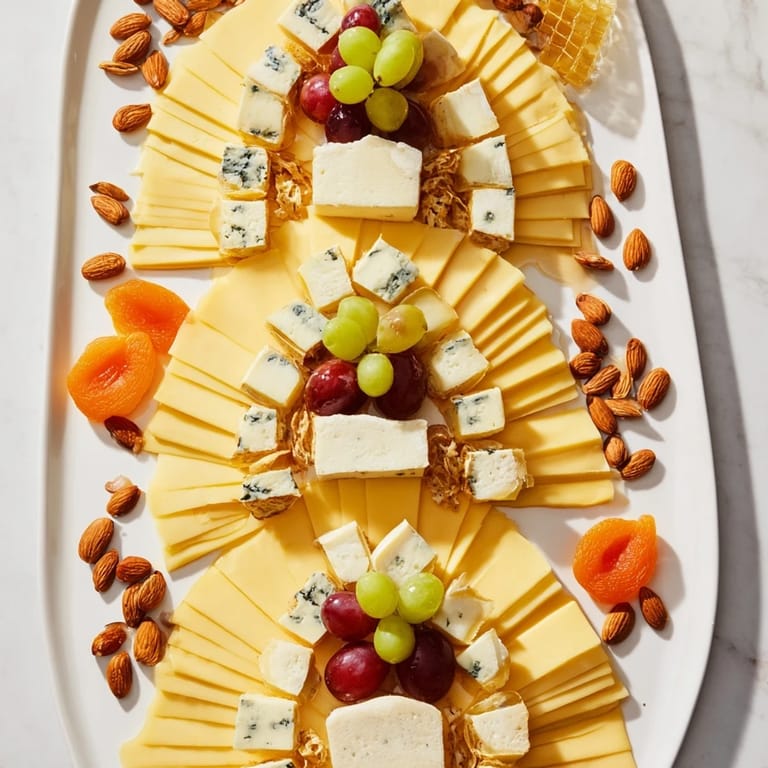
Save I stumbled onto this platter concept while flipping through a vintage design book at my aunt's apartment, mesmerized by photos of 1920s skyscrapers with their geometric arches reaching toward the sky. That evening, I found myself arranging slices of aged cheddar and Gruyère on a board, trying to recreate those soaring lines with cheese instead of steel and glass. The moment my friends saw it—that collective pause before diving in—I knew I'd discovered something special. It wasn't just about the cheeses anymore; it was about turning a simple board into edible architecture.
I made this for a dinner party where half the guests were architects, and I'll never forget the moment they recognized the Art Deco references without me saying a word. Someone traced their finger along the tiered fans and whispered, "Chrysler Building," and suddenly the platter became a conversation piece instead of just appetizers. That's when I realized presentation isn't vanity—it's a love language.
Ingredients
- Aged cheddar, thinly sliced: The sharp backbone that keeps this platter from feeling too delicate; I learned to slice it on a mandoline rather than a knife for those clean, geometric edges.
- Gruyère, thinly sliced: Nutty and elegant, it curves beautifully when you overlap the slices and holds its shape without cracking.
- Manchego, thinly sliced: The Spanish addition that adds both visual warmth and a slightly herbaceous note that surprised me the first time.
- Creamy brie in wedges: These form the solid architectural base and add luxurious creaminess where the geometric shapes need grounding.
- Blue cheese triangles: Sharp and unexpected at the top of each arch, like the ornamental spires that make Art Deco unmistakable.
- Green and red grapes: They nestle between the arches and provide visual contrast; I learned to use seedless varieties so guests don't have to think twice.
- Pear and apple slices: Toss these in a bit of lemon juice right before arranging to prevent browning and keep everything looking fresh.
- Roasted almonds: Scattered throughout for texture and a hint of crunch that surprises the palate.
- Dried apricots: The warm color bridges the gap between the cool cheese tones and the earthier elements.
- Honeycomb or honey: A drizzle near the brie adds sweetness and catches the light beautifully on the board.
- Baguette slices and crackers: Choose a mix of textures; sturdy crackers won't crumble under the weight of the softer cheeses.
Tired of Takeout? 🥡
Get 10 meals you can make faster than delivery arrives. Seriously.
One email. No spam. Unsubscribe anytime.
Instructions
- Slice your cheeses with precision:
- A wire cheese slicer is non-negotiable here; it creates those clean, even slices that actually fan properly without shattering. I once tried a dull knife and ended up with ragged edges that refused to overlap, so invest in the right tool.
- Create the first arch:
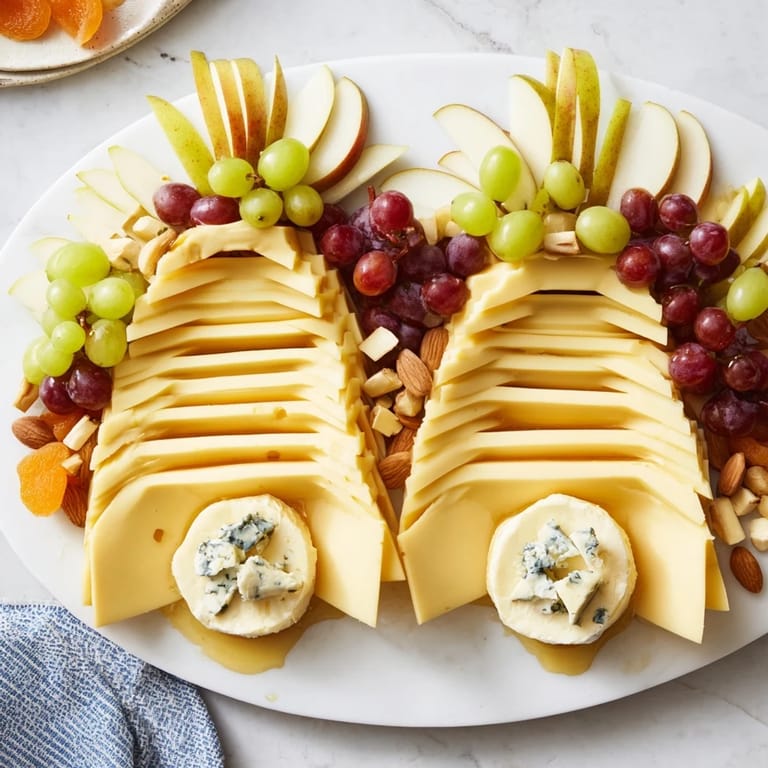
- Start with the aged cheddar, overlapping each slice at a slight angle to mimic the curve of a skyscraper arch. You're aiming for geometry, not perfection, so trust your instincts as you layer.
- Build the second and third arches:
- Repeat with Gruyère and Manchego, spacing them evenly across your board or platter. Step back occasionally and look at it from above to make sure the symmetry feels intentional.
- Anchor each arch with brie:
- Place the wedges at the base of each arch; this gives the whole structure visual weight and creates a transition from geometric cheese fans to the more organic fruits. The creamy texture prevents the design from feeling too rigid.
- Crown with blue cheese:
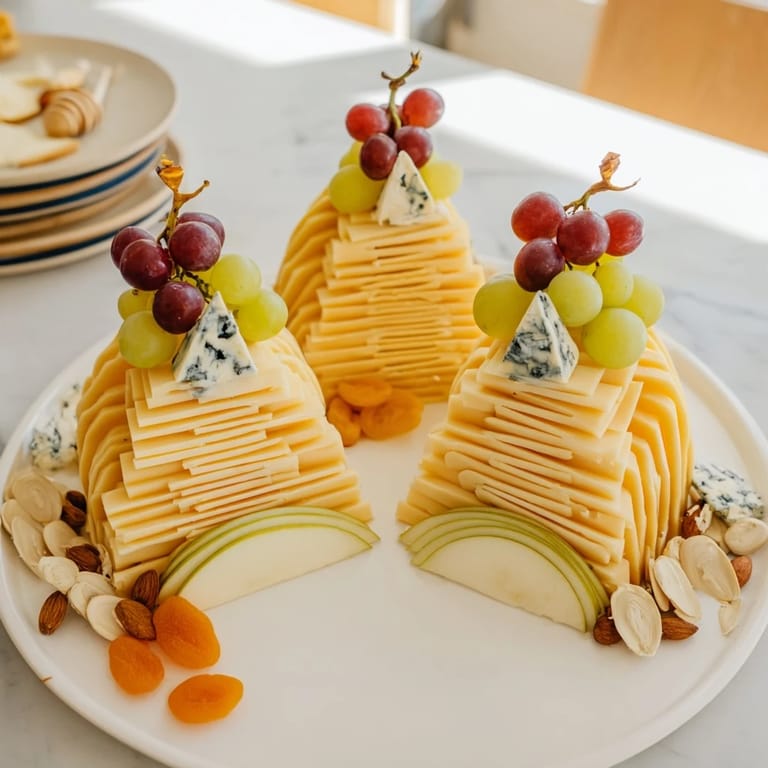
- Position your blue cheese triangles at the top-center of each arch like the distinctive points of 1920s skyscrapers. This detail is what makes someone suddenly recognize the Art Deco inspiration.
- Fill the spaces thoughtfully:
- Tuck grape bunches, pear slices, and apple slices between the arches where they'll add color without disrupting the geometric flow. I arrange these last so I can see exactly where the design needs softening.
- Scatter the nuts and dried fruit:
- Distribute the roasted almonds and halved apricots around the platter artistically; this is where you can be playful because these elements don't need to follow strict architectural rules.
- Add the honey detail:
- Drizzle honeycomb or a pool of honey near the brie; it acts as both flavor complement and a visual anchor that draws the eye.
- Position crackers and bread strategically:
- Arrange these along the sides and edges where guests can easily reach them without disturbing your carefully constructed arches. Baguette slices lean against the board naturally, while crackers can fill any remaining gaps.
- Final check and chill:
- Step back and admire your work, then cover loosely with plastic wrap if you're serving within the hour, or refrigerate for up to an hour if you built it ahead.
 Save
Save What started as visual inspiration from a design book became a way I connect with people at gatherings, because suddenly we're not just eating cheese—we're celebrating craftsmanship and creativity together. That matters more than I expected it to.
The Art of Cheese Selection
The first time I made this platter, I chose cheeses purely for how they looked sliced. But I quickly discovered that visual appeal and flavor balance go hand-in-hand; the sharp cheddar, nutty Gruyère, and delicate blue cheese create a tasting journey, not just a visual one. Each cheese has a moment where it shines, and the arrangement lets guests discover them in any order. I started paying attention to how the colors interact with light—aged cheddar glows golden, Manchego has a subtle amber warmth, and blue cheese punctuates the design with its dark, veined beauty. This taught me that good entertaining is about engaging all the senses, not just the eyes.
Timing and Temperature Matters
I learned the hard way that a cold platter fresh from the refrigerator tastes lifeless compared to one that's had time to breathe at room temperature. The soft brie especially—it goes from rubber-like to silky and approachable, and suddenly people linger over it instead of rushing past. I now build the platter thirty minutes before guests arrive and leave it uncovered on the counter so everything can relax into its best self. The cheese flavors deepen, the fruit releases subtle juices, and the whole board feels more generous and inviting than when it's straight from cold storage.
Adapting and Personalizing
One of the joys of this platter is that it doesn't require specific cheeses; it requires understanding the principle behind them. I've substituted Comté for Manchego, used aged Gouda in place of cheddar, and the architecture still works beautifully. The key is choosing cheeses that slice cleanly and have distinct flavors so the tasting experience feels complete. I've also experimented with different fruits—figs are stunning instead of apricots, and candied walnuts add a sophisticated crunch that guests remember. The geometric framework gives you total creative freedom within a defined structure, which is exactly how good design should work.
- Vegan versions work wonderfully with high-quality plant-based cheeses; they slice nearly as cleanly and the visual impact remains identical.
- Don't be afraid to include savory crackers with seeds or herbs; they provide interesting texture contrasts against the creamy cheeses.
- A small bowl of fig jam or Dijon mustard nearby gives guests flavor options without cluttering the main board.
 Save
Save This platter taught me that hospitality is about creating moments where beauty and taste combine, where guests feel the care behind what they're experiencing. Serve it with Champagne or a crisp Riesling, and watch how a simple board of cheese becomes the highlight of the evening.
Recipe FAQs
- → How should the cheese slices be arranged?
Arrange cheddar, Gruyère, and Manchego slices in overlapping, tiered fan shapes to form symmetrical arches.
- → What fruits complement the cheese arrangement?
Seedless green and red grapes, thinly sliced pears, and apples add freshness and color.
- → Can the cheeses be substituted?
Yes, you can swap cheeses like Comté, Emmental, or aged Gouda to suit your taste.
- → How to add sweetness to the platter?
Drizzle honey or include honeycomb near the brie for a subtle, natural sweetness.
- → What tools ensure clean cheese slices?
A wire cheese slicer helps achieve even, sharp slices perfect for fan shapes.