 Save
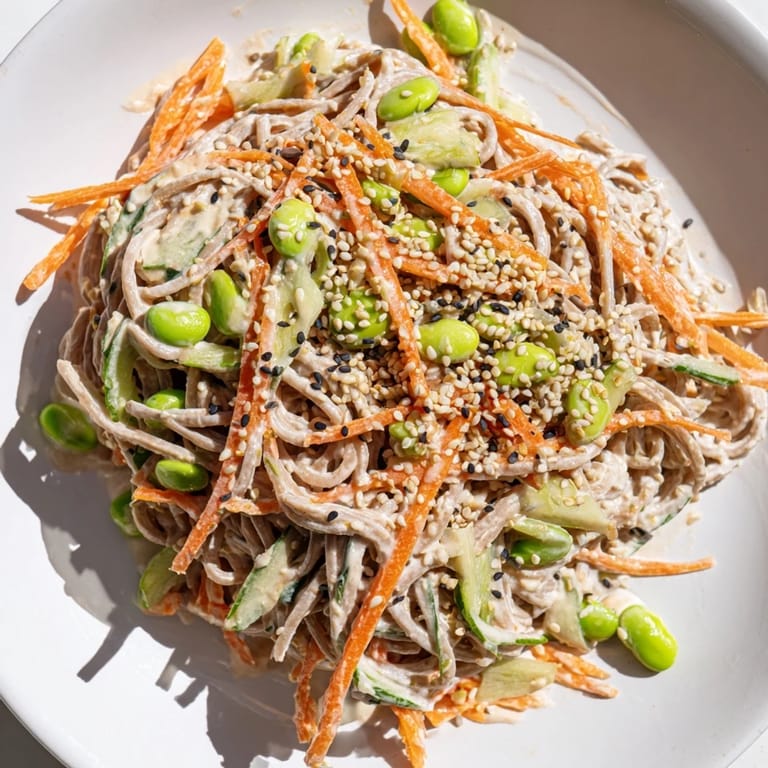
Save One sticky summer afternoon, I found myself standing in front of an open refrigerator with wilting vegetables and a craving for something cold and zingy. A friend had just shared her obsession with sesame noodles from a tiny shop near her apartment, and I thought, why not try making it at home? That first attempt taught me that the simplest dishes often deliver the biggest payoff—especially when you let the dressing do the talking.
I made this for a potluck where everyone brought heavy casseroles, and watching people come back for thirds was quietly satisfying. One guest asked for the recipe before even sitting down, and I realized how rare it is to find a dish that feels both light and deeply satisfying at the same time.
Ingredients
- Soba noodles or thin spaghetti (250 g): Soba has a nutty flavor that pairs beautifully with sesame, but regular spaghetti works just as well if that's what you have on hand.
- Cucumber (1 medium, julienned): The crunch here matters—it's your textural anchor, so don't skip it or use a food processor.
- Carrots (2 medium, julienned): Sweet and colorful, they add visual appeal and a subtle sweetness that balances the dressing.
- Edamame (1 cup, shelled and cooked): This is where protein sneaks in quietly; frozen ones work beautifully and are already cooked.
- Spring onions (2, thinly sliced): A sharp, fresh counterpoint added at the end so they stay bright and crisp.
- Toasted sesame seeds (2 tbsp): Buy them already toasted if you can—it saves a step and prevents burning.
- Tahini or toasted sesame paste (3 tbsp): This is the soul of the dressing; toasted sesame paste is earthier than regular tahini.
- Soy sauce (2 tbsp): Use tamari if gluten matters to you or if you're cooking for someone who's avoiding wheat.
- Rice vinegar (1 tbsp): It's milder than other vinegars and won't overpower the delicate sesame notes.
- Toasted sesame oil (1 tbsp): A little goes a long way—this is the difference between good and unforgettable.
- Honey or maple syrup (1 tbsp): Just enough to round out the flavors without making it dessert-like.
- Fresh ginger (1 tsp, grated): Adds warmth and brightness; fresh is always better than dried here.
- Garlic (1 clove, finely minced): Mince it small so it distributes evenly throughout the dressing.
- Water (2–3 tbsp): You'll need this to thin the dressing to a pourable consistency.
Tired of Takeout? 🥡
Get 10 meals you can make faster than delivery arrives. Seriously.
One email. No spam. Unsubscribe anytime.
Instructions
- Bring water to a boil and cook your noodles:
- Follow the package timing, but aim for tender with just a hint of resistance. Drain them and rinse under cold water while running your fingers through them gently to cool them completely.
- Build the dressing in a large bowl:
- Whisk tahini with soy sauce, rice vinegar, sesame oil, honey, ginger, and garlic until combined. Add water slowly while whisking until you reach a sauce that's pourable but still coats the back of a spoon.
- Combine noodles and vegetables:
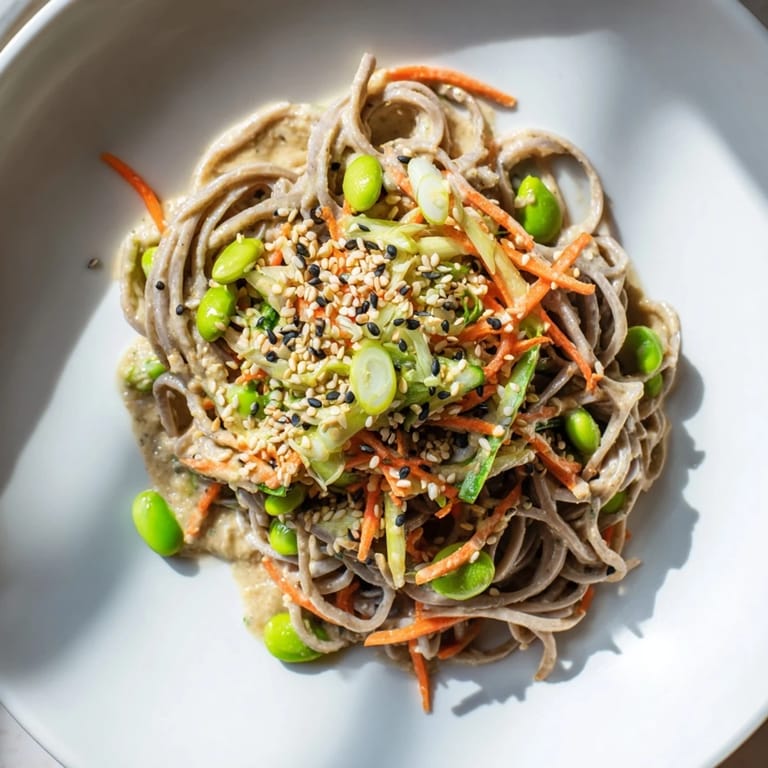
- Add the cooled noodles to the dressing along with cucumber, carrots, and edamame. Use gentle tossing motions with two spoons or your hands to coat everything evenly without breaking the noodles.
- Finish with fresh elements:
- Scatter spring onions and toasted sesame seeds across the top. Add any optional garnishes—cilantro, crushed nuts, lime wedges—depending on your mood and what's around.
- Let it rest in the cold:
- Chill for at least 10 minutes, though 30 minutes is even better if you have the time. The flavors continue to blend and deepen as it sits.
 Save
Save There's something almost meditative about the rhythm of julienning vegetables for this dish, and somehow the salad tastes better when you've put that care into it. It became the thing I'd make on days when I needed to feel like I was doing something nourishing without fussing in the kitchen for hours.
Dressing Variations That Work
Once you understand the backbone of this dressing, you can play with it endlessly. I've made versions with peanut butter instead of tahini, added a splash of coconut milk for creaminess, and substituted lime juice for rice vinegar when that's what was calling to me. The ratio of sesame to umami to acid is what matters; everything else is just personal preference and whatever's in your fridge.
Why This Works as a Side or Main
On its own, it's light and refreshing, but it also loves being a supporting player next to grilled fish or roasted tofu. The sesame dressing is rich enough that you don't feel like you're eating rabbit food, and the edamame brings enough protein that it doesn't need meat to feel complete. I've served it warm, cold, and at room temperature, and each version has its moment.
Make-Ahead Wisdom
This salad gets better after a few hours as the noodles absorb the dressing and everything becomes more cohesive. You can make it up to a day ahead, though if you're doing that, keep the spring onions and sesame seeds separate and add them just before serving so they stay crisp and bright. A quick stir and maybe a splash of water to loosen it up is all you'll need.
- Store it in an airtight container and it'll keep happily in the fridge for up to two days.
- If the dressing seems thick after sitting, whisk in a tablespoon of water or more sesame oil depending on what you're in the mood for.
- This dish doesn't freeze well, so plan to eat it fresh or within a couple of days.
 Save
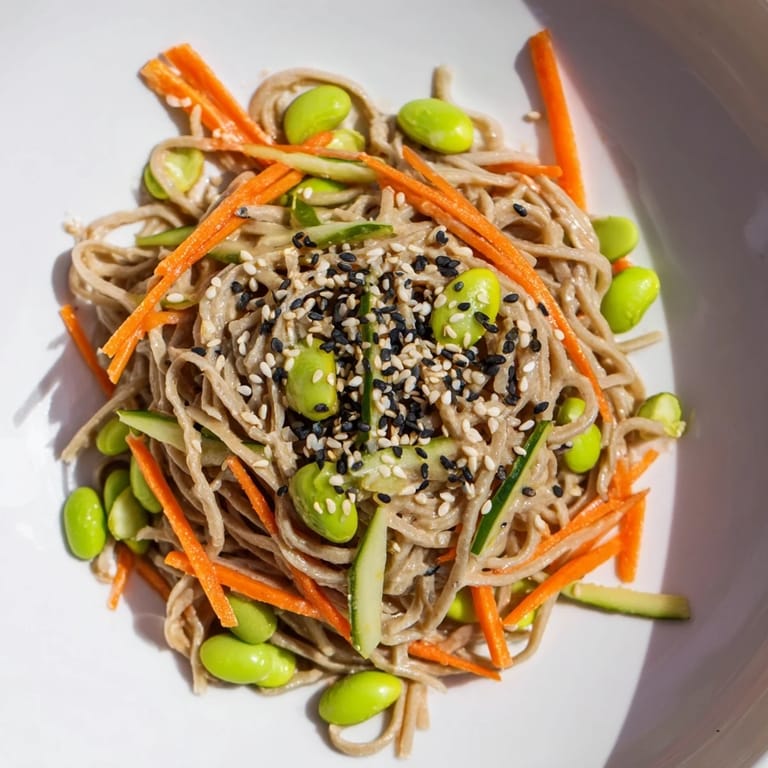
Save This salad has become my answer to the question of what to bring to a gathering when you want people to feel cared for without spending all day cooking. It's become less about following a recipe and more about trusting the process and tasting as you go.
Recipe FAQs
- → Can I use different noodles for this dish?
Yes, soba or thin spaghetti work well. For a gluten-free option, rice noodles are excellent.
- → How can I make the dressing creamier?
Using tahini or toasted sesame paste provides a rich, creamy texture in the dressing.
- → What proteins pair best with this dish?
Edamame adds plant-based protein, but shredded cooked chicken or tofu are tasty additions.
- → Can this dish be made vegan?
Yes, substitute honey with maple syrup and ensure all ingredients are plant-based.
- → How should I store leftovers?
Keep chilled in an airtight container and consume within 2 days for best freshness.