 Save
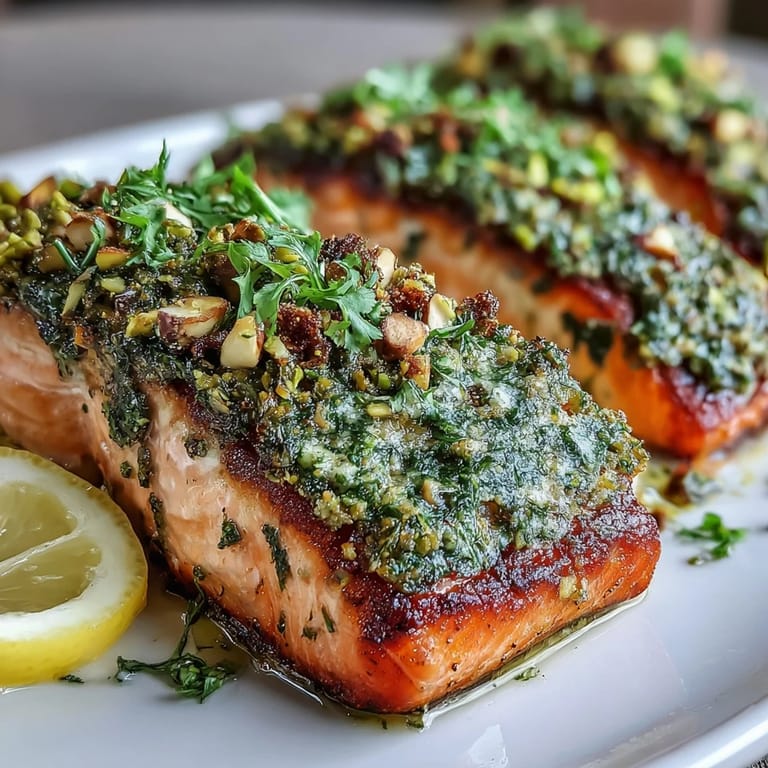
Save The first time I pulled salmon from a bath of warm olive oil, I was skeptical it would work. It seemed wasteful, even a little strange, to submerge beautiful fillets in all that oil. But when I lifted one piece free and it practically melted on my fork, I understood why chefs guard this technique. The tahini and pistachio crust came later, born from a half-empty jar in the pantry and a handful of nuts I didn't want to waste. Now I make this dish when I want something that feels elegant without the fuss of precise timing or high heat drama.
I served this at a small dinner party once, and everyone went quiet after the first bite. One friend said it tasted like something she'd order at a restaurant but never thought she could make at home. The crust, with its bright herbs and nutty depth, turned what could have been simple poached fish into something memorable. I've made it for weeknight dinners too, and even on a Tuesday it feels like a treat.
Ingredients
- Salmon fillets: Look for thick, even pieces so they cook at the same rate, and make sure they're skinless and pin-boned or you'll be picking at them later.
- Olive oil: You need enough to mostly submerge the fillets, and yes, it seems like a lot, but you can strain and reuse it for roasting vegetables or sautéing greens.
- Lemon zest: Just the zest here, no pith, it adds brightness without the acidity that can sometimes overpower delicate fish.
- Pistachios: Chop them finely by hand rather than pulsing in a processor, you want texture, not dust.
- Tahini: Use a well-stirred, runny tahini, the thick, separated kind will make the crust grainy and hard to spread.
- Fresh herbs: Parsley, dill, and mint together create a fresh, layered flavor, but if you're missing one, just use more of the others.
- Garlic: Grate it finely so it blends into the crust without leaving sharp, raw bites.
- Honey: A small spoonful balances the sesame bitterness and helps the crust cling to the fish.
- Ground cumin: Just a hint adds warmth without making the dish taste overtly spiced.
Tired of Takeout? 🥡
Get 10 meals you can make faster than delivery arrives. Seriously.
One email. No spam. Unsubscribe anytime.
Instructions
- Prep the salmon:
- Preheat your oven to 100°C and nestle the salmon fillets snugly in an ovenproof dish. Season each one with salt, pepper, and a little lemon zest, then pour over enough olive oil to mostly cover them.
- Confit gently:
- Slide the dish into the oven and let the salmon cook slowly for 25 to 30 minutes, until the flesh turns opaque and flakes with the gentlest nudge of a fork. The oil should barely shimmer, not bubble.
- Make the crust:
- While the fish cooks, stir together the pistachios, tahini, garlic, parsley, dill, mint, lemon juice, honey, cumin, and a pinch of salt and pepper in a bowl. You want a thick, spoonable paste that holds together but spreads easily.
- Lift and rest:
- When the salmon is done, carefully lift each fillet from the oil with a slotted spatula and set on a paper towel-lined plate to drain. Let them cool just slightly so the crust doesn't slide off.
- Top and serve:
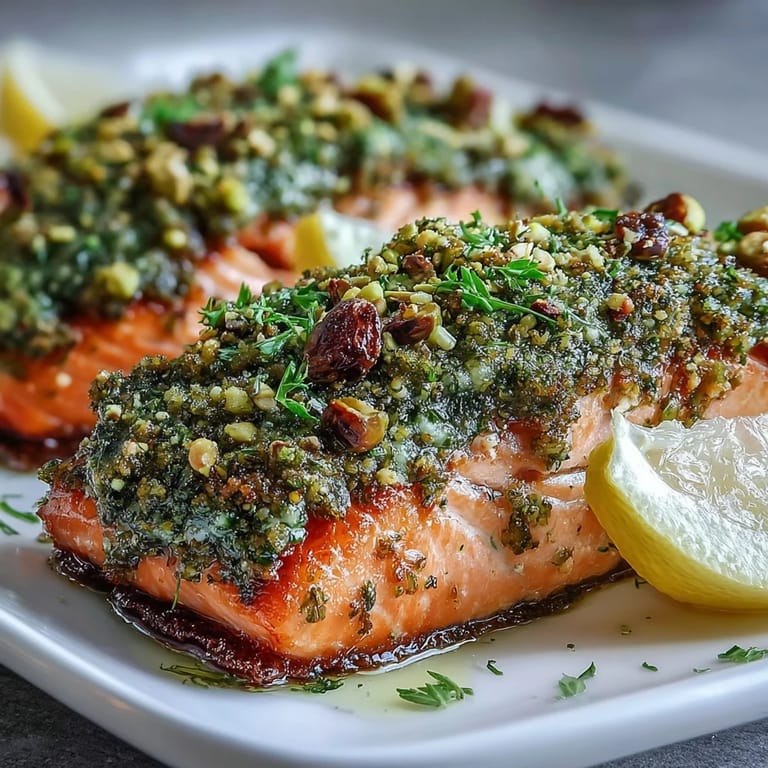
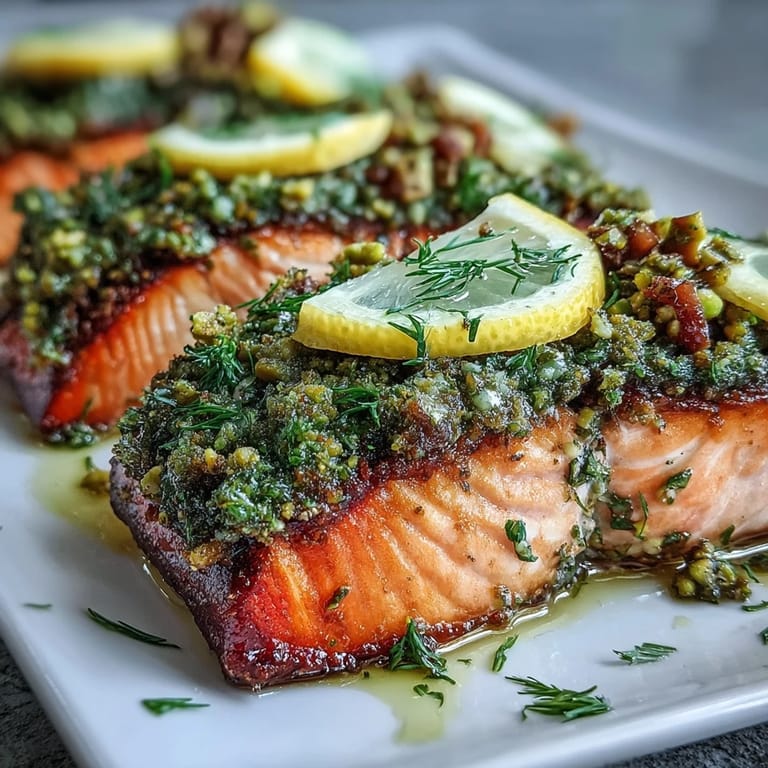
- Spoon a generous layer of the tahini-pistachio mixture over each fillet, spreading it gently to the edges. Serve warm or at room temperature with lemon wedges, extra herbs, and a drizzle of olive oil if you like.
 Save
Save The best part about this dish is how forgiving it is once you understand the rhythm. You can prep the crust while the salmon gently cooks, and there's no frantic flipping or worrying about sticking. It's the kind of recipe that lets you stay calm and present, even when you're cooking for people you want to impress. I've come to love that quiet confidence it gives me in the kitchen.
Serving Suggestions
I like to serve this with a simple green salad dressed in lemon and olive oil, or alongside warm flatbread for scooping up any extra crust. Roasted asparagus or a lemony couscous also work beautifully. The dish is rich enough to stand on its own, so keep the sides light and fresh to balance the buttery salmon and nutty topping.
Make It Your Own
If pistachios aren't your thing, swap them for finely chopped almonds or walnuts, both bring their own character to the crust. You can also add a pinch of chili flakes to the tahini mixture for a subtle kick, or swap the mint for basil if that's what you have growing on the windowsill. The technique stays the same, but the flavor can shift to match your mood or pantry.
Storage and Reheating
Leftovers keep well in the fridge for up to two days, covered tightly. I actually love this salmon cold the next day, flaked over a grain bowl or tucked into a wrap with greens and cucumber. If you want to reheat it, do so gently in a low oven to avoid drying it out, or just bring it to room temperature and enjoy it as is.
- Store the confit oil separately in a jar and use it within a week for sautéing or drizzling over roasted vegetables.
- The crust can be frozen in a small container for up to a month and thawed when you need a quick topping for fish or chicken.
- If you're meal prepping, confit the salmon but wait to add the crust until just before serving so it stays vibrant and fresh.
 Save
Save This is one of those recipes that feels special every time, whether you're making it for a celebration or a quiet dinner at home. Once you try the confit method, you'll wonder why you ever stressed over pan-searing fish again.
Recipe FAQs
- → What does confit mean in cooking?
Confit is a French technique where food is gently cooked submerged in fat or oil at low temperature. This method produces incredibly tender, moist results and infuses the salmon with subtle flavor.
- → Can I use salmon with skin on?
While skinless fillets work best for this preparation, you can use skin-on salmon. Simply remove the skin after poaching when it will slip off easily.
- → What can I substitute for pistachios?
Almonds, walnuts, or hazelnuts make excellent alternatives. Choose raw or lightly toasted nuts and chop finely for the best texture in the crust.
- → How do I know when the salmon is done?
The salmon is ready when it's just opaque throughout and flakes easily with a fork. It should reach an internal temperature of about 50-55°C for a tender, moist texture.
- → Can I make this ahead of time?
Yes, you can confit the salmon up to a day ahead and refrigerate. Bring to room temperature, add the crust, and serve, or briefly warm in a low oven before adding the topping.
- → What should I serve with this dish?
This pairs beautifully with Mediterranean sides like tabbouleh, roasted vegetables, crisp green salad, or warm flatbread. Couscous or quinoa also complement the flavors well.