 Save
Save My friend Sarah threw a dinner party last spring, and I arrived early to help in the kitchen. She'd been flipping through a travel magazine and spotted a photo of a Moroccan market spread—vendors arranging vegetables in stunning geometric patterns. That image stuck with her, and she wanted to recreate that magic for her guests. We spent the afternoon slicing and arranging, and by the time the first guest walked in, there it was: a edible tent made of colors, waiting to be explored.
I made this platter for a potluck, nervous I'd show up with something forgettable. Instead, it became the thing people actually gathered around—more than the fancy casserole, more than the desserts. Someone's five-year-old was arranging cherry tomatoes by color while her mom dipped peppers. That's when I realized this isn't just pretty food; it's an invitation to slow down and play with your dinner.
Ingredients
- Cucumber: Sliced lengthwise, it holds shape better than rounds and catches dip in satisfying ways.
- Red and yellow bell peppers: Cut into strips for easy dipping, and the color contrast is half the visual magic.
- Carrots: Raw sticks stay crisp longer than roasted, and they're naturally sweet—guests who skip vegetables usually eat these.
- Cherry tomatoes: Halved ones nestle into gaps and add those pops of color that make the whole tent work.
- Red onion: Thinly sliced for a sharp bite; it wakes up your palate between dips.
- Radishes: They look almost gemlike arranged thin, and that peppery crunch surprises people pleasantly.
- Pita or msemen bread: Warming them briefly makes them pliable for fanning out; cold bread cracks.
- Hummus: The creamy anchor—store-bought is fine, but make sure it's smooth enough for vegetables to glide through without breaking.
- Roasted red pepper muhammara: This one has depth; it's nutty and slightly spiced in a way that makes people ask what it is.
- Baba ganoush: If you've never tried it, it's smoky eggplant transformed into something luxurious and unexpected.
- Olives, cilantro, sesame seeds, cumin, and paprika: These are the finishing touches that whisper Moroccan market and make the whole platter feel intentional.
Tired of Takeout? 🥡
Get 10 meals you can make faster than delivery arrives. Seriously.
One email. No spam. Unsubscribe anytime.
Instructions
- Prep and group your vegetables:
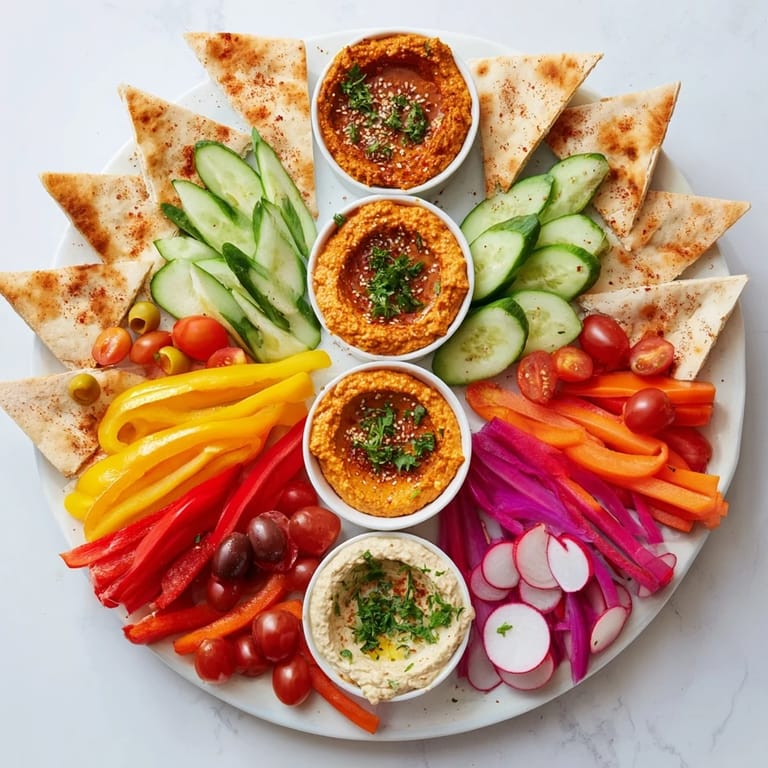
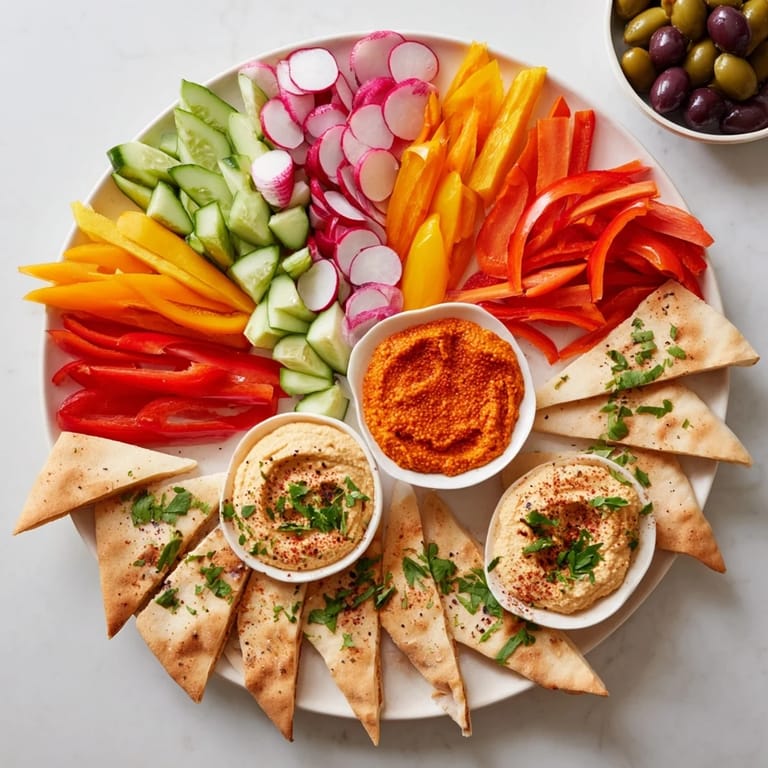
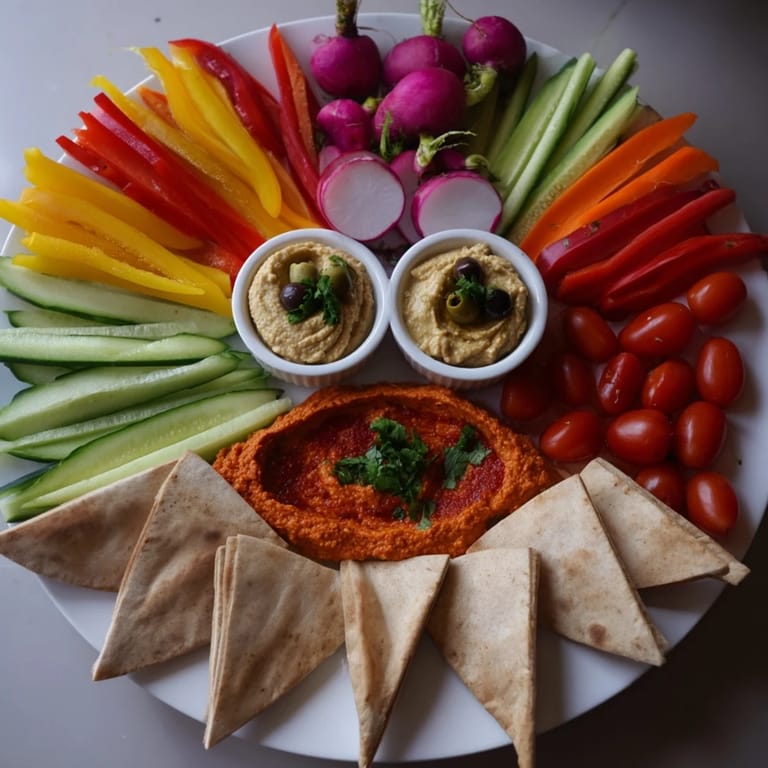
- Slice everything and arrange them in pointed triangular groupings across a large platter—think tent panels. Let colors play against each other: reds next to yellows, greens next to purples. There's no wrong way, but the more intentional the grouping, the more "wow" people feel when they walk in.
- Warm and fan the flatbreads:
- A quick warm in a dry skillet or 350°F oven for 2-3 minutes makes them pliable and releases a little steam that smells like promise. Cut into triangles and fan them out at the base like you're opening a book, creating the bottom edge of your tent.
- Dress the dips:
- Spoon hummus, muhammara, and baba ganoush into small bowls and cluster them at the center base of your arrangement. Sprinkle each with a pinch of cumin or paprika and scatter sesame seeds across the top—this is where texture and color get their final say.
- Final flourish:
- Scatter olives across the platter and finish with chopped fresh cilantro or parsley. Step back and look at what you've made before anyone else does.
- Bring it to the table and let guests discover:
- Set it down and watch people lean in, point, and start combining flavors in their own way. That's the whole point—everyone eats differently, and this platter lets them be themselves.
 Save
Save The best part happened after everyone had eaten—Sarah's daughter asked to help her remake the tent for her school lunch the next day. Suddenly it wasn't just a party platter anymore; it became something her kid wanted to build and eat. That's when I knew this recipe was about more than visual appeal or Moroccan flavors. It was about making food feel like an experience worth sharing and remembering.
The Tent Concept—Why It Works
Arranging food into a shape might sound like unnecessary fussiness, but it shifts how people relate to what they're eating. A pile of vegetables on a plate reads as sides. A tent reads as an event, an invitation, a story. The pointed shape naturally guides eyes inward, drawing attention to the dips at the center, which means people eat in a rhythm you've designed. It's subtle psychology through appetizers, and it actually makes the whole meal feel more cohesive.
Building Flavor Layers
Each of the three dips brings something different to the table: hummus is creamy and neutral, letting vegetables shine; muhammara is bold and nutty, demanding to be tasted slowly; baba ganoush is smoky and complex, the kind of flavor that makes people pause mid-bite. The vegetables aren't just vehicles—their sweetness (carrots, tomatoes), sharpness (radish, red onion), and freshness (cucumber, peppers) interact with each dip differently. Some guests will stick with one favorite pairing; others will experiment through the whole platter like it's a flavor map. Both ways are correct.
Storage and Make-Ahead Magic
If you're hosting, you can prep vegetables hours ahead and keep them in containers, then arrange the platter 30 minutes before guests arrive. The dips benefit from coming to room temperature, so pull them from the fridge while you're arranging vegetables—they'll taste richer and less muted than straight-from-cold. Bread is the only thing that needs last-minute warming, which actually works in your favor because that warm bread smell greets people at the door.
- Slice vegetables in the morning and store them in separate containers to prevent color bleeding.
- Let hummus, muhammara, and baba ganoush sit out for 15-20 minutes before serving so their flavors open up.
- If you're making this the night before, assemble everything except the cilantro garnish and cover loosely with plastic wrap; add fresh herbs right before serving.
 Save
Save This platter reminds me why I cook for people—not for perfection, but for those moments when food becomes the reason everyone gathers a little closer. It's simple enough that you'll make it again, beautiful enough that people will remember it, and communal enough that everyone walks away feeling like they were part of something.
Recipe FAQs
- → What dips are included in the Moroccan Tent platter?
It features hummus, roasted red pepper muhammara, and baba ganoush, each seasoned with cumin, smoked paprika, and sesame seeds for added depth.
- → Can the flatbreads be substituted?
Yes, pita breads or Moroccan msemen work well; warming them slightly enhances the texture and makes folding easier.
- → How should the vegetables be prepared?
Vegetables are sliced or cut into sticks and arranged in pointed groupings to create a tent-like visual, alternating colors for appeal.
- → Is this platter suitable for vegetarians?
Yes, all components are vegetarian-friendly, with fresh vegetables, dips, and breads forming a balanced, colorful spread.
- → What garnishes enhance the presentation?
Pitted green and black olives, chopped fresh cilantro or parsley, and toasted sesame seeds add both flavor and decorative touches.