 Save
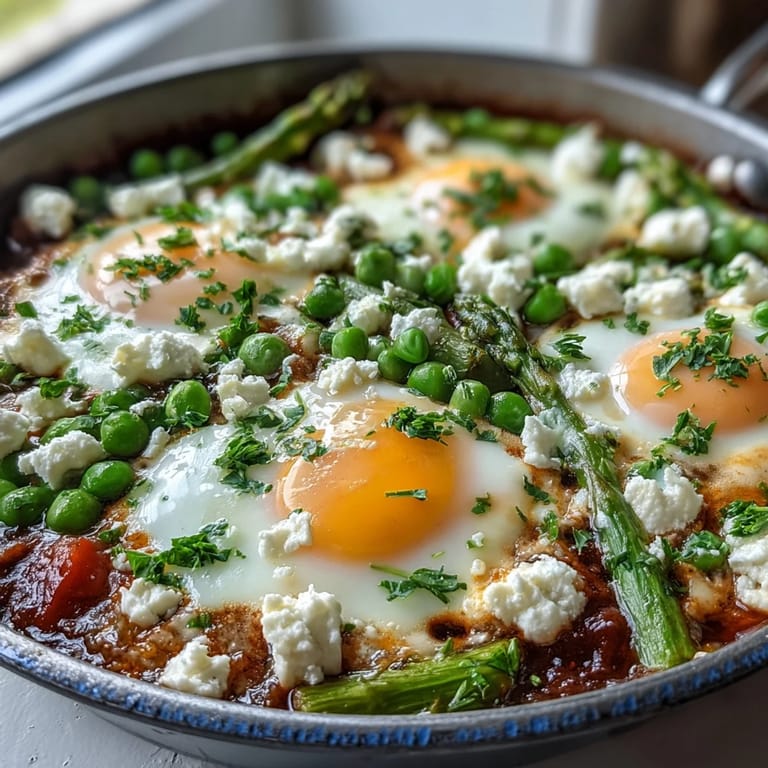
Save The spring I discovered pea and broad bean shakshuka changed my weekend brunches forever. While sheltering from a sudden April shower at my favorite farmers market, I struck up a conversation with a vendor arranging vibrant piles of fresh peas and tender broad beans. She described this spring twist on shakshuka that sounded too delicious not to try. Back home, with rain pattering against the kitchen window, the bright greens against the rich tomato sauce created something that felt like sunshine on a plate.
Last Easter, when my sister announced she was now vegetarian, this shakshuka became our new holiday tradition. We gathered around the table, tearing pieces of warm flatbread and dipping them into the sauce, the conversation flowing as easily as the wine. My brother in law, notorious for his meat loving ways, was the one who requested seconds and then asked for the recipe. The dish has a way of bringing people together, creating moments where time seems to slow down.
Ingredients
- Fresh or frozen peas and broad beans: The heart and soul of this spring version, they add sweet pops of texture that regular shakshuka misses.
- Asparagus: Look for medium thickness stalks as they cook evenly with the other vegetables without becoming mushy.
- Smoked paprika: This is your secret weapon, bringing a subtle campfire essence that elevates the entire dish beyond a simple tomato sauce.
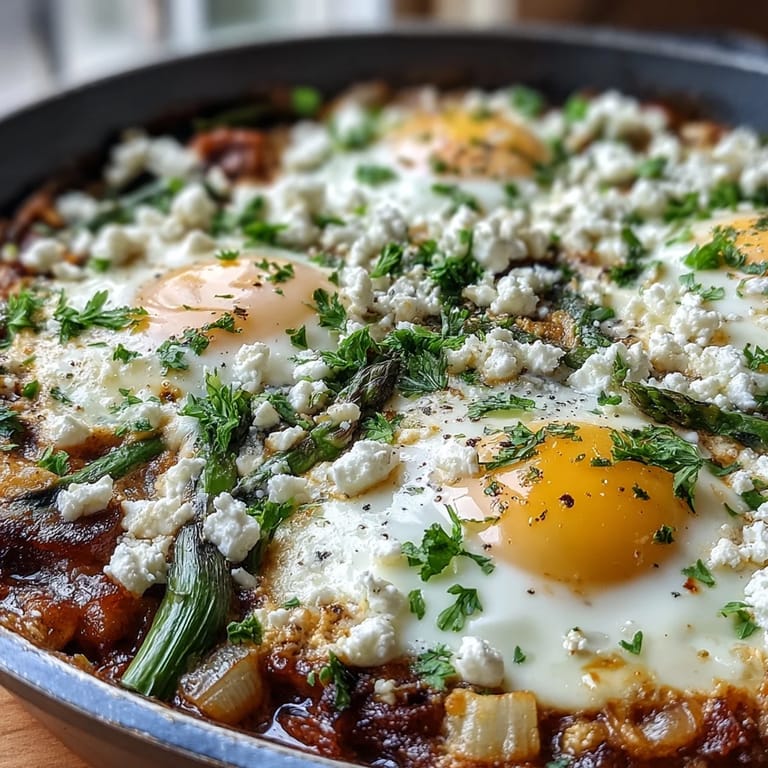
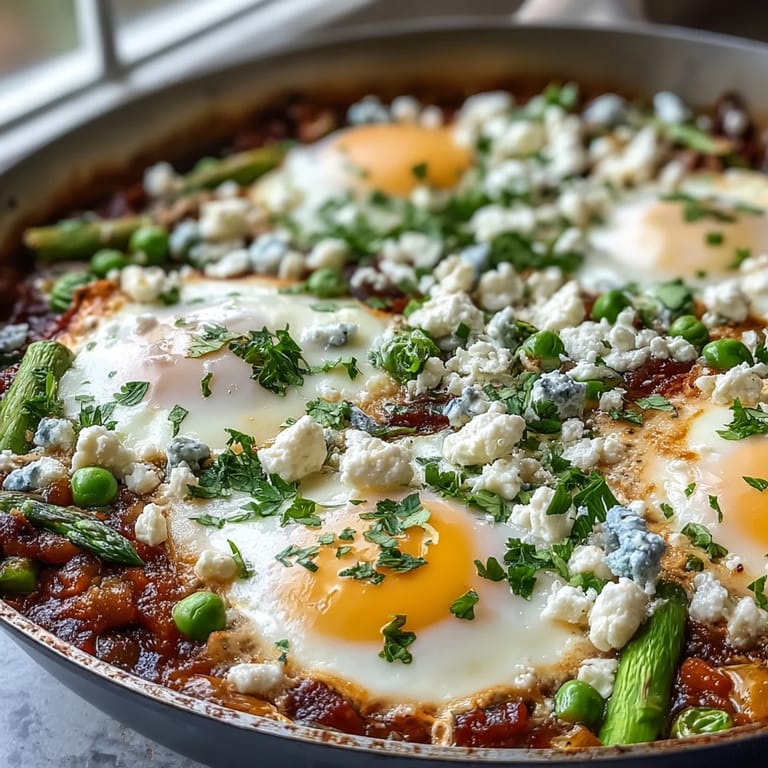
- Eggs: Farm fresh eggs with those gorgeous orange yolks create the most beautiful contrast against the vibrant greens and reds.
- Feta cheese: The salty tang cuts through the richness of the eggs and sweetness of the vegetables perfectly.
Tired of Takeout? 🥡
Get 10 meals you can make faster than delivery arrives. Seriously.
One email. No spam. Unsubscribe anytime.
Instructions
- Blanch the spring stars:
- Start by giving your peas and broad beans a quick bath in boiling water, just about two minutes until they brighten. The ice bath afterward is non negotiable, it locks in that vivid green color we want.
- Build your flavor foundation:
- As the onions and peppers soften in the pan, your kitchen will fill with that savory aroma that signals good things are coming. When you add the spices, stand over the pan for a moment and breathe in that fragrant cloud as they bloom in the oil.
- Create the tomato canvas:
- The tomato paste might seem like a small addition, but those two tablespoons pack concentrated umami that transforms the sauce. Watch as it deepens from bright red to a rich russet as it caramelizes slightly.
- Add the spring vegetables:
- When you fold in the asparagus, peas and broad beans, the pan becomes a patchwork of green jewels nestled in tomato sauce. Resist the urge to overcook them, they should retain a slight bite.
- Create egg nests:
- Use the back of a spoon to make wells for each egg, working quickly so they cook evenly. The moment when you crack an egg and watch the white slowly spread while the yolk stays perfectly centered feels like culinary magic every time.
- The waiting game:
- This is the hardest part, keeping the heat low and resisting the urge to peek under the lid too often. The eggs should set gently, with the whites opaque but the yolks still gloriously runny.
- Finishing touches:
- The shower of feta and herbs isnt just garnish, its the final layer of flavor that brings everything together. A generous drizzle of your best olive oil adds glossy richness.
 Save
Save One particularly memorable evening, I served this shakshuka to friends who had just returned from traveling through the Middle East. We sat on the back porch as the sun was setting, and they fell silent after the first few bites. Then came the stories of markets in Jerusalem and tiny cafes in Morocco, each memory unlocked by flavors in the dish. Food has this incredible power to transport us, and this humble pan of vegetables and eggs took us around the world that night.
Seasonal Adaptations
Ive learned that this recipe shifts beautifully with the seasons, each variation telling its own story on the plate. In summer, sweet corn kernels and cherry tomatoes bring brightness and pop. Fall calls for butternut squash cubes and kale, creating a heartier version that stands up to cooler evenings. Winter finds me using frozen peas with preserved lemon for brightness, a reminder that spring will eventually return. The recipe becomes a calendar of sorts, marking time through flavors and colors.
Serving Suggestions
The communal nature of shakshuka makes it perfect for those lazy weekend gatherings where people wander into the kitchen throughout the morning. Ive discovered that setting out a variety of breads transforms the experience, from torn pieces of chewy sourdough to warm pita or even buttery brioche. The sauce demands to be sopped up, and watching friends use the last piece of bread to clean their plates completely is perhaps the highest compliment a cook can receive.
Make It Your Own
After making this countless times, Ive come to appreciate how forgiving shakshuka truly is, welcoming improvisation and happy accidents. The time I accidentally used hot smoked paprika instead of sweet created a version with unexpected heat that became my brothers favorite. Another night, throwing in leftover roasted cauliflower added wonderful nutty notes I hadnt anticipated.
- For a luxurious twist, try dolloping a spoonful of good quality labneh on top just before serving instead of the feta.
- When fresh herbs are abundant, increase the amounts substantially, they can handle being treated as a vegetable rather than just a garnish.
- Consider a sprinkle of dukkah or za'atar at the end for an additional layer of texture and earthy flavor.
 Save
Save This green shakshuka has taught me that the most memorable dishes often come from bridging traditions with what's fresh and available. Each time I make it, the recipe evolves slightly, carrying forward the essence of shared meals and seasonal celebrations.
Recipe FAQs
- → Can I make this dish ahead of time?
The vegetable base can be prepared up to a day in advance and stored in the refrigerator. When ready to serve, reheat gently, make the wells, and add the eggs to cook fresh.
- → What can I substitute for broad beans?
Edamame works beautifully as a substitute, bringing similar texture and protein. Fresh fava beans can also be used, though they require double-podding like broad beans.
- → How do I know when the eggs are perfectly cooked?
Cook covered on low heat for 7–10 minutes. The whites should be fully set and opaque, while the yolks remain jiggly when you gently shake the pan. For firmer yolks, extend cooking time by 2–3 minutes.
- → Can I use frozen vegetables instead of fresh?
Absolutely. Frozen peas and broad beans work well—skip the blanching step and add them directly when the recipe calls for fresh vegetables. They'll thaw and cook in the simmering sauce.
- → What's the best bread to serve alongside?
Crusty sourdough or traditional flatbreads like pita and naan are ideal for scooping up the sauce. Warm the bread before serving for the best experience.
- → How can I adjust the spice level?
The chili flakes are optional, so omit them for a milder dish. For more heat, increase the flakes or serve with harissa or chili oil on the side.