 Save
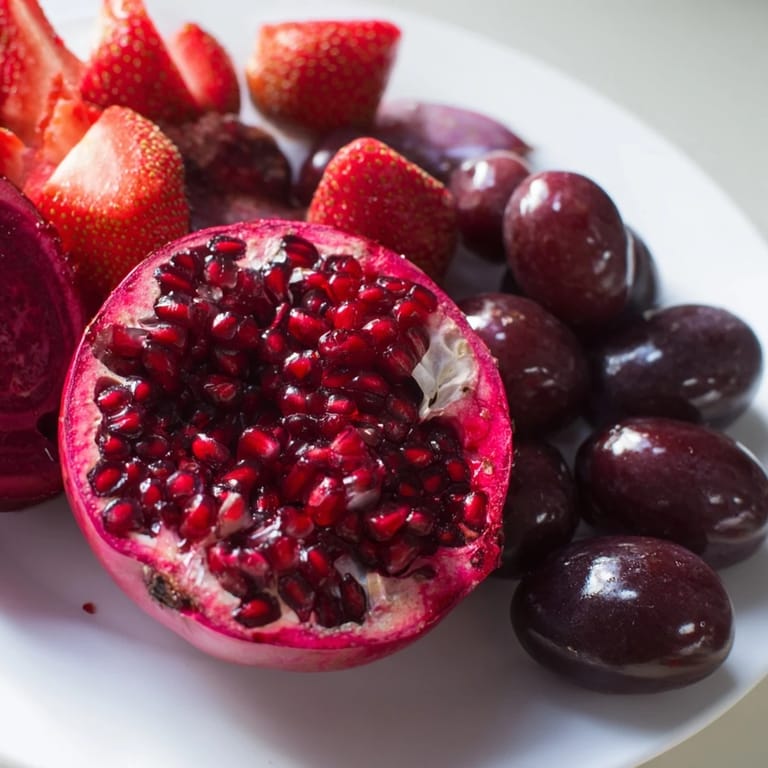
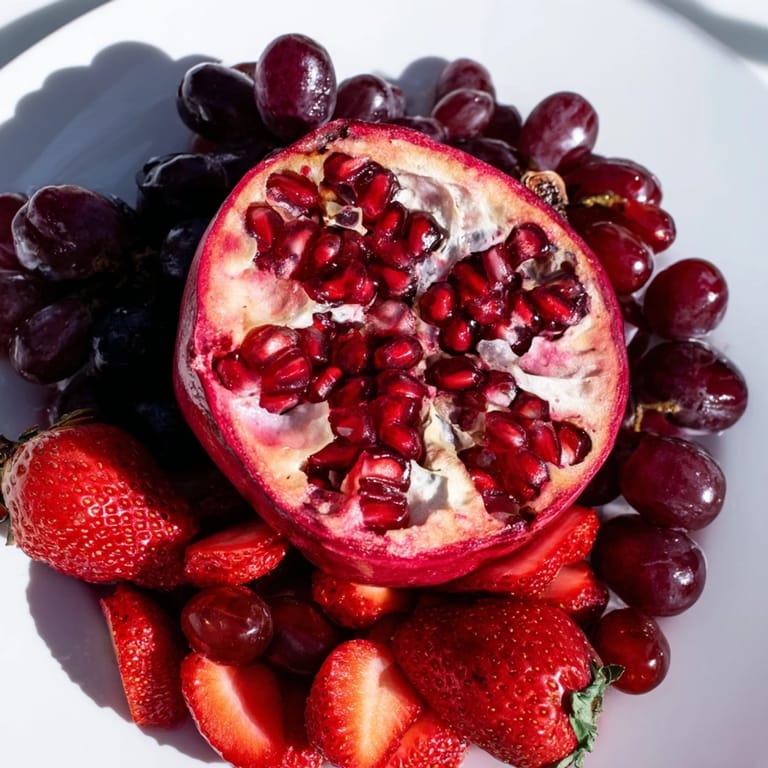
Save I was arranging fruit on a platter for a dinner party when my eight-year-old nephew pointed at the pomegranate halves and said they looked like little thrones. That image stuck with me, and suddenly I wanted to build something regal around them—a gradient that flowed like a sunset, moving from deep crimson through blush tones to the palest pink. What started as a practical appetizer became this moment where the fruit itself became the art, and I realized people would talk about how it looked long before they tasted it.
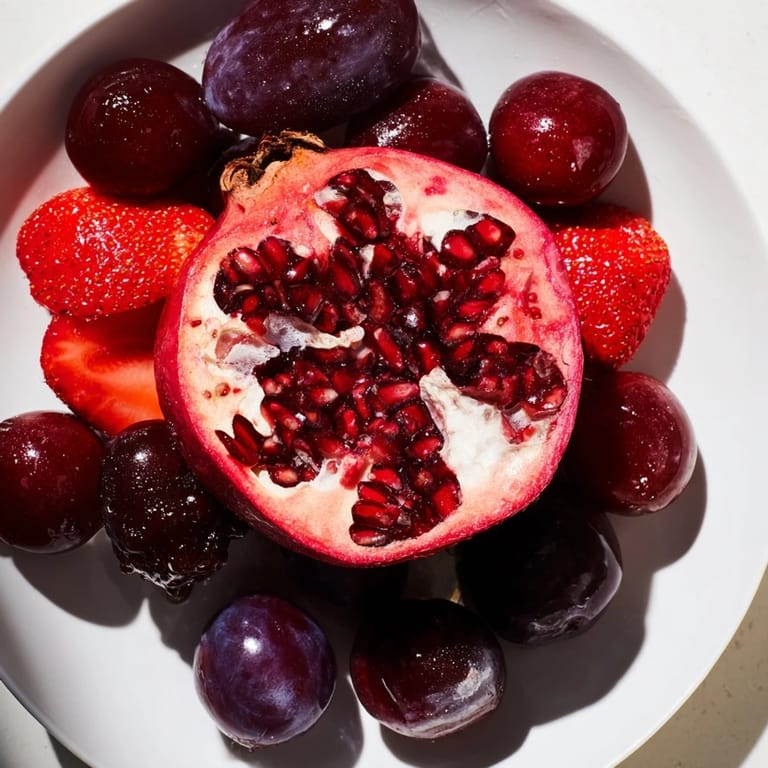
I made this platter for my sister's baby shower on a sweltering July afternoon, and someone asked if I'd bought it from a catering company. The pomegranate center caught the light streaming through the kitchen window, and the reds seemed to glow. After everyone ate, three people asked me for the recipe—not because it was complicated, but because they'd taken photos to remember how beautiful it looked on their phones.
Ingredients
- 1 large pomegranate, halved: This is your centerpiece, so pick one that's heavy for its size and has that deep, jewel-like color; it anchors the whole visual story and gives you something to build around.
- 1 cup dark cherries, pitted: These are your deepest red note, almost burgundy if you find good ones, and they should be the first ring of color closest to the pomegranate.
- 1 cup red grapes: They roll slightly, so nestle them gently between the cherries—they'll catch light and add shine to your deep red section.
- 1 cup strawberries, hulled: Slice these in half lengthwise so you see that gorgeous pink interior; it bridges the gap between red and lighter tones beautifully.
- 1 cup raspberries: These are delicate, so handle them last and place them gently; they mark the transition where things start to soften in color.
- 1 cup watermelon, cubed: The pale pink cubes feel fresh and summery; they're sturdy enough not to bruise, which helps when you're doing final arrangements.
- 1 cup pink grapefruit segments: These have this translucent quality that's almost jewel-like when light passes through them.
- 1 cup dragon fruit, cubed: The pale pink flesh with those tiny black seeds gives you texture that photographs incredibly well.
- 1 cup apple slices (pink or blush varieties): Use a mandoline if you're confident, but a sharp knife works too; thin slices look more refined and let light through them.
- 1 cup pear slices: These go on the outer edge where they're the palest, almost white element that makes everything else look deeper and more saturated by contrast.
- Fresh mint leaves and edible rose petals (optional): These aren't essential, but if you use them, scatter them at the very end like you're adding the final brushstrokes to a painting.
Tired of Takeout? 🥡
Get 10 meals you can make faster than delivery arrives. Seriously.
One email. No spam. Unsubscribe anytime.
Instructions
- Set your stage:
- Place that pomegranate halves cut-side up in the absolute center of your platter—step back and look at it from above before you add anything else. The whole arrangement flows outward from this moment, so make sure it feels centered and intentional.
- Build your deepest ring:
- Arrange the dark cherries and red grapes in a crescent moon around the pomegranate, letting them nestle close but not touching. You're creating a frame here, so think about spacing and overlapping slightly for depth.
- Transition to pink:
- Place your strawberry halves next, then the raspberries, creating a band of color that moves from deep red toward blush tones. This is where the gradient really starts to reveal itself, so take your time and step back between adding colors to check your progress.
- Move toward pale:
- Layer the watermelon cubes and grapefruit segments in the next ring, letting the colors flow naturally into one another. The watermelon should feel like you're moving from warm to cool tones, a visual reset as you spiral outward.
- Frame with the palest fruits:
- Finish with dragon fruit, apple slices, and pears at the outer edge, using them like a border that makes everything toward the center feel more vibrant. This outer ring is your safety net—if your color transition isn't perfect, pale fruit at the edges makes it look intentional.
- Final touches and serving:
- Scatter mint leaves and rose petals if you're using them, then either serve immediately or cover loosely and refrigerate until your guests arrive. The fruit stays fresh and gorgeous for a few hours, and that moment of uncovering it at the table is worth the wait.
 Save
Save My friend's grandmother watched me arrange this and didn't say anything for a long moment, then told me it reminded her of the sunset from her porch in Portugal forty years ago. She had a piece of melon, and we sat together talking about color and memory and why certain things stick with us. That's when I understood this platter was never really just about fruit.
The Color Theory Behind the Beauty
There's something almost meditative about arranging fruits in a color gradient because you're not just making food, you're working with light and perception. Red fruits next to pink fruits make the pink look lighter than it actually is, and pale fruits at the edges make everything toward the center pop. I started noticing this principle in everything—how painters arrange colors, how gardens are designed, how even sunsets work. Understanding that you're using optical illusions makes the whole arrangement feel less random and more intentional, like you're revealing something true about how human eyes actually see.
Seasonal Swaps That Keep Things Fresh
Summer demands watermelon and stone fruits, winter begs for pomegranate and citrus, but spring is where you get creative with berries at their peak. I've rotated between red currants, lychees, and even thin-sliced radishes when I wanted something unexpectedly striking. The rule isn't the specific fruit—it's maintaining that color flow from deep to light, so you can build this platter almost any time of year with whatever's at its best. The arrangement technique is more important than the exact ingredients, which is why this becomes a different dish every season yet somehow always feels like itself.
Serving and Pairing Moments
This works best at a party where people can graze and make their own decisions about what to eat, rather than plated individually. I've served it before sparkling rosé, with dessert, alongside cheese, and even as a shocking addition to a brunch spread. Each pairing shifted the whole feeling—elegant with champagne, casual at brunch, almost romantic as a pre-dinner moment. The best version I ever made was at a potluck where someone brought homemade whipped yogurt and we drizzled it over pieces, turning the platter into something soft and creamy against the crisp fruit.
- Keep your platter at cool room temperature or lightly chilled—not ice-cold, where the flavors go muted.
- Have small plates and forks nearby so people can eat standing up without juice running down their hands.
- If you're making this more than a few hours ahead, keep the apple and pear slices separate in lemon juice until the last moment.
 Save
Save This platter taught me that food doesn't always have to be complicated to feel special—sometimes the simplest presentations hit harder than anything with ten steps and rare ingredients. It's become my go-to when I want to feel generous and creative without stress, and somehow that ease translates into something people remember.
Recipe FAQs
- → How do I prevent apple and pear slices from browning?
Lightly drizzle lime juice over apple and pear slices to slow oxidation and keep them looking fresh.
- → Can I substitute any fruits in the platter?
Yes, seasonal fruits like red currants, pomegranate seeds, lychees, or peaches make excellent alternatives to maintain color and flavor variety.
- → What is the best way to arrange fruits for visual impact?
Layer fruits in overlapping crescents around the pomegranate, moving from deep reds to pale pinks and whites for a smooth gradient effect.
- → Are garnishes necessary for this fruit arrangement?
Garnishes like fresh mint leaves and edible rose petals add aroma and vibrant accents but are optional based on preference.
- → What tools are recommended for preparing this platter?
A sharp paring knife, cutting board, large serving platter, and small bowls for organizing fruits help ensure a clean, precise arrangement.