 Save
Save There's something about the smell of lemon and capers hitting hot oil that makes you feel like you're cooking in a proper Italian kitchen, even if you're standing in your regular apartment with the same old pan you've had for years. The first time I made chicken piccata, it was a weeknight rescue mission—I had bought chicken on sale, a bottle of white wine I wasn't sure about, and about forty minutes before guests arrived. What started as panic turned into one of those meals that tastes elegant but doesn't demand much of you, which honestly is the dream.
I made this for my partner on a Tuesday when we were both exhausted, and somehow that simple plate of pasta with golden chicken and lemony sauce turned the whole evening around. We sat on the couch eating it straight from bowls, and it felt like the most luxurious thing despite taking less time than ordering delivery.
Ingredients
- Chicken breasts: Buy them boneless and skinless, and don't skip the step of slicing them horizontally—thinner cutlets cook faster and more evenly, and they soak up that beautiful sauce.
- All-purpose flour: Just a light dredge, not a thick coating; you want the chicken to be delicate, not crispy.
- Olive oil and butter: The combination gives you a higher smoke point and better flavor than either alone.
- Garlic: Mince it fresh if you can; jarred garlic won't give you those fragrant, slightly browned bits that make the sauce sing.
- Lemon juice: Squeeze it from fresh lemons, not the bottled stuff—the difference is real and worth those few extra seconds.
- Capers: Rinse them well to cut some of the salt, and don't skip this step even if you think you love salty things.
- Dry white wine: Use something you'd actually drink; it doesn't have to be fancy, but it shouldn't taste like vinegar either.
- Chicken broth: Low-sodium is key because the capers and wine will add salt as the sauce reduces.
- Fresh parsley: Chop it just before serving so it stays bright and doesn't turn dark and sad.
- Pasta: Spaghetti or linguine both work beautifully; save some pasta water because it's the secret to a silky sauce.
Tired of Takeout? 🥡
Get 10 meals you can make faster than delivery arrives. Seriously.
One email. No spam. Unsubscribe anytime.
Instructions
- Get your pasta going:
- Bring a large pot of salted water to a boil and get your pasta cooking according to the package directions. This is your anchor—you want everything else timed so the pasta finishes around the same time as the chicken. Reserve about half a cup of that starchy pasta water before you drain; it's liquid gold for bringing the sauce together.
- Butterfly and season the chicken:
- Lay each chicken breast on your cutting board and slice it horizontally to create two thin cutlets from each breast. Season both sides generously with salt and pepper, then dredge lightly in flour, shaking off the excess so you get a thin, delicate coating instead of a thick crust.
- Sear the chicken until golden:
- Heat olive oil and butter in a large skillet over medium-high heat until it's shimmering and smells nutty. Add the chicken cutlets and let them sit for 3 to 4 minutes without moving them around—this is how you get that golden, slightly crispy exterior. Flip and cook the other side for another 3 to 4 minutes until they're cooked through. Transfer to a plate and loosely tent with foil.
- Build the sauce:
- In the same skillet, add minced garlic and let it toast for about 30 seconds until fragrant. Pour in the white wine and scrape the bottom of the pan with a wooden spoon, loosening all those delicious browned bits. Add lemon juice, drained capers, and chicken broth, then let it simmer for 2 to 3 minutes until it's slightly reduced and the flavors are mingling.
- Make it glossy and rich:
- Lower the heat and whisk in the butter a little at a time until it's melted and the sauce looks silky and cohesive. Return the chicken to the skillet and let it warm through while you spoon that sauce over the cutlets.
- Bring it all together:
- Add the drained pasta directly to the skillet and gently toss everything together, adding splashes of reserved pasta water if the sauce seems too thick. You want it to coat the pasta like a light, glossy blanket, not pool at the bottom.
- Plate and serve:
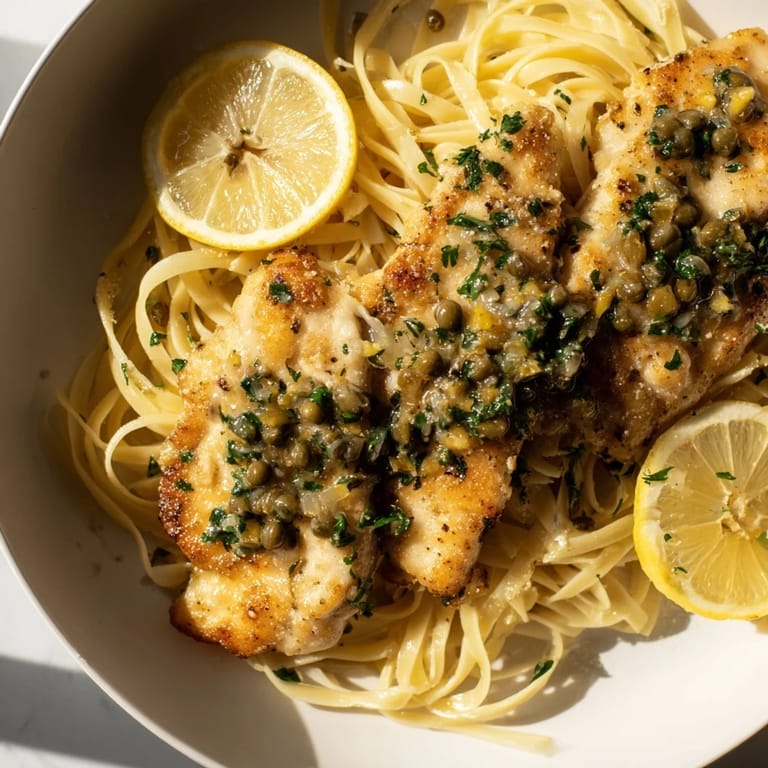
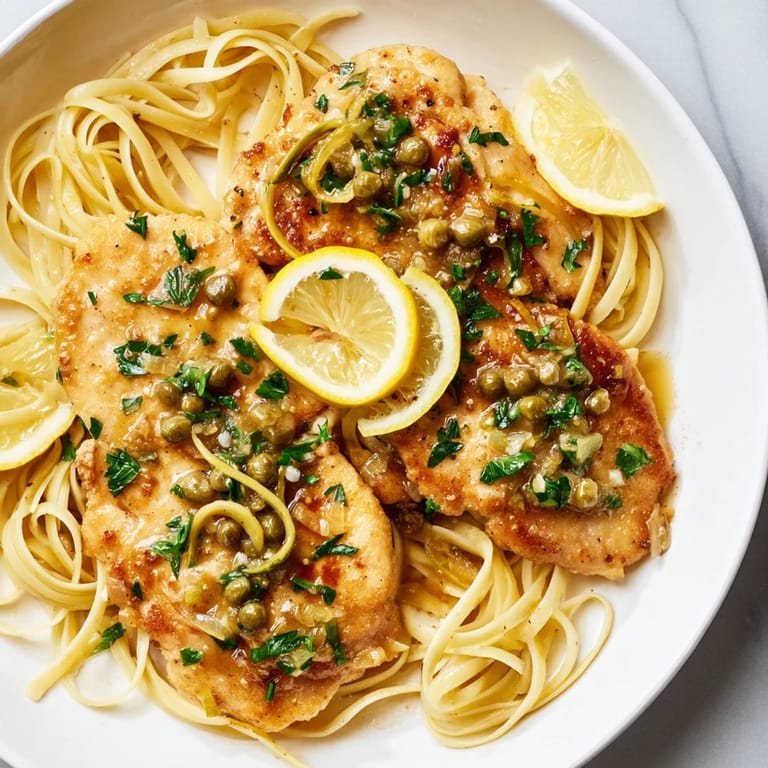
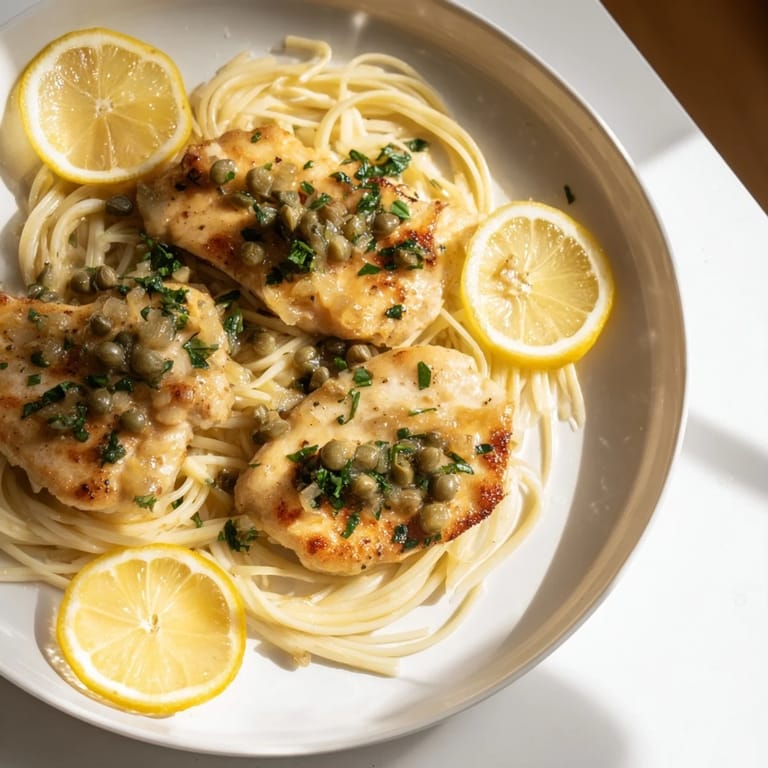
- Divide the pasta among four bowls or plates, top each with a chicken cutlet, and spoon extra sauce over everything. Finish with fresh parsley and thin lemon slices if you want it to look as good as it tastes.
 Save
Save There was a moment when I plated this for the first time that my mom walked into the kitchen and actually stopped to smell it. She didn't say much, just nodded and asked when dinner was ready—and that small moment of approval, over something I'd made in less than half an hour, felt like winning something.
Why This Works as a Weeknight Dish
The beauty of piccata is that every component is designed to cook fast without sacrificing flavor. The thin chicken cutlets mean you're not waiting for thick breasts to cook through, the sauce comes together while you're finishing the pasta, and there's no long simmering or resting time involved. It's the kind of cooking that feels active and engaging without being stressful, which is exactly what you need on a Tuesday night.
Making It Your Own
Once you understand the bones of this recipe, you can play with it. Some people swear by chicken broth instead of wine, which gives you a lighter, less acidic sauce. Others add a splash of heavy cream at the very end, which sounds indulgent but changes the whole character of the dish. I've made versions with artichoke hearts instead of capers, or added a handful of spinach right at the end, and each one feels different but equally right.
The Sauce is Everything
Piccata lives or dies by its sauce, and the secret is understanding that you're building layers of flavor rather than just mixing ingredients together. The wine needs to reduce slightly to lose its harsh edges, the lemon needs to be fresh and bright, the capers need to be rinsed so they add salt and briny flavor without overwhelming everything else, and the butter at the end is what makes it all feel luxurious and cohesive. It sounds fussy when you read it, but it's just standing at the stove and paying attention for about ten minutes.
- Taste the sauce as you go and adjust the lemon juice and salt until it feels balanced to you.
- If your sauce breaks or looks separated, whisk in a tablespoon of cold butter and it usually comes back together.
- Make extra sauce on purpose—it's even better the next day spooned over toast or leftover chicken.
 Save
Save This is the kind of recipe that becomes a regular rotation not because it's complicated, but because it proves that simple, quick cooking can still feel special. Make it once and you'll know it by heart.
Recipe FAQs
- → What type of pasta works best for this dish?
Spaghetti or linguine are traditional choices that complement the light sauce well. Angel hair pasta can also be used for a delicate texture.
- → Can I substitute the wine in the sauce?
Yes, chicken broth can be used instead of white wine for a milder flavor while maintaining the sauce’s richness.
- → How can I ensure the chicken remains tender?
Slice the chicken breasts thinly and season before lightly dredging in flour. Cook over medium-high heat until golden but not overdone to keep them juicy.
- → Is it necessary to reserve pasta water?
Yes, reserving some pasta water helps loosen the sauce and coat the pasta evenly for a silky finish.
- → What garnish enhances the flavors?
Fresh parsley and lemon slices add brightness and a fresh, herbal touch that balances the richness of the sauce.