 Save
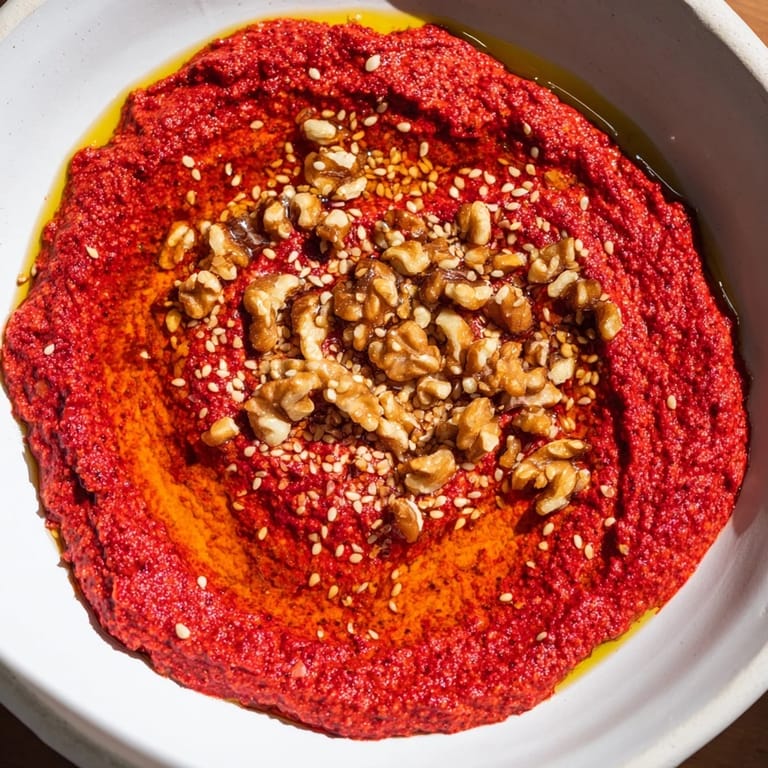
Save I first tasted muhammara at a sprawling family dinner in Beirut, where it arrived in a shallow ceramic bowl with a glossy swirl of olive oil on top, flecked with pomegranate seeds that caught the evening light. The moment I dipped warm pita into that vibrant red dip, something clicked—the walnuts gave it a subtle earthiness, the pomegranate molasses added a bright tang that made my mouth wake up, and there was this deep smokiness that suggested flame had kissed those peppers. Now when I make it at home, the kitchen fills with that same roasted pepper perfume, and suddenly people gather around before anything else is ready.
Last winter, I brought this to a potluck where someone had already set out store-bought hummus and baba ghanoush, and honestly, I wasn't sure how it would hold up. But within twenty minutes, the muhammara bowl was nearly empty while those other spreads barely had a dent in them—I watched a friend take a third helping and just smile without saying anything, which told me everything.
Ingredients
- Red bell peppers (3 large): The foundation of everything—roasting them softens their skin and brings out natural sweetness, and the slight charring adds that signature smoky depth.
- Walnuts (1 cup, lightly toasted): Toasting them yourself wakes up their flavor and prevents the dip from tasting flat or stale; don't skip this step.
- Garlic cloves (2): Raw garlic works here because it's balanced by the other bold flavors, but use less if you're sensitive to garlic's bite.
- Breadcrumbs (2 tbsp): This is the secret that gives muhammara its creamy body without needing dairy or extra oil—it absorbs moisture and keeps everything silky.
- Pomegranate molasses (2 tbsp): This is non-negotiable; it's what makes muhammara taste like itself, bringing an honest tartness that bottled lemon juice can't quite match.
- Smoked paprika and Aleppo pepper (1/2 tsp each): These two spices do the heavy lifting—smoked paprika adds the roasty warmth, Aleppo pepper gives gentle heat with its fruity edge, not sharp aggressiveness.
- Extra virgin olive oil (2 tbsp, plus more for drizzling): Quality matters here since you taste it so directly; use something you'd actually want to eat by itself.
- Sesame seeds (1 tbsp, toasted, optional): The toasted finish adds texture and a subtle nuttiness that echoes the walnuts without announcing itself.
- Cumin, lemon juice, salt, and black pepper: These are the fine-tuners that bring everything into focus once the main flavors are in place.
Tired of Takeout? 🥡
Get 10 meals you can make faster than delivery arrives. Seriously.
One email. No spam. Unsubscribe anytime.
Instructions
- Roast the peppers until they surrender:
- Preheat your oven to 220°C (425°F), lay the peppers on a baking tray, and let them roast for 20–25 minutes, turning them once or twice so they char evenly all over. You're looking for blistered, blackened patches that smell intensely roasty and sweet—that's when you know they're ready.
- Steam and peel with patience:
- Transfer the hot peppers to a bowl, cover it tightly (steam is your ally here), and let them rest for 10 minutes so the skins loosen. Once cooled slightly, peel away the charred skin under cool running water if it helps, remove the seeds and stems, and don't worry if some small bits of char remain—they add flavor.
- Build the base in the food processor:
- Combine the roasted peppers, walnuts, garlic, breadcrumbs, cumin, smoked paprika, Aleppo pepper, salt, and black pepper in your food processor, then pulse until the mixture looks coarse and textured, with walnuts still visible in small pieces. This is not the time to over-blend; you want some personality in the texture.
- Finish with liquid and seasonings:
- Pour in the pomegranate molasses, olive oil, and lemon juice, then process until smooth but still holding a bit of texture—think creamy pâté, not baby food. Taste as you go, and adjust the pomegranate molasses if you want more tang, lemon if it needs brightness, or more salt if it feels muted.
- Present it with intention:
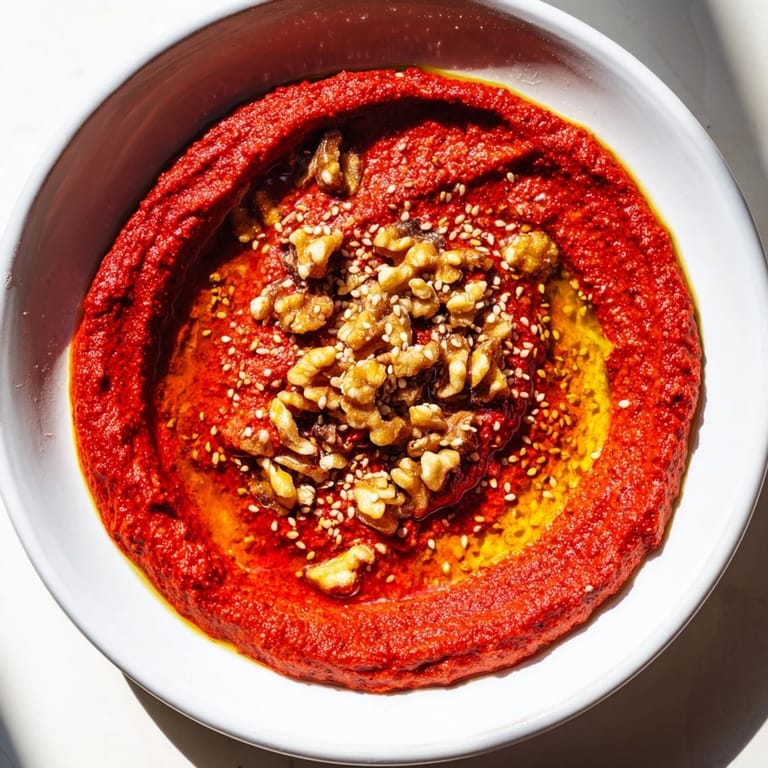
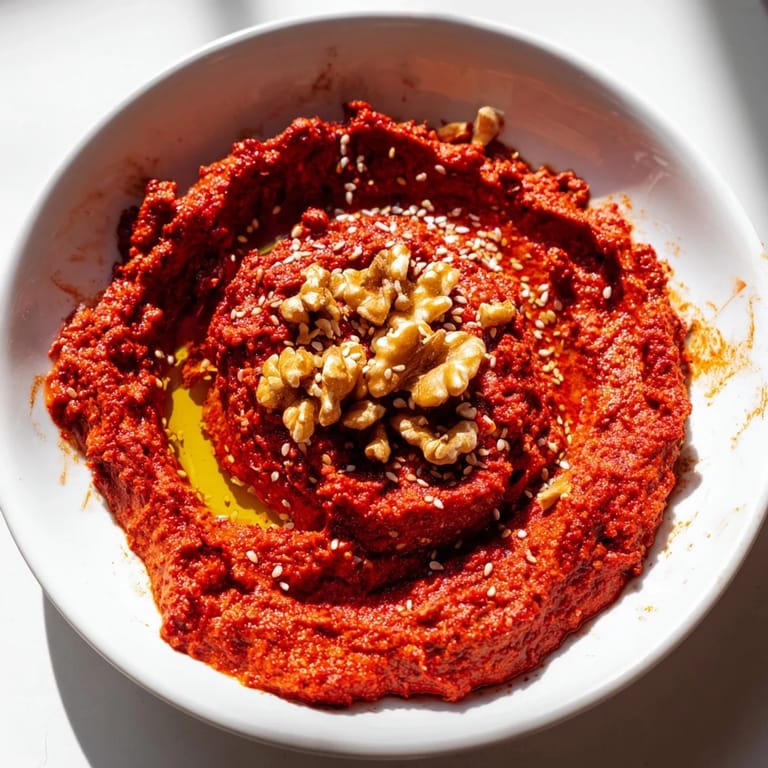
- Spoon the muhammara into a shallow bowl, create a gentle swirl with the back of the spoon, drizzle generously with olive oil, and scatter the toasted sesame seeds across the top. Serve at room temperature with warm pita, flatbreads, crackers, or crisp vegetable sticks for dipping.
 Save
Save My favorite memory of this dip happened on an ordinary Tuesday evening when my neighbor stopped by unexpectedly, and instead of panicking about having nothing to serve, I pulled out a jar of muhammara I'd made the weekend before, warmed some pita, and suddenly we had this impromptu feast that felt both effortless and meaningful. It reminded me that the best food isn't always the most elaborate—sometimes it's just something honest and delicious that's already waiting in your fridge.
Why Roasting Transforms Everything
The magic of muhammara lives in the roasting step, where raw peppers become something entirely different—the heat breaks down their cellular walls, concentrating their sugars and deepening their flavor in a way that no raw pepper could achieve. When I first tried making it with canned roasted peppers out of sheer convenience, the result was passable but hollow, missing that smoky intensity that makes people stop mid-conversation to ask what they're eating. The fifteen minutes it takes to roast fresh peppers properly is the difference between a decent dip and something genuinely memorable.
The Role of Pomegranate Molasses
Pomegranate molasses is the ingredient that confused me most when I first encountered muhammara recipes—I kept thinking it would be cloyingly sweet, but it's actually the opposite. It's tart and concentrated, with a subtle floral note that plays against the walnuts and roasted peppers like an unexpected harmony in a song you thought you knew. Once I understood that this wasn't a sweetener but a flavor balancer, the whole dip clicked into place, and now I always have a bottle on hand.
Making It Your Own
The foundation of muhammara is so strong that it welcomes small variations without losing its identity—some people add a pinch of ground coriander, others include a touch of white vinegar for extra brightness, and I've had versions with toasted pine nuts instead of walnuts that were equally stunning. The beauty is that once you understand why each component matters, you can adjust the heat, tweak the tang, or introduce a complementary spice without the dish feeling broken.
- If you can't find pomegranate molasses, a combination of lemon juice and a touch of honey can approximate the flavor, though it won't be identical.
- For a grainier, more rustic texture, pulse the mixture less—for something smoother and almost spreadable, process it longer.
- Muhammara stays fresh in the refrigerator for up to five days, making it perfect for meal prep or unexpected guests.
 Save
Save Muhammara has become my go-to when I want to feel like a generous host without spending hours in the kitchen, and it never fails to make people feel seen and cared for. Every time someone asks for the recipe and I explain the roasting, the pomegranate molasses, and the toasted walnuts, I see their face light up with that familiar spark of kitchen curiosity.
Recipe FAQs
- → How do I roast red peppers for this dish?
Place whole red bell peppers on a baking tray and roast in a 220°C oven for 20–25 minutes until skins are charred and blistered. Let them steam covered for 10 minutes before peeling.
- → Can I adjust the spiciness?
Yes, increase or decrease Aleppo pepper or red chili flakes to modify the heat according to your taste preferences.
- → What alternatives exist for walnuts?
You can experiment with other toasted nuts like almonds or pine nuts, but walnuts provide the characteristic rich flavor and texture.
- → Is it necessary to use pomegranate molasses?
Pomegranate molasses imparts a unique tangy sweetness; however, alternatives like a mix of lemon juice and honey can provide similar notes.
- → How should this dish be served?
Serve chilled or at room temperature with fresh pita bread, crackers, or vegetable sticks as part of an appetizer or mezze spread.
- → How long can it be stored?
Store in an airtight container in the refrigerator for up to 5 days to retain freshness and flavor.