 Save
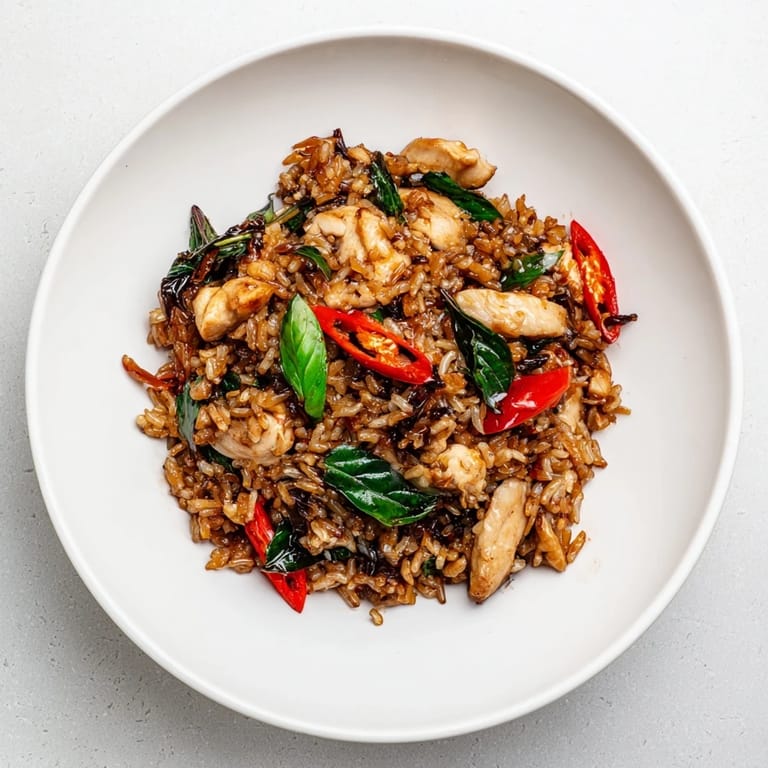
Save The scent hit me before I even walked into the kitchen—garlic sizzling sharp and hot, then that unmistakable sweetness of holy basil hitting the wok. My neighbor, who'd grown up in Bangkok, was teaching me how to make proper fried rice, and I remember her saying, "If your basil doesn't smell like licorice and pepper at the same time, it's not the right one." She tossed everything with a confidence I didn't have yet, and when she pulled the wok off the heat and folded in those bright green leaves, I understood why this dish never tastes the same anywhere else.
I made this for a group of friends on a rainy Tuesday night when everyone was too tired to go out. The kitchen filled with steam and the smell of fish sauce caramelizing, and by the time I plated it with lime wedges and cucumber, the conversation had shifted from complaints about the weather to who was getting seconds. One friend, who usually ordered pad thai every time, looked up and said, "This is the one I should've been ordering." I've made it a dozen times since, and it still feels like a small victory every time the basil wilts into the rice.
Ingredients
- Boneless, skinless chicken thighs or breasts: Thighs stay juicier and handle high heat better, but breasts work if you slice them thin and don't overcook.
- Cooked jasmine rice: Day-old rice is drier and separates easily in the wok without turning mushy, which is the key to getting that slightly crispy texture.
- Onion: Adds a mild sweetness that balances the salty sauces and rounds out the flavor.
- Garlic: The foundation of the dish, it should sizzle fast and release its fragrance without burning.
- Thai red chilies: Small but fierce, they bring heat and a fruity sharpness that's different from regular chili flakes.
- Holy basil leaves: This is the star herb, peppery and aromatic, and it wilts in seconds so it goes in last.
- Red bell pepper: Optional, but it adds color and a bit of crunch if you like more vegetables in the mix.
- Soy sauce: Brings saltiness and depth, coating every grain of rice with umami.
- Oyster sauce: Adds a subtle sweetness and a glossy finish that makes the rice look as good as it tastes.
- Fish sauce: The secret ingredient that gives Thai food its savory, funky backbone.
- Sugar: Just a touch to balance the salty and spicy elements.
- White pepper: More floral and less sharp than black pepper, it's traditional in Thai cooking.
- Vegetable oil: High smoke point oil is essential for stir-frying at the heat you need.
- Lime wedges: A squeeze of lime at the end brightens everything and cuts through the richness.
- Sliced cucumber: Cool, crisp, and refreshing against the heat of the rice.
Tired of Takeout? 🥡
Get 10 meals you can make faster than delivery arrives. Seriously.
One email. No spam. Unsubscribe anytime.
Instructions
- Get the wok screaming hot:
- Heat your wok or large skillet over high heat until a drop of water evaporates instantly, then add the oil and swirl it around. This is when the magic starts, and your kitchen will smell like a street food stall.
- Bloom the aromatics:
- Toss in the garlic and chilies, stirring constantly for about 30 seconds until they're golden and fragrant but not burnt. Move fast here.
- Cook the chicken:
- Add the sliced chicken and spread it out in the wok, letting it sear for a moment before tossing. Cook for 3 to 4 minutes until it's opaque and just cooked through.
- Add the vegetables:
- Stir in the onion and bell pepper if you're using it, and cook for another 2 minutes until they soften slightly but still have some bite.
- Break up the rice:
- Add the cooked jasmine rice, using your spatula to break up any clumps and spread it evenly across the wok. Let it sit for a moment to get a little crispy on the bottom.
- Season and toss:
- Pour in the soy sauce, oyster sauce, fish sauce, sugar, and white pepper, then toss everything together until the rice is evenly coated and heated through. The rice should start to take on a golden color.
- Fold in the basil:
- Remove the wok from the heat and fold in the holy basil leaves, stirring just until they wilt. The residual heat is enough, and this keeps them bright and aromatic.
- Serve immediately:
- Plate the fried rice and garnish with lime wedges and sliced cucumber. Serve it hot, and don't skip the lime squeeze.
 Save
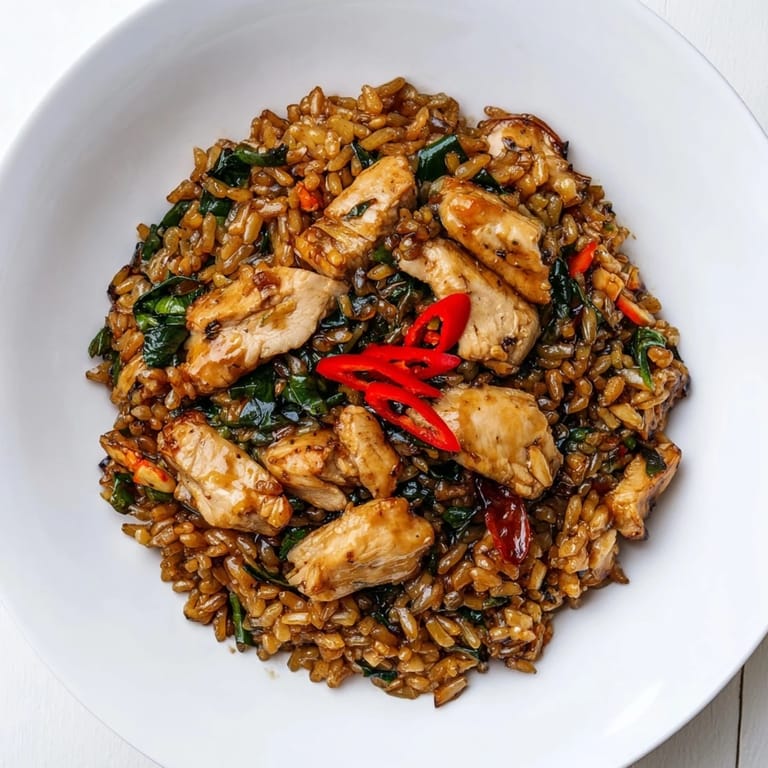
Save There was one night I made this after a long week, and I didn't have holy basil, so I used regular basil instead. It was fine, good even, but it wasn't the same. The next day I drove to three different stores until I found holy basil at an Asian market, and the woman at the checkout smiled and said, "Now you know." I've kept a plant on my windowsill ever since, and every time I pick a handful of leaves, I think about how some ingredients aren't just swaps, they're the whole point.
Choosing Your Protein
Chicken thighs are my first choice because they stay tender even when the wok is blazing hot, but I've used shrimp when I wanted something lighter and faster. Shrimp only needs about 2 minutes, so you add it after the garlic and pull it out before the rice goes in, then toss it back at the end. Tofu works beautifully if you press it well and cut it into small cubes, and pork, especially ground pork, gives you a richer, almost meaty-sweet flavor that clings to every grain of rice.
Getting the Rice Right
Day-old rice isn't just a suggestion, it's the difference between fried rice and a sticky, sad pile of mush. When rice sits in the fridge overnight, it dries out just enough to separate easily in the wok and develop those crispy, golden edges. If you're in a pinch and only have fresh rice, spread it out on a baking sheet and let it cool completely, maybe even pop it in the fridge for an hour. It's not perfect, but it's better than trying to fry wet rice.
Serving and Storing
This dish is best eaten right away, straight from the wok while the basil is still fragrant and the rice has that slight crisp. If you do have leftovers, store them in an airtight container in the fridge for up to two days, but know that the basil will darken and lose some of its punch. Reheat it in a hot skillet with a splash of oil, not the microwave, so you can bring back a bit of that texture.
- Add a fried egg on top for a richer, more filling meal.
- Serve it with a side of Thai cucumber salad for contrast.
- If you like it spicier, drizzle on some chili oil or Sriracha at the table.
 Save
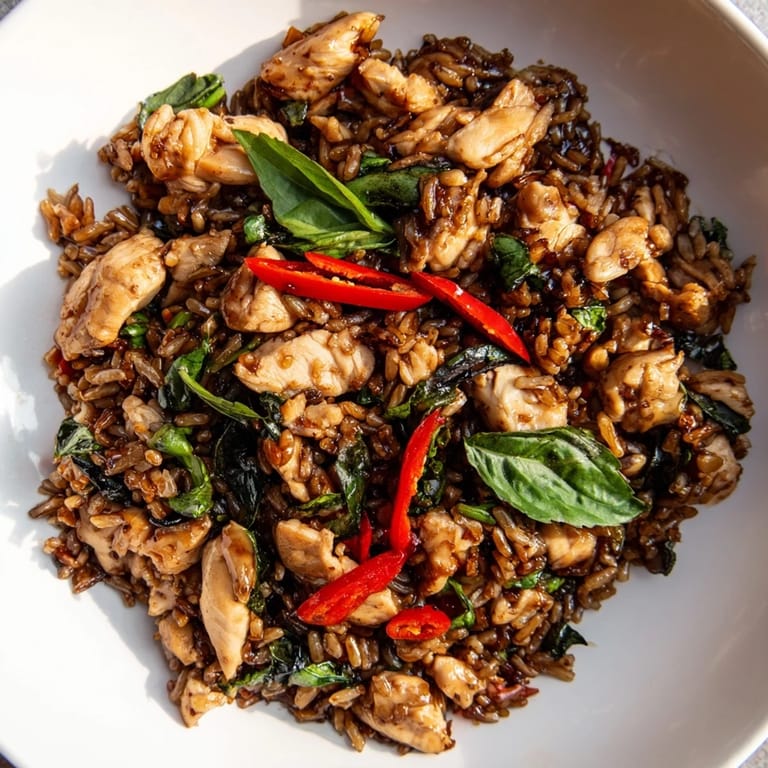
Save This is the kind of dish that makes you feel capable in the kitchen, even on a weeknight when you're too tired to think. Once you've made it a few times, it becomes muscle memory, and you'll start craving it the way I do—fast, fragrant, and just a little bit spicy.
Recipe FAQs
- → Can I use fresh basil instead of holy basil?
Thai basil is the closest substitute if holy basil is unavailable. Fresh basil will work but offers different flavor notes. Add it at the end to avoid wilting and maintain its aromatic qualities.
- → Why is day-old rice recommended?
Day-old rice has lower moisture content, preventing the fried rice from becoming mushy or clumpy. Fresh rice can absorb too much sauce. If using freshly cooked rice, spread it on a plate to cool and dry slightly first.
- → How can I adjust the spice level?
Control heat by adjusting the amount of Thai chilies. Remove seeds for milder flavor or add chili oil drizzled before serving for extra kick. Taste as you cook and adjust seasonings to your preference.
- → What proteins can I substitute for chicken?
Shrimp, tofu, pork, or beef work excellently. Adjust cooking times accordingly—shrimp cooks faster (1-2 minutes), while pork or beef may need slightly longer. Tofu should be pressed and cubed before cooking.
- → Is this dish suitable for meal prep?
Yes, prepare components in advance and store separately. Keep cooked rice, marinated chicken, and chopped vegetables in containers. Assemble and stir-fry fresh when ready to serve for optimal texture and flavor.
- → What should I serve alongside this dish?
Serve with lime wedges and cucumber as suggested. Fresh spring rolls, a light salad, or steamed vegetables complement the rich flavors. A cold beverage balances the spice and heat from cooking.