 Save
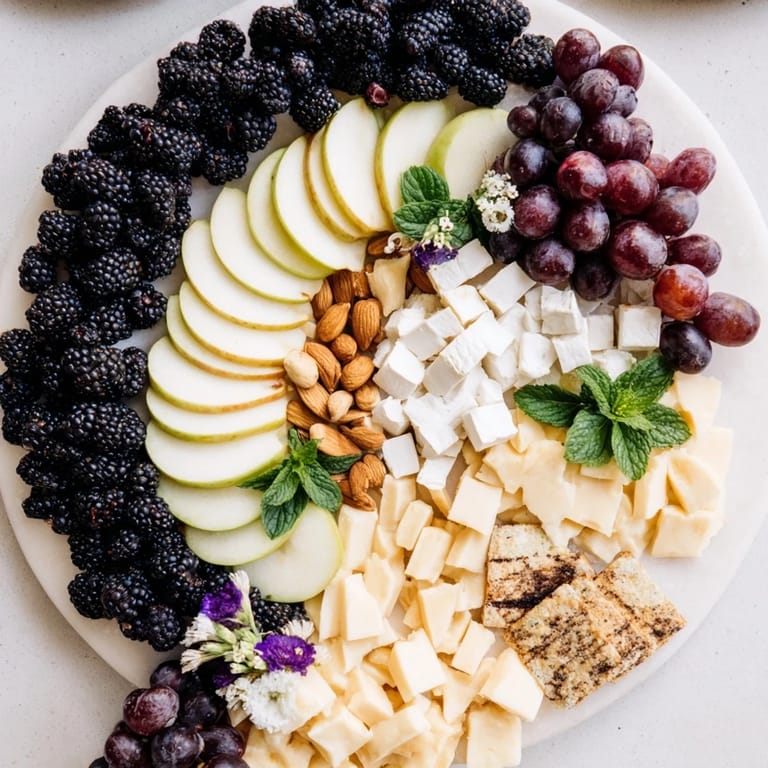
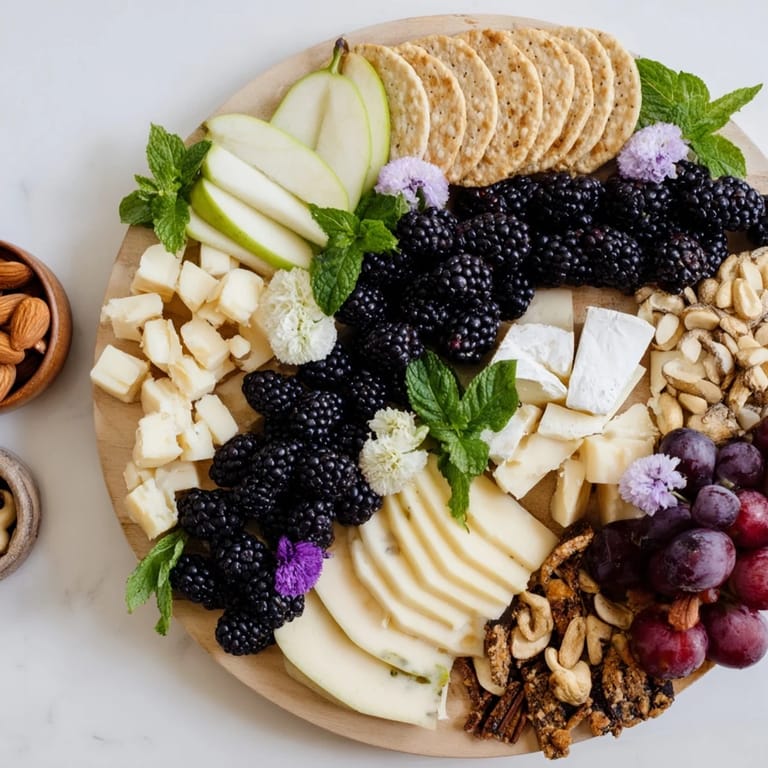
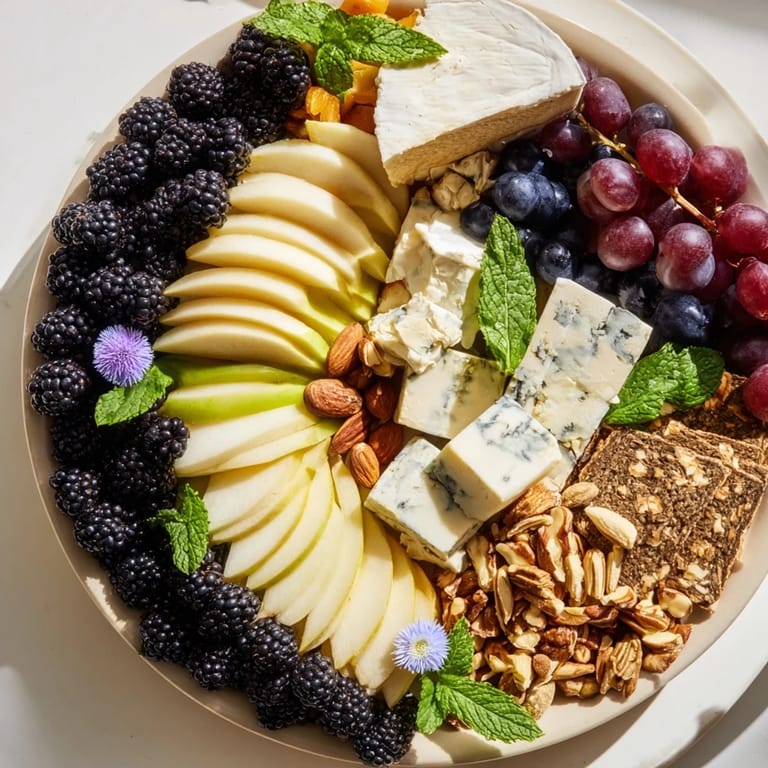
Save I discovered the magic of a cheese board by accident one afternoon when I was supposed to be planning a formal appetizer spread but instead found myself arranging whatever interesting cheeses and fruits I had on hand. My daughter walked by, stopped, and asked why I'd split everything down the middle like that—and suddenly the whole board made sense. The yin-yang balance isn't just visually stunning; it's a philosophy you can actually taste, where opposing flavors complete each other rather than compete.
The first time I made this for a wine tasting, a guest commented that the board felt almost meditative—the way the colors mirrored each other made her slow down and really taste instead of just nibble. That moment taught me that presentation isn't vanity; it's an invitation to be present with your food.
Ingredients
- Fresh blackberries, 150 g: These create the dividing line and should be arranged gently to avoid crushing—they're structural as much as they are decorative.
- Goat cheese, 100 g: The tanginess of chèvre balances beautifully against sweet pear, so resist the urge to skip it.
- Young Manchego or white cheddar, 100 g: Cubed rather than sliced, these hold their shape and texture better on the light side.
- Pear, 1 small: Slice it no more than ten minutes before serving or it'll oxidize and lose its appeal.
- White grapes, 50 g: They echo the brightness of the light cheeses without overwhelming the palate.
- Raw almonds, 30 g: Leave them raw—roasting makes them compete with the hazelnuts on the dark side.
- Rice crackers or light-colored crackers, 30 g: These should be sturdy enough not to crack under soft cheese but delicate enough to feel refined.
- Aged blue cheese, 100 g: Its funk is the heart of the dark side, so choose one with good veining.
- Aged Gouda or sharp cheddar, 100 g: The depth here balances the bright acidity of the plum.
- Black plum, 1 small: Ripe but not soft—you want it to hold its shape like the pear does.
- Red or black grapes, 50 g: They should feel substantial and juicy, not mealy.
- Roasted hazelnuts, 30 g: The toasted flavor adds richness that mirrors the aged cheeses.
- Dark rye crisps or seeded crackers, 30 g: Look for ones with visible seeds for textural contrast.
- Fresh mint leaves and edible flowers: These are the finishing touch that transforms arrangement into art.
Tired of Takeout? 🥡
Get 10 meals you can make faster than delivery arrives. Seriously.
One email. No spam. Unsubscribe anytime.
Instructions
- Set Your Stage:
- Choose a large round board—the shape itself reinforces the yin-yang concept. Make sure your work surface is clear and your ingredients are prepped before you start arranging, because once you begin the visual magic takes over and you won't want to pause.
- Draw the Line:
- Arrange your blackberries in a flowing curve across the center, slightly off-center if it feels right—perfectionism will make this look stiff. Let them nestle together naturally; a few gaps actually improve the overall composition.
- Build the Light Side:
- Place the goat cheese slices and Manchego cubes first to anchor your composition, then fill spaces with pear, grapes, and almonds. The crackers go last around the outer edge, creating a frame that invites people to start eating.
- Anchor the Dark Side:
- Mirror the light side's arrangement with your darker ingredients—this symmetry is what makes the board sing. The aged cheeses deserve pride of place, with plum slices, grapes, and hazelnuts supporting their deeper flavors.
- Finish with Purpose:
- Scatter mint leaves across both sides for a whisper of freshness, and add edible flowers if you have them. Step back, take a breath, and adjust anything that feels unbalanced.
- Serve with Intention:
- Bring it to the table while everything is at its peak freshness, and let your guests discover the harmony themselves rather than explaining it.
 Save
Save Someone once told me that food is conversation without words, and that cheese board proved it. Watching people choose between sides, taste the contrasts, and then understand how they actually balance each other—that was when I realized this wasn't just appetizers anymore.
The Philosophy of Contrast
The yin-yang isn't arbitrary—it's about understanding that opposing flavors don't cancel each other out but instead make each other more interesting. The tang of blue cheese becomes sharper when followed by the sweetness of a grape, and the delicate pear tastes more floral against creamy chèvre. This board teaches that lesson every time someone tastes across the divide.
Timing and Temperature
Pull your cheeses out of the refrigerator about thirty minutes before serving so their flavors can fully develop and their textures soften just enough to be pleasurable. Cold cheese tastes muted and dense; room-temperature cheese reveals all its complexity. If you're serving this at a party, let guests mingle for a bit before bringing the board out so it stays fresh and inviting throughout the evening.
Making It Your Own
The beauty of this recipe is that it's a template, not a prescription. In autumn, try figs instead of plums and add honeycomb to the light side. In spring, swap almonds for pistachios and use fresh berries instead of grapes. The yin-yang structure remains powerful no matter what ingredients you choose, as long as you stay true to the contrast between light and dark.
- Substitute any seasonal fruit or cheese that appeals to you, keeping the light-and-dark balance in mind.
- If someone at your table is allergic to nuts, replace them with dried fruit or seeds without losing the textural interest.
- A drizzle of truffle oil on the dark side or a dot of floral honey on the light side elevates the board without disrupting its elegance.
 Save
Save A cheese board that tells a story about balance is more than just food—it's a moment of pause in a busy gathering. Serve it with intention and let your guests discover the harmony themselves.
Recipe FAQs
- → How can I substitute cheeses for this board?
Feel free to replace cheeses with similar textures or flavors that suit your preference or season, such as swapping goat cheese with cream cheese or aged Gouda with sharp cheddar.
- → What crackers pair best with this arrangement?
Light-colored rice crackers suit the lighter side, while dark rye crisps or seeded crackers complement the darker cheeses and fruits well.
- → Can I prepare this board ahead of time?
Arrange ingredients shortly before serving to maintain freshness, especially fruits and garnishes like mint leaves and edible flowers.
- → What beverages are recommended to serve alongside?
A crisp white wine or a light-bodied red pairs beautifully, enhancing the balance of flavors without overpowering them.
- → Are there options to add sweetness to the board?
Consider adding honeycomb to the lighter side or fig jam to the darker side for a touch of natural sweetness and complexity.