 Save
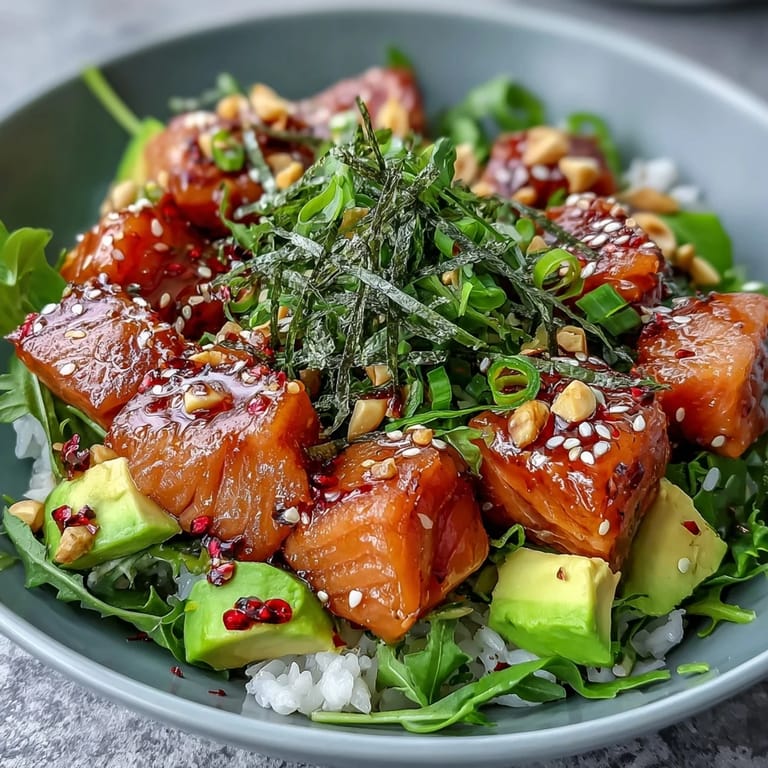
Save My kitchen smelled like toasted sesame oil the afternoon a friend stopped by with a bag of sushi-grade salmon, insisting we turn it into something impressive but quick. We'd both been craving something that felt restaurant-quality yet doable on a weeknight, and that's when this bowl came together—layers of umami, heat, and creaminess all balanced in one gorgeous bowl. It's become my go-to when I want to feel like I've actually cooked something, even though the whole thing comes together faster than ordering takeout.
There was this moment when I was putting together three of these bowls for my partner and their parents, and I realized halfway through that the avocado I'd bought was sitting on the counter looking a little too soft. Instead of panicking, I sliced it anyway and it was actually perfectly creamy, and that's when I understood this dish has built-in grace—minor imperfections actually work in its favor because the bold flavors and textures carry it.
Ingredients
- Fresh salmon fillet, skinless and cubed (250 g): Quality matters here because the fish is the star—look for that deep coral color and ask your fishmonger for sushi-grade if you want extra peace of mind.
- Tamari sauce (2 tbsp): It's less salty than regular soy sauce and has a deeper, almost sweet undertone that makes the whole marinade sing.
- Toasted sesame oil (1 tsp): A little goes a long way; this oil is potent and aromatic, so resist the urge to double it.
- Rice vinegar (1 tsp for marinade, 1 tbsp for rice): The acidity brightens everything and keeps the bowl from feeling heavy.
- Honey or agave syrup (1 tsp): Just enough sweetness to balance the salt and vinegar without tasting dessert-like.
- Cooked sushi rice (200 g or about 1 cup uncooked): Regular rice works if that's what you have, but sushi rice has a slight stickiness that holds the bowl together beautifully.
- Sugar and salt for the rice base: These seasonings turn plain rice into something that actually tastes intentional.
- Ripe avocado (1 large): Slice it just before assembly so it stays creamy and doesn't brown at the edges.
- Roasted peanuts (2 tbsp, chopped): They add an unexpected crunch that plays off the soft salmon and silky avocado.
- Chili oil (1 tbsp): This is your heat and richness—taste as you go because tolerance varies wildly.
- Wasabi paste (1 tsp): A tiny dot packs serious punch; you can always add more but you can't take it back.
- Nori sheets, cucumber, spring onions, sesame seeds: These are the supporting cast that add texture and visual appeal without stealing focus.
- Cilantro or microgreens and lime wedges: The final touches that make it feel complete.
Tired of Takeout? 🥡
Get 10 meals you can make faster than delivery arrives. Seriously.
One email. No spam. Unsubscribe anytime.
Instructions
- Build your marinade:
- Whisk tamari, sesame oil, rice vinegar, and honey in a medium bowl until the honey dissolves completely. The mixture should smell toasty and balanced, not aggressively salty.
- Marinate the salmon:
- Toss the cubed salmon into the marinade and let it sit in the fridge for 10 to 15 minutes—this is just long enough for the flavors to sink in without the acid cooking the fish too much. Don't skip this step even if you're in a hurry.
- Season the rice:
- Mix the warm cooked sushi rice with rice vinegar, sugar, and salt while it's still slightly warm so everything incorporates smoothly. Taste it and adjust—the rice should be bright and slightly tangy.
- Prep your toppings:
- Slice the avocado, chop your peanuts, cut the nori into strips, and slice the cucumber and spring onions. Having everything ready before assembly means your avocado stays fresh and the whole process feels calm instead of rushed.
- Assemble the bowls:
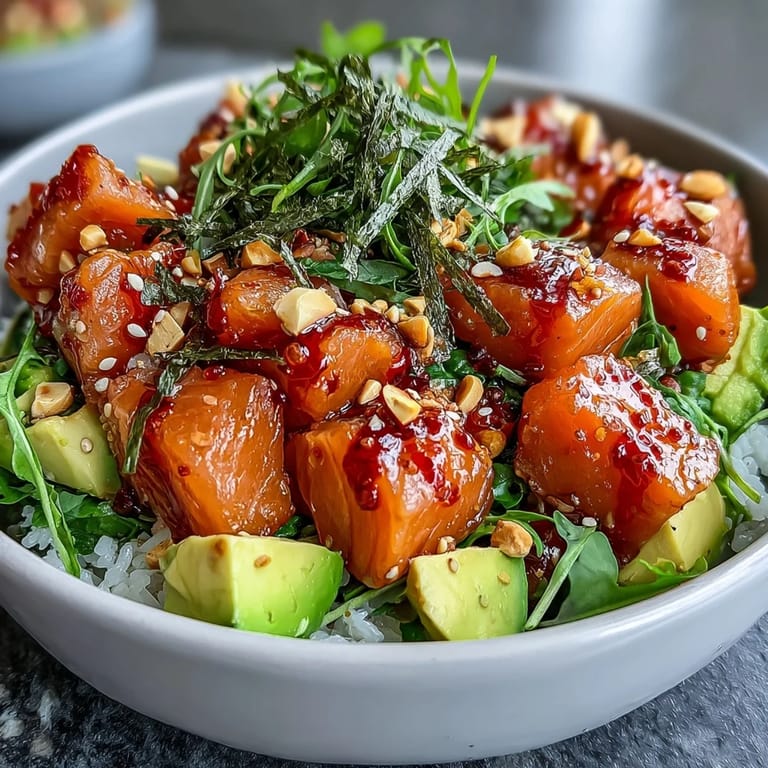
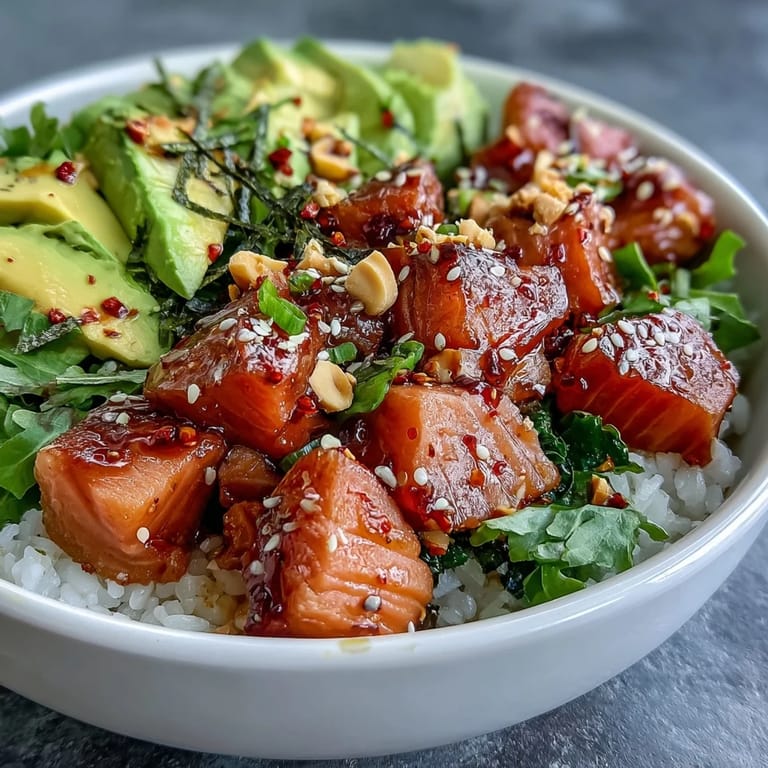
- Divide the seasoned rice between two bowls and arrange the marinated salmon on top, then layer avocado slices, cucumber, and spring onions around it. Think of it like painting—you're creating visual balance as much as flavor balance.
- Add the finishing touches:
- Drizzle chili oil across the top, dot a small amount of wasabi paste in one spot so people can mix it in as they eat, then scatter peanuts, sesame seeds, and nori strips. Garnish with cilantro or microgreens and serve with lime wedges on the side.
 Save
Save The best part about this bowl is watching someone take their first bite and then pause for a second, clearly surprised at how many flavors are happening at once. That moment when their face shifts from casual to genuinely impressed is exactly why I keep making it.
Why Salmon Works Here
Salmon has enough richness and body to stand up to the bold flavors in this bowl without getting overwhelmed. The cubed pieces marinate quickly and stay tender, and honestly, there's something deeply satisfying about a protein that's this good for you but tastes indulgent. If salmon isn't in your budget one week, marinated tofu or even shrimp work beautifully in its place.
The Art of Bowl Balance
This bowl is really about contrast—soft salmon against crunchy peanuts, creamy avocado against spicy chili oil, umami-rich marinade against bright lime. You could eat it with your eyes closed and know exactly what's happening because your mouth is getting a full conversation, not a monologue. The key is not piling everything into one bite but letting each component shine.
Customizing Your Bowl
One of my favorite things about this recipe is how it adapts to whatever you're feeling or whatever your kitchen holds. I've made it with cashews instead of peanuts, added pickled ginger when I had it, swapped in edamame for extra protein, and even tried it with a drizzle of mayo mixed with sriracha. The base is solid enough that experiments actually work.
- For vegetarians, marinated tofu or tempeh absorbs the flavors beautifully and gets an almost meaty texture when cubed.
- If nuts aren't your thing, toasted seeds like sunflower or pumpkin give you the same crunch without the allergen worry.
- Wasabi and chili oil are both optional—this bowl is delicious without them, so adjust based on your heat comfort level.
 Save
Save This bowl became my answer to the question of how to cook something that feels special without spending hours in the kitchen. Every time I make it, I remember that good food doesn't have to be complicated to be memorable.
Recipe FAQs
- → Can I use frozen salmon instead of fresh?
Yes, frozen salmon works well for this bowl. Thaw it completely in the refrigerator overnight, then pat it dry before cutting into cubes and marinating. The texture will be similar to fresh salmon after cooking.
- → What can I substitute for sushi rice?
You can use short-grain white rice, brown rice, or even quinoa as a base. Brown rice adds nuttiness and fiber, while quinoa provides extra protein. Just season whichever grain you choose with the rice vinegar mixture.
- → How spicy is this bowl?
The heat level is easily adjustable. Start with 1 teaspoon each of chili oil and wasabi paste for mild-medium spice. Add more gradually to reach your preferred heat level, or omit the wasabi entirely for a milder version.
- → Can I prepare the components ahead of time?
Absolutely. Cook and season the rice up to 2 days in advance. Prepare the toppings and store them separately in the refrigerator. Marinate the salmon just before serving for the best texture and flavor.
- → Is this suitable for meal prep?
Yes, this bowl works great for meal prep. Store each component in separate containers and assemble when ready to eat. The rice stays good for 3-4 days, while the salmon is best consumed within 2 days of marinating.