 Save
Save My neighbor Sarah showed up at my door one Tuesday evening with a container of salmon rice bowls she'd made for a potluck, and honestly, I was skeptical about eating fish and rice from a takeout container. But the moment I lifted the lid, that aroma of toasted sesame and ginger hit me, and by the second bite I understood why she kept making them. Now it's become my go-to when I need something that feels both restaurant-quality and ridiculously easy to pull together on a weeknight.
I made these for my sister's book club gathering last spring, and watching everyone dig in without hesitation told me everything I needed to know. Someone asked if I'd gone to culinary school, and I had to laugh because the only school I attended was my own kitchen, learning through small disasters and happy accidents with this exact bowl.
Ingredients
- Skinless salmon fillet (500 g, cut into 2 cm cubes): The cubes cook faster and distribute evenly across the bowl, plus they're easier to eat than trying to cut through a whole fillet.
- Soy sauce (2 tbsp): This is your flavor anchor, so don't skip it or substitute with something lighter.
- Sesame oil (1 tbsp): Just a tablespoon is enough because it's potent, and it gives the marinade that deep, nutty richness.
- Honey (1 tbsp): Balances the salty and savory notes while helping the salmon develop a slight caramelized glaze in the oven.
- Rice vinegar (1 tsp): Adds brightness without overpowering, think of it as the gentle wake-up call for your taste buds.
- Fresh garlic and ginger (1 clove minced, 1 tsp grated): Never use the jarred stuff for this, the fresh versions are what make people ask for your recipe.
- Jasmine rice (2 cups): It's fragrant and fluffy, and when cooked properly it becomes the perfect cushion for everything else.
- Water and salt (2 1/2 cups water, 1/2 tsp salt): The ratio matters more than you'd think, this keeps the rice tender without turning it into mush.
- Edamame (1 cup shelled, cooked): Buy them frozen and boil them while the rice cooks, it's a time-saver that doesn't sacrifice quality.
- Cucumber (1 medium, sliced): The crispness cuts through the richness of the salmon and avocado beautifully.
- Avocado (1 large, sliced): Add this right before serving so it doesn't oxidize and turn brown, nobody wants that.
- Toasted sesame seeds (2 tsp): Toast them yourself if you can, the difference is noticeable and worth the extra two minutes.
- Green onions (2, thinly sliced, optional): Honestly optional only in the sense that you can skip them, but they add a fresh bite that ties everything together.
- Mayonnaise (1/3 cup), sriracha sauce (1-2 tbsp), lime juice (1 tsp): This mayo is the wild card, adjust the sriracha based on who you're feeding because some people love heat and others don't.
Tired of Takeout? 🥡
Get 10 meals you can make faster than delivery arrives. Seriously.
One email. No spam. Unsubscribe anytime.
Instructions
- Set up your workspace:
- Preheat the oven to 200°C (400°F) and line your baking tray with parchment paper so nothing sticks and cleanup is painless. This takes literally one minute but saves you from a scraped-off salmon situation later.
- Create the marinade magic:
- In a medium bowl, whisk together soy sauce, sesame oil, honey, rice vinegar, minced garlic, and grated ginger until it looks smooth and glossy. The honey should dissolve completely, and you'll know it's right when it smells incredible.
- Marinate the salmon:
- Add your salmon cubes to the marinade and gently fold them so every piece gets coated, then set a timer for 10 to 15 minutes. Don't leave it longer or the acid in the vinegar will start cooking the outside of the fish.
- Start the rice simultaneously:
- While the salmon sits, rinse your jasmine rice under cold running water until the water runs clear, which removes excess starch and prevents gumminess. Put the rice, water, and salt in a saucepan, bring it to a boil, then reduce heat to low, cover it, and let it cook for 12 to 15 minutes until the water is absorbed.
- Bake the salmon:
- Arrange the marinated salmon pieces on your prepared tray in a single layer and slide it into the oven for 10 to 12 minutes. You're looking for the salmon to be cooked through but still moist inside, with a light caramelization on the edges.
- Mix the sriracha mayo:
- In a small bowl, whisk together mayonnaise, sriracha, and lime juice until it's completely smooth and there are no streaks. Start with 1 tablespoon of sriracha and add more if you want it spicier.
- Assemble with intention:
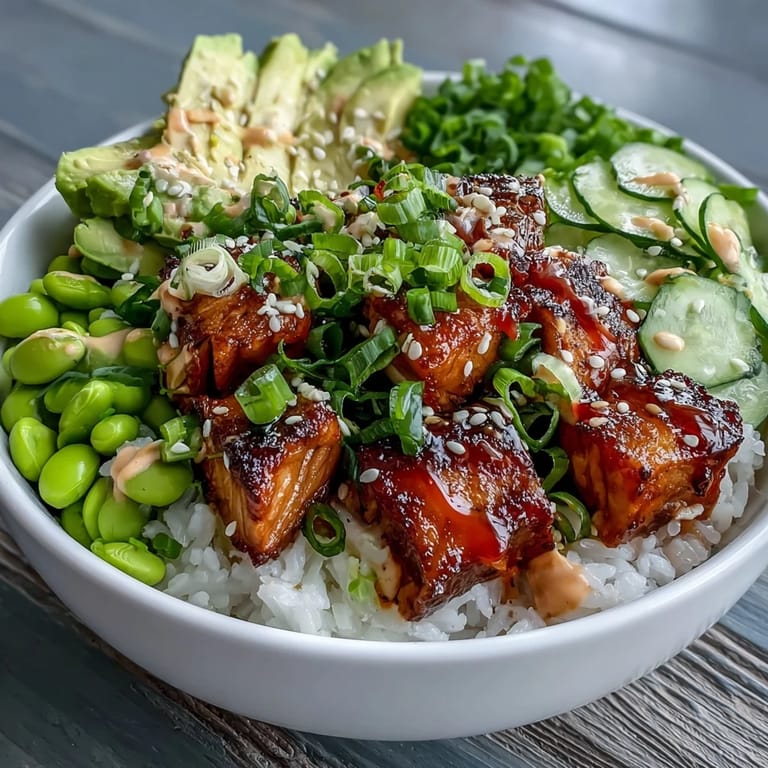
- Fluff the rice with a fork, then divide it among four bowls as your base layer. Top each bowl with baked salmon, a handful of edamame, cucumber slices, and avocado slices, then drizzle generously with the sriracha mayo and finish with a sprinkle of sesame seeds and green onions.
 Save
Save My friend Michael, who claims he doesn't like fish, had seconds of this bowl at my table last month, and we both just sat there grinning at the absurdity of it. That's when I knew this recipe had transcended being just dinner and become something that brings people together without any fuss.
The Beauty of Build-Your-Own Bowls
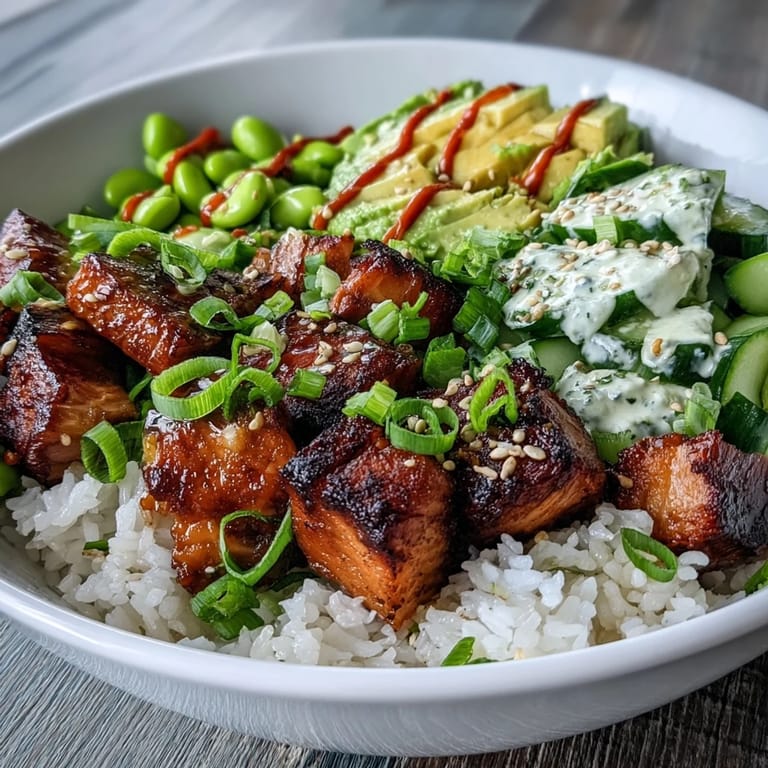
There's something deeply satisfying about assembling your own bowl because every person can customize their toppings based on what they actually enjoy eating. I've learned that some people skip the avocado, others go light on the mayo, and a few brave souls ask for extra sriracha. Making this for a group means everyone leaves happy because they had agency in their meal.
Timing Your Cooking for Seamless Service
The key to making this feel effortless is understanding that the salmon bakes for about 12 minutes while the rice needs 12 to 15 minutes, so starting both simultaneously means everything finishes around the same time. I used to prep everything ahead and then panic when the rice was done but the salmon wasn't, but now I've learned to work backward from when I want to eat.
Making It Your Own
While this recipe is gorgeous as written, I've discovered that the framework is flexible enough to swap in whatever fresh vegetables you have on hand. Last month I used shredded carrots and thinly sliced radishes instead of cucumber, and the week before I added pickled ginger because I was craving that tangy note.
- If you need it gluten-free, swap regular soy sauce for tamari and check your sriracha bottle because some brands sneak in gluten.
- The salmon cubes can be prepped and marinated the night before, which means you're just baking and assembling on the actual cooking day.
- Leftover sriracha mayo keeps in the fridge for about a week, so don't feel obligated to use it all at once.
 Save
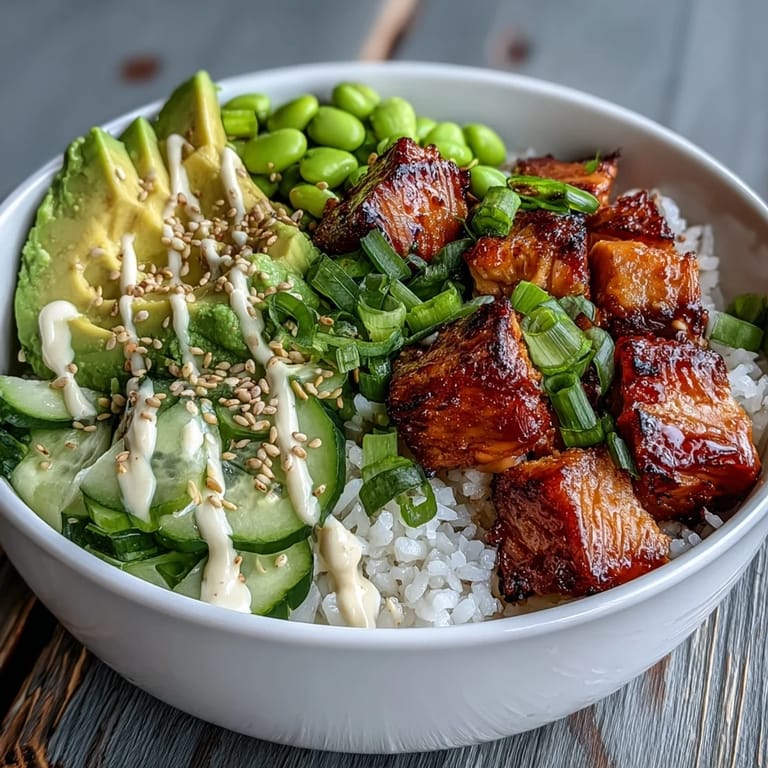
Save This salmon rice bowl has become my answer to "what should we make for dinner" because it satisfies that craving for something restaurant-quality while respecting the fact that nobody has hours to spend cooking. Make it once and you'll understand why it's become a permanent fixture in my weekly rotation.
Recipe FAQs
- → Can I use brown rice instead of jasmine?
Yes, brown rice works well but requires about 40-45 minutes to cook compared to 12-15 minutes for jasmine rice. Adjust your timing accordingly and consider starting the brown rice before marinating the salmon.
- → How long does the marinated salmon keep?
Marinated salmon should be cooked within 24 hours for best quality and food safety. Once cooked, the bowl components can be stored separately in airtight containers for up to 3 days in the refrigerator.
- → What can I substitute for sriracha mayo?
You can use spicy mayo, chili garlic sauce mixed with mayonnaise, or a drizzle of teriyaki sauce for a different flavor profile. For a lighter option, try Greek yogurt mixed with hot sauce.
- → Is this bowl freezer-friendly?
The cooked salmon and rice freeze well separately for up to 2 months. However, fresh toppings like cucumber, avocado, and edamame should be added fresh after reheating. The sriracha mayo does not freeze well.
- → Can I cook the salmon on the stovetop?
Absolutely! Heat a tablespoon of oil in a skillet over medium-high heat and cook the marinated salmon cubes for 2-3 minutes per side until caramelized and cooked through. This creates a nice sear and reduces cooking time.
- → How do I know when the salmon is done?
The salmon is cooked when it turns opaque and flakes easily with a fork. The internal temperature should reach 63°C (145°F). Be careful not to overcook, as the cubes will dry out quickly.