 Save
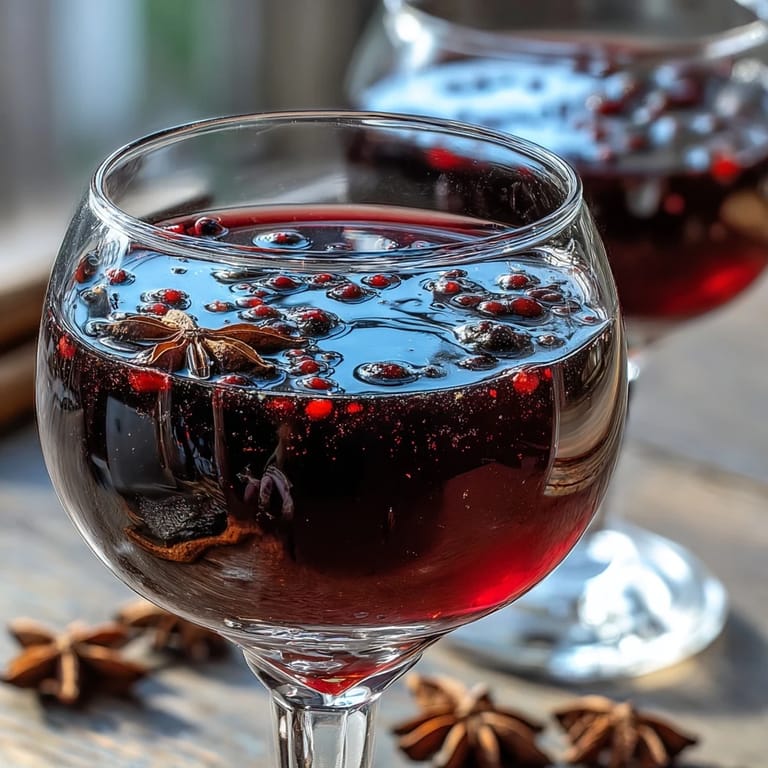
Save My neighbor showed up one autumn evening with a mason jar filled with something that caught the light like liquid ruby, and I was hooked before she even explained what it was. She'd made a blackcurrant vodka liqueur in her kitchen over the summer, and watching her pour it over ice with this knowing smile made me realize I'd been missing out on one of those special homemade gifts that actually tastes like someone cared enough to wait. That night, I decided to try it myself, and the patience required turned out to be the whole point—two weeks of gentle shaking and anticipation transformed simple ingredients into something that felt almost luxurious.
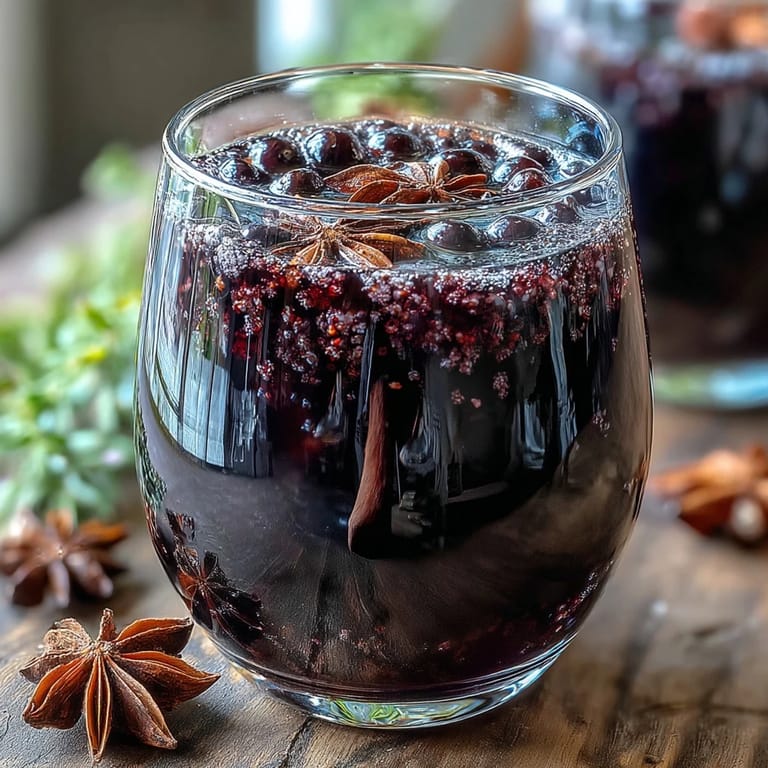
I made a batch during a particularly grey November and kept the jar on my kitchen shelf where I could see it daily, watching the color deepen from week to week. Every time I'd shake it gently, the scent of cinnamon and blackcurrant would drift up, and I'd find myself daydreaming about sipping it by the fire. When it finally came time to strain and bottle, my kitchen smelled like a spiced wine bar, and I realized this wasn't just a liqueur—it was bottled patience and anticipation.
Ingredients
- Fresh or frozen blackcurrants (500 g): Use frozen if fresh aren't available; they actually work beautifully and cost less too. The berries will release their deep color and tartness into the vodka, creating that jewel-like appearance.
- Good-quality vodka (750 ml): Don't overthink this—mid-range works perfectly, and you're infusing it anyway so premium isn't necessary. The vodka is your extraction base, carrying all those berry and spice flavors forward.
- Granulated sugar (250 g): This balances the tartness of the blackcurrants and helps preserve the liqueur, dissolving gradually over weeks into a silky sweetness.
- Cinnamon stick (1): One stick is enough to warm the whole jar without overpowering; it plays beautifully against the tart berry notes.
- Whole cloves (4): Exactly four gives you that gentle spiced undertone, never harsh or medicinal if you resist the urge to add more.
- Star anise (2): These add a whisper of licorice that somehow makes the blackcurrant sing, trust me on this.
- Black peppercorns (5): A small number creates subtle heat in the finish, grounding all the sweeter spice notes.
- Lemon zest (1 unwaxed lemon, in strips): Strip it with a vegetable peeler so it's in large pieces, adding bright acidity that cuts through richness beautifully.
Tired of Takeout? 🥡
Get 10 meals you can make faster than delivery arrives. Seriously.
One email. No spam. Unsubscribe anytime.
Instructions
- Prepare and lightly crush the blackcurrants:
- Rinse them gently and pat completely dry—any water dilutes your infusion. Use a potato masher or fork to give each berry just enough pressure to crack it open and release the juice, but you're not making a paste here.
- Layer your jar:
- Place the crushed blackcurrants into your sterilized jar first, then scatter the cinnamon stick, cloves, star anise, peppercorns, and lemon zest over top. This layering helps the flavors distribute evenly as everything infuses together.
- Add sweetness and spirit:
- Pour in the sugar directly over the spices, then carefully pour the vodka over everything. The sugar won't fully dissolve yet, and that's perfectly fine.
- Seal and shake gently:
- Close the jar tightly and give it a gentle shake for about 30 seconds, just enough to start waking up the flavors and helping some sugar begin to dissolve. This is your official start.
- Begin the infusion ritual:
- Store the jar in a cool, dark cupboard—somewhere you'll see it regularly. Every few days over the next two to four weeks, give it a gentle shake to help flavors marry and sugar fully dissolve. You'll watch the vodka transform from clear to a gorgeous deep crimson.
- Strain when ready:
- After two to four weeks, when the color is rich and the aroma intoxicating, pour everything through a fine sieve or muslin cloth into a clean jug. Discard all the solids and let the liquid settle.
- Bottle and mature:
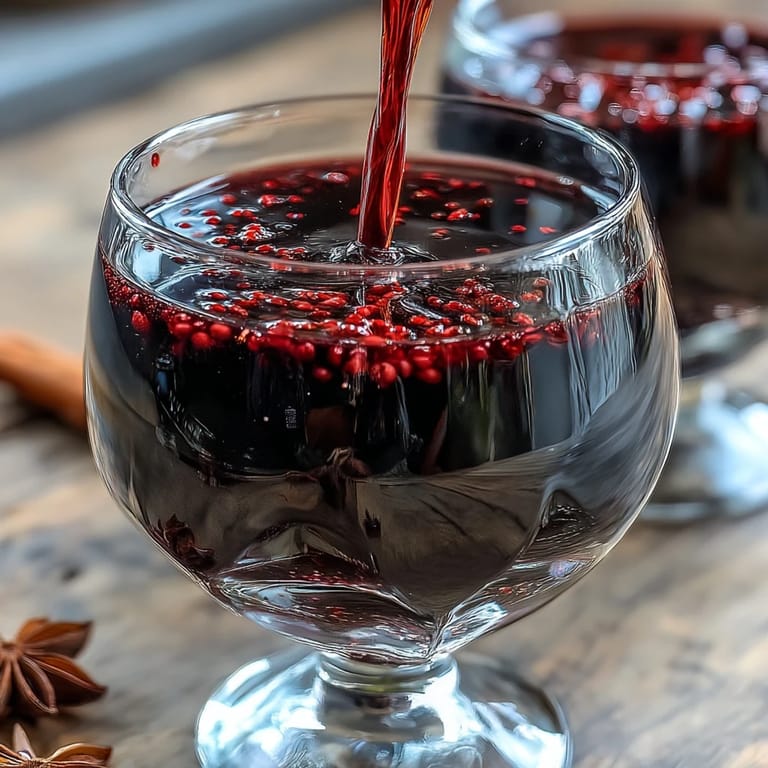
- Pour your strained liqueur into sterilized bottles using a funnel, seal tightly, label with the date and contents. Let it sit for at least one more week before opening—this final maturation rounds out all the flavors beautifully.
 Save
Save I gave my first batch to my sister for Christmas, and she called me three weeks later just to say thank you—apparently she'd been serving it at dinner parties and people kept asking where she bought it. Hearing that someone enjoyed something I'd made enough to share it with others felt different than any store-bought gift ever could.
Why Two to Four Weeks Matters
The infusion time isn't arbitrary—it's the difference between something drinkable and something memorable. During those quiet weeks, the vodka slowly extracts color, flavor, and aroma from the berries and spices, while the sugar dissolves to create silky sweetness. I've tried rushing it by a week, and the result was thinner, sharper, less integrated somehow. Patience here actually tastes like it was worth the wait.
Serving Suggestions and Uses
This liqueur is endlessly versatile—I've served it chilled as an after-dinner digestif, poured it over vanilla ice cream for an instant sophisticated dessert, and even stirred it into cocktails where it adds complexity and gorgeous color. A friend of mine drizzles it over dark chocolate mousse, and another uses it in a champagne cocktail for special occasions. The beauty is that whether you're sipping it neat or mixing it into something else, every application feels special.
Customization and Creative Variations
Once you've made this version, you might start imagining your own tweaks, and honestly, that's where the real fun begins. I've added a split vanilla pod to one batch for extra warmth, tried cardamom pods in another, and even experimented with a piece of fresh ginger. The base recipe is forgiving enough that you can play around and discover your own signature version.
- Try adding one split vanilla pod alongside the other spices for deeper complexity and subtle sweetness.
- A few cardamom pods or a small piece of fresh ginger root can be steeped for the full duration if you like more adventurous spice.
- If you prefer less sweetness, reduce the sugar to 200 g and taste after the first two weeks, adding more if needed.
 Save
Save Making liqueur at home taught me that the most satisfying gifts aren't always the ones that take the most time to prepare—they're the ones made with patience and intentionality, where you've actually invested thought into the final taste. This blackcurrant liqueur sits somewhere between gift and self-care, depending on who ends up drinking it.
Recipe FAQs
- → How long should I infuse the blackcurrant vodka?
Allow the mixture to infuse for 2–4 weeks in a cool, dark place. Shake gently every few days to help the flavors meld and sugar dissolve completely.
- → Can I use frozen blackcurrants instead of fresh?
Yes, frozen blackcurrants work perfectly well. Thaw them slightly before crushing to release their juices, then proceed with the recipe as usual.
- → What's the best way to serve this liqueur?
Serve chilled over ice as an after-dinner drink, use in cocktails, or drizzle over desserts like vanilla ice cream or chocolate cake for a luxurious finish.
- → How should I store the finished liqueur?
Store in sterilized sealed bottles in a cool, dark place. Properly stored, this liqueur will keep for several months and continues to develop flavor over time.
- → Can I adjust the sweetness level?
Absolutely. Taste the liqueur after straining and before bottling. If you prefer it sweeter, dissolve a little more sugar in a small amount of warmed vodka and blend in.
- → What other spices can I add for variation?
Try adding a split vanilla pod, cardamom pods, or a piece of fresh ginger. These aromatics complement the blackcurrant beautifully and add unique flavor dimensions.