 Save
Save The first time I watched maklouba being made, I stood mesmerized in my aunt's kitchen as she layered rice, golden cauliflower, and tender chicken into a heavy pot with the precision of someone building something precious. When she inverted it onto the platter with one confident flip, the whole dish tumbled out intact—a fragrant, steaming dome that seemed impossible until you'd seen it happen. That dramatic moment, the way everyone gasped and leaned in, taught me that some of the most impressive dishes come from layers of patience and trust in the process.
I made this for my friend who'd been homesick, and watching her face when that pot flipped over and the maklouba emerged whole and fragrant reminded me why cooking for people matters. She closed her eyes on the first bite and didn't say anything for a moment, and I realized that food is sometimes the closest we can get to bridging distance. That's when maklouba stopped being just a recipe and became something I wanted to master.
Ingredients
- Bone-in chicken pieces (1.2 kg): Bone-in chicken holds flavor far better than boneless, and the bones create a richer broth as everything simmers together.
- Basmati rice (2 cups): The long grains stay separate and fragrant; soaking removes excess starch so the rice won't turn mushy during the final cooking.
- Cauliflower florets (1 large head): Frying them first gives texture and color; they'll soften slightly during the final cook but hold their shape for that perfect presentation.
- Potatoes (2 medium, sliced thin): These create a flavorful base layer and help anchor the whole structure when you invert the pot.
- Large onion (1, sliced): Onions become silky and sweet as they cook down with the spices, building the aromatic foundation of the dish.
- Spice blend (cumin, coriander, cinnamon, turmeric, allspice, cardamom, bay leaves): This combination is the soul of maklouba; toast them briefly in oil so their flavors bloom fully into the broth.
- Chicken stock or water (5 cups): Stock adds depth, but water works fine if you trust the spices and chicken to do the heavy lifting.
- Vegetable oil: Use enough for shallow frying; it should sizzle around the vegetables to get them golden and crisp.
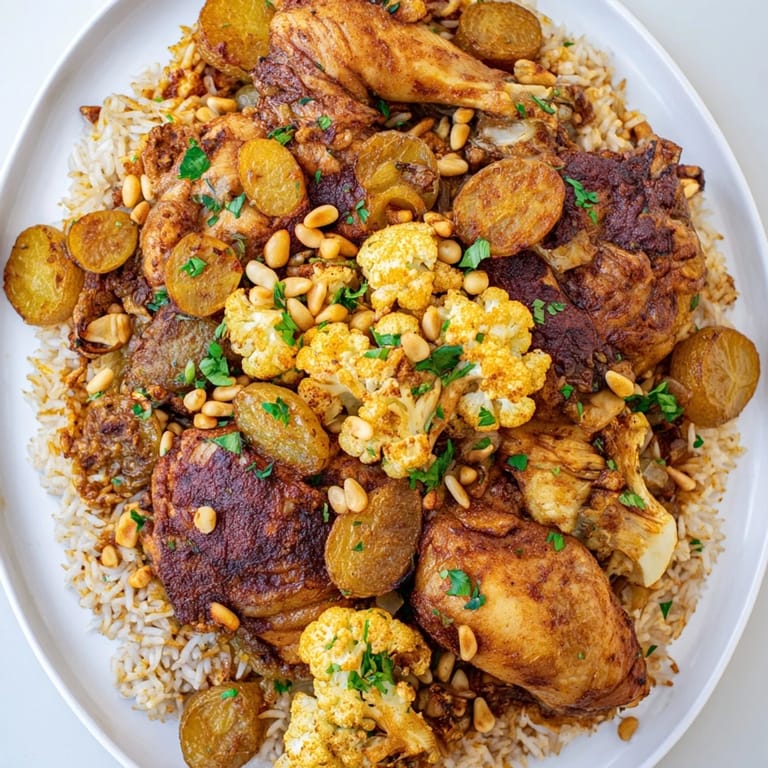
- Pine nuts or slivered almonds (¼ cup, toasted): These add a gentle crunch and richness that anchors the final garnish.
- Fresh parsley (¼ cup, chopped): A bright, fresh finish that cuts through the richness of the oil and spices.
Tired of Takeout? 🥡
Get 10 meals you can make faster than delivery arrives. Seriously.
One email. No spam. Unsubscribe anytime.
Instructions
- Soak the rice:
- Rinse the basmati rice under cold water until the water runs clear, then submerge it in salted water for 30 minutes. This softens each grain slightly and removes starch so the rice cooks evenly without turning sticky.
- Brown the chicken:
- Heat olive oil in your heavy pot over medium-high heat and season the chicken pieces with salt and pepper. Let them sizzle undisturbed for a few minutes on each side until they're golden and fragrant, then set them aside on a plate.
- Build the spice base:
- In the same pot, soften the sliced onion until it turns translucent and sweet. Add all your spices and bay leaves, stirring constantly for about a minute so the heat coaxes out their essential oils and fills your kitchen with their warmth.
- Simmer the chicken:
- Return the browned chicken to the pot, pour in your stock, and bring everything to a gentle boil. Lower the heat and let it simmer for about 20 minutes until the chicken is cooked through and the broth is infused with flavor, then lift out the chicken and reserve the broth.
- Fry the vegetables:
- While the chicken simmers, heat vegetable oil in a separate deep pan and fry the cauliflower florets and potato slices in batches until they're golden brown and crispy around the edges. Drain them well on paper towels so they stay crisp when layered.
- Layer the pot:
- In your heavy-bottomed pot, create the foundation: potatoes on the bottom, then the cooked chicken, then the fried cauliflower, and finally the drained rice pressed down gently. This structure is everything—it holds together during the final cook and creates that stunning presentation when inverted.
- Final cook:
- Pour reserved broth over the rice until it's just covered, about 4 to 5 cups. Set the pot over medium heat and watch the edges—when the liquid starts bubbling there, lower the heat to the gentlest simmer, cover the pot tightly, and let it cook undisturbed for 35 to 40 minutes. The silence of that waiting time is part of the magic.
- Rest and invert:
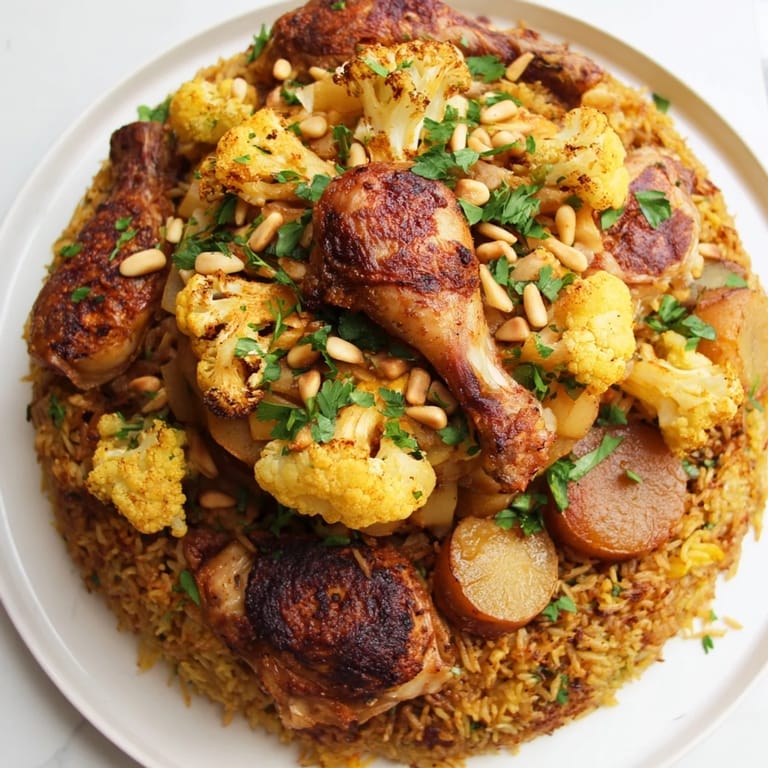
- Turn off the heat and let the maklouba sit covered for 10 to 15 minutes so the layers set. Then place a large serving platter over the pot, take a breath, and flip it in one confident motion, lifting away the pot to reveal your perfect dome.
 Save
Save The moment you've waited for arrives when you hear that soft settling sound as the maklouba comes free from the pot and lands on the platter—it's confirmation that patience and layers and trust have paid off. Suddenly what seemed complicated becomes something you want to make again and again.
The Art of the Inversion
The inversion is the heart of maklouba, and I used to be nervous about it until I realized it's actually the dish's way of protecting itself. Because the rice is on top and the potatoes are on the bottom, gravity and the weight of everything holds it together as you flip. The first time you succeed, you'll understand why this dish is called maklouba—it means upside-down, and the inversion is not a trick but a promise.
Customizing Your Layers
The beauty of maklouba is that it welcomes variation once you understand its structure. I've added sliced eggplant that caramelizes beautifully, thin rounds of carrot for color, and even layered in some gently cooked tomatoes for brightness. The logic stays the same: sturdy vegetables on the bottom, protein in the middle, rice on top, and everything held together by the broth and time.
Serving and Storage
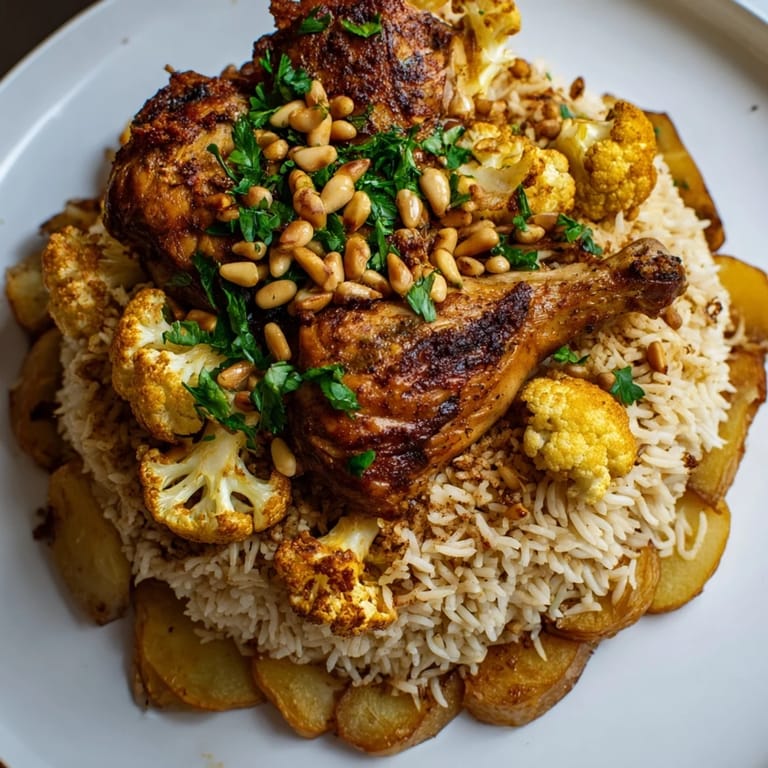
Maklouba is best served hot, right after the inversion while the dome is still steaming and the flavors are singing their loudest. Yogurt or a fresh Arabic salad alongside cuts through the richness perfectly. Leftovers keep for three days in the refrigerator and reheat gently in a covered pot with a splash of water; the flavors actually deepen as they sit, making the second day almost as good as the first.
- Toast your pine nuts or almonds just before serving so they stay crisp and add that final textural contrast.
- If you're feeding vegetarians, skip the chicken and use vegetable broth—the spices and vegetables create a complete, satisfying dish.
- A pinch of saffron stirred into the broth elevates everything if you have it on hand, but it's absolutely not necessary.
 Save
Save Maklouba is the kind of dish that makes you feel capable in the kitchen, like you've mastered something ancient and alive. Make it once, and you'll make it again.
Recipe FAQs
- → What type of rice is best for this dish?
Basmati rice is preferred for its fragrance and ability to stay fluffy when cooked, making it ideal for layering in Maklouba.
- → Can vegetables be substituted or added?
Yes, eggplant or carrots can be added for variation, and the dish can also be made vegetarian by omitting the chicken and using vegetable broth.
- → How is the layered dish assembled?
Potato slices are layered at the bottom, followed by browned chicken, fried cauliflower, and finally soaked rice, then cooked together with broth.
- → What spices are typically used?
Common spices include cumin, coriander, cinnamon, turmeric, allspice, cardamom, and bay leaves, which give the dish its characteristic warm flavor.
- → Any tips for cooking to avoid sticking?
Use a heavy-bottomed pot and cook over low heat without uncovering to ensure even cooking and to prevent burning or sticking.
- → What garnishes complement the dish?
Toasted pine nuts or slivered almonds and chopped fresh parsley add crunch and freshness to the final presentation.