 Save
Save I still remember the December afternoon when my sister called asking for help with her holiday party platter. She wanted something that looked like peppermint candy—elegant, festive, and not requiring any actual cooking. That's when the Peppermint Stripe Celebration was born. What started as a simple arrangement of red and white became the showstopper that guests kept photographing and requesting the recipe for. Now whenever December rolls around, someone asks, "Are you making that striped platter again?"
The first time I made this for a gathering, my eight-year-old nephew pointed at the red and white rows and said, "It looks like Christmas peppermint!" His simple observation captured exactly why this platter works—it's festive without being fussy, celebratory without trying too hard. That party was the one where people lingered longest at the food table, building their own combinations and discovering flavor pairings they'd never considered.
Ingredients
- Fresh mozzarella balls (200 g): These tender, delicate spheres are your pristine white base layer. They stay soft and creamy throughout service, creating that luxurious mouthfeel that makes people close their eyes a little when they eat them. The key is buying them the day of—they truly taste different when absolutely fresh.
- White cheddar cheese, sliced (200 g): This brings a sharper, more assertive cheese flavor that contrasts beautifully with the mild mozzarella. Slicing it yourself from a block rather than buying pre-sliced means it won't have those separation layers, and it tastes noticeably better.
- Havarti cheese, sliced (200 g): The unsung hero of this platter—buttery and smooth with a slight sweetness that bridges the gap between fresh and aged cheeses. It's the cheese people always ask about.
- Sliced strawberries (150 g): These provide your brightest red and a gentle sweetness that reminds everyone this is also a celebration. Use them sparingly if they're not perfectly ripe; the flavor matters more than the color.
- Raspberries (150 g): Deeper in color and slightly tart, they add complexity and visual depth. They're delicate, so place them gently and handle the platter with care—they bruise easily but photograph beautifully.
- Cherry or grape tomatoes, halved (100 g): This is where savory meets the fruit sweetness. The tomatoes ground the platter in reality, reminding guests that this is meant to be enjoyed as actual food, not just a picture.
- Roasted red bell peppers, sliced (100 g): If you have time, roast your own—the smoky depth changes everything. If not, quality jarred peppers work well. They're softer than tomatoes and add another texture layer.
- Thinly sliced salami (150 g): Optional, but when included, it adds that salty, savory element that keeps the platter from becoming one-note. Thinly sliced means it will curve gently into the rows.
- Prosciutto (100 g): The most luxurious element if you go this direction. Drape it loosely rather than folding it tight—it should look elegant and effortless.
- Water crackers (150 g): Their neutral flavor and subtle texture let other ingredients shine. They're the architecture that helps hold the visual structure of your stripes.
- Baguette slices (100 g): Toast these very lightly if you want them to hold up better, but serve them at room temperature. They offer a different textural experience than crackers—slightly more substantial and wheat-forward.
- Fresh mint leaves: These are essential for the peppermint storytelling. Scatter them across the top just before serving so they're bright and fragrant. They're not just garnish—they're the narrative.
- Microgreens or edible flowers (optional): If you find beautiful ones, they add a chef-like final touch that feels intentional rather than necessary.
Tired of Takeout? 🥡
Get 10 meals you can make faster than delivery arrives. Seriously.
One email. No spam. Unsubscribe anytime.
Instructions
- Choose Your Canvas:
- Start with a large platter or wooden board—ideally at least 16 inches in one direction. The size matters because it gives you room to create actual rows rather than just a scattered arrangement. If you're serving 8–10 people, you need space for them to take generous portions without the platter looking immediately depleted. A rectangular platter makes the stripe effect more obvious, but circular works beautifully too.
- Build Your First White Row:
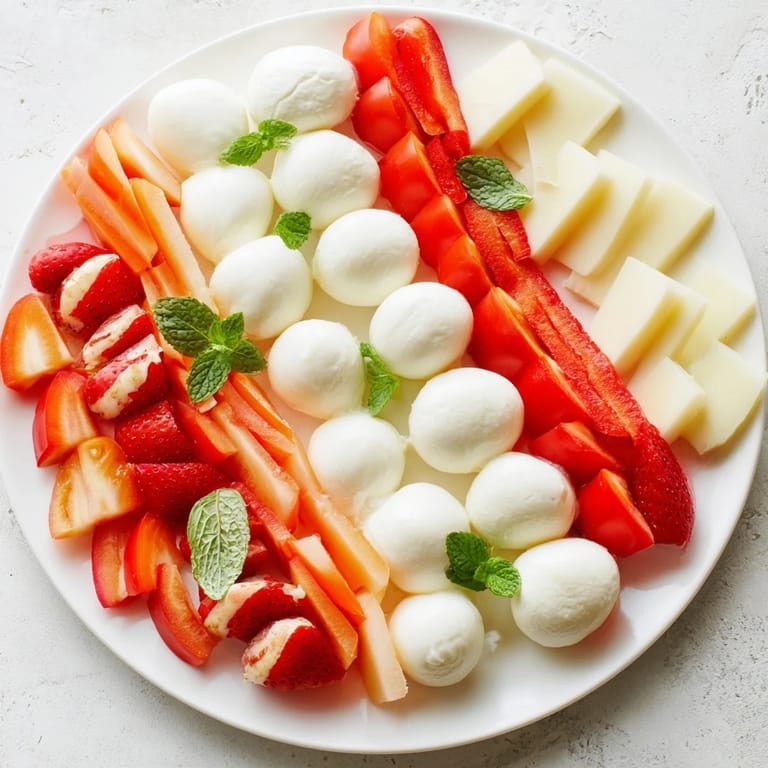
- Along one edge, arrange your first white layer. Use mozzarella balls for the softest, most luxurious look, or white cheddar slices if you prefer something sturdier. Place them gently, allowing them to overlap slightly—they should look abundant and inviting, not sparse. This first row sets the tone for everything that follows.
- Lay Down Your First Red Row:
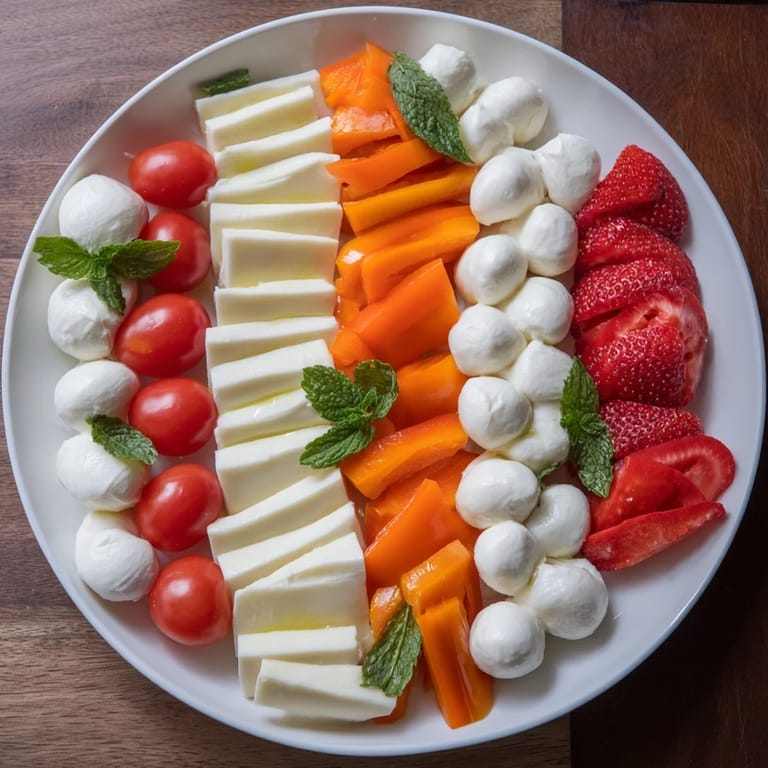
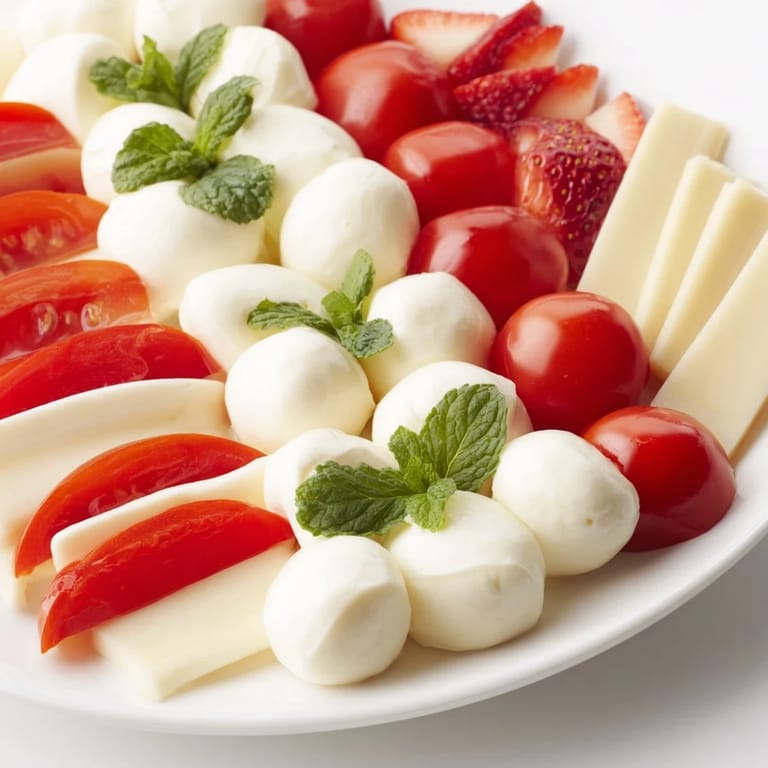
- Directly adjacent to your white row, create your first red layer. Strawberry slices work beautifully here because they're visually striking and their slight sweetness hints at the peppermint theme. Arrange them so they overlap slightly and create a clear visual boundary between the white and red. This contrast is everything.
- Continue the Striping Pattern:
- Now alternate: white (try Havarti this time for variety), then red (perhaps raspberries or halved tomatoes), then white (back to mozzarella or cheddar), and so on. The rhythm of the repetition is what makes this feel intentional rather than random. You're creating a visual pattern that almost hypnotizes people when they look at it.
- Weave in Texture and Variety:
- Between some of the soft cheese and fruit stripes, insert rows of crackers or baguette slices. This isn't just about looking nice—it's functional too. The crackers give people something to put cheese on immediately, and they add architectural support to the whole composition. Roasted red peppers can become their own stripe, bringing deeper color and different texture.
- Add the Meat Element (If Using):
- If you're including salami or prosciutto, this is where it becomes art. Roll the salami into loose roses by folding each slice into thirds, then curling it gently—tuck these into your red stripes so they sit like they belong there. Prosciutto should be draped casually, creating movement and elegance. The meat rows don't need to be as rigid as your other stripes; let them flow.
- Finish with Garnish and Intent:
- Just before serving—and I mean moments before—scatter fresh mint leaves across the entire platter. This is when it transforms from something beautiful into something that smells like celebration. A few edible flowers or microgreens on top add that final touch that makes people realize you thought about every detail.
- Chill or Serve:
- Serve immediately if possible, while everything is at its freshest and the contrast between temperatures is most interesting. Or cover gently with plastic wrap and refrigerate up to 2 hours. When you remove it from the fridge, let it sit at room temperature for 5–10 minutes so the cheese softens back to its proper texture and the flavors wake up again.
 Save
Save At my friend's holiday party last year, I watched her teenage daughter show her friends this platter on her phone later that evening—not because she was hungry, but because it was beautiful enough to photograph and share. That's when I realized this recipe had become more than just an appetizer. It became a moment. It became proof that food can be both effortless and show-stopping, that sometimes the best dishes are the ones that let quality ingredients speak for themselves.
The Secret of Striping
The magic of this platter isn't complicated—it's actually the opposite. By committing to a clear pattern and repeating it, you create visual harmony that feels intentional and special. The human eye loves patterns and anticipation. When people see white, they expect red, and when you deliver that red exactly on schedule, it satisfies something deeply. Think of it like a visual rhythm. You're not trying to squeeze everything onto a platter; you're creating a composed, confident arrangement that could be in a magazine because you chose discipline over chaos.
Customizing Your Celebration
This platter is endlessly flexible, which is part of why it's so forgiving. For vegetarians, simply omit the meats and add extra cheeses, or introduce red options like pomegranate seeds, roasted beets, or sun-dried tomatoes. You could even do a dessert version using white chocolate pieces, marshmallows, and red and white candies—it becomes a different celebration entirely but follows the same striping principle. The framework stays the same; you're just changing what fills it.
Pairing and Presentation
Serve this with something that feels as effortless as the platter itself. A crisp sparkling wine, or better yet, a simple cranberry spritz, complements the sweetness of the fruit and the richness of the cheese without demanding attention. When you set it out, set it out confidently—this is a platter worth admiring. Give people permission to stand there and really look at it before diving in. That moment of visual appreciation is part of the gift.
- If you're serving this at a standing party, position it at eye level so people can easily admire and access it from multiple angles
- Place small plates and napkins nearby so people can comfortably take generous portions without the platter deteriorating
- The mint garnish is optional but transformative—it completes the peppermint story and adds a fresh aroma that elevates the entire experience
 Save
Save This platter reminds me every time I make it that the best entertaining comes from simplicity, fresh ingredients, and a little intentional thoughtfulness. It's the kind of recipe that becomes a tradition almost without you planning for it to.
Recipe FAQs
- → What cheeses work best for this platter?
Fresh mozzarella balls, white cheddar, and Havarti offer a creamy and mild flavor profile that complements red fruit and vegetables.
- → Can this platter be made vegetarian?
Yes, simply omit meats and add extra cheeses, marinated tofu, or red bell pepper hummus for added variety.
- → How should I arrange the platter for visual impact?
Alternate rows of white cheeses and red ingredients like strawberries, tomatoes, and bell peppers to create striking peppermint stripes.
- → What garnishes enhance the peppermint theme?
Fresh mint leaves and microgreens add a refreshing aroma and reinforce the classic peppermint vibe visually.
- → How long can the platter be prepared in advance?
It can be assembled ahead and refrigerated for up to 2 hours before serving to maintain freshness.