 Save
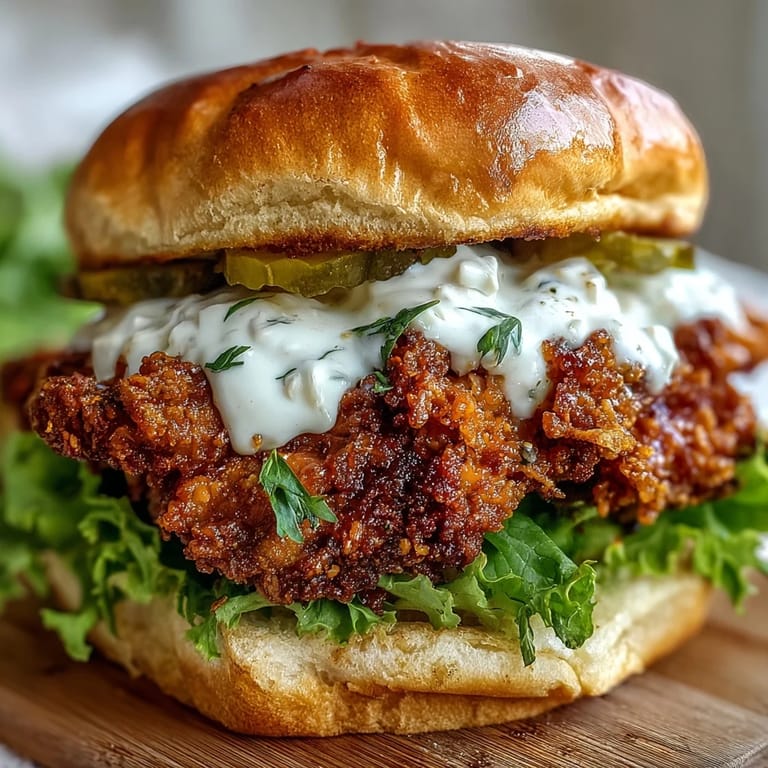
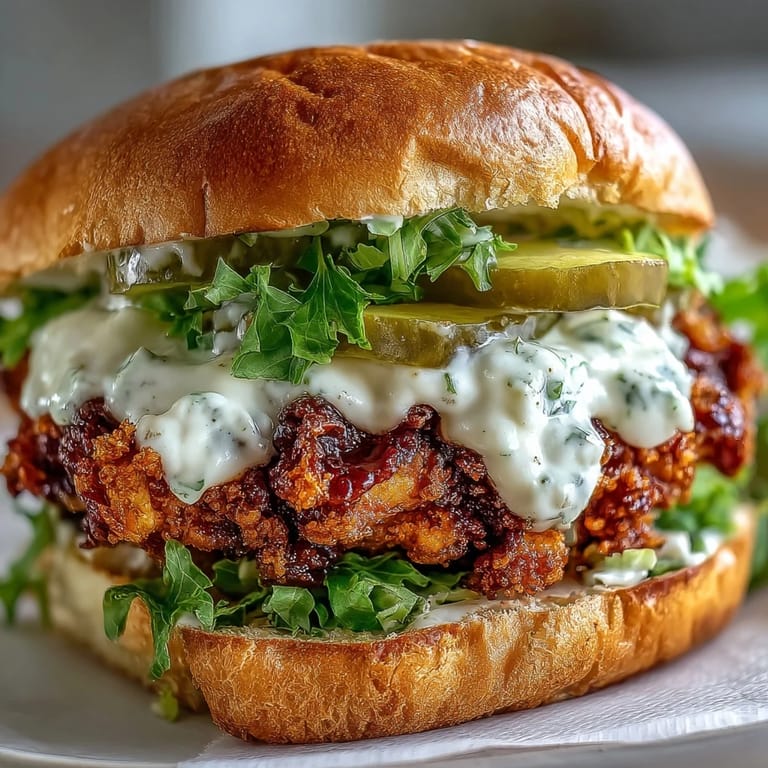
Save The sizzle hit me before anything else. I was standing at my stove on a rainy Tuesday, chicken sinking into hot oil, and the smell alone made my neighbor text asking what I was cooking. That first sandwich was a mess, sauce dripping everywhere, but I ate it standing over the counter and knew I'd be making this weekly. It's become the thing I crave when nothing else sounds right.
I made these for my brother's birthday once, and he ate two before anyone else got to the table. He's the kind of person who orders the same thing at every restaurant, so watching him go back for thirds felt like winning something. Now he asks for them every time he visits, and I've learned to double the batch.
Ingredients
- Boneless, skinless chicken breasts: Pound them thin so they cook evenly and stay tender, I learned this after biting into a raw center once and never forgot.
- Buttermilk: This is what makes the chicken impossibly juicy and helps the dredge stick like glue, regular milk won't do the same magic.
- Hot sauce: Adds a vinegar tang and subtle heat that builds without burning, I like Frank's but use what you love.
- Paprika and cayenne pepper: Paprika gives color and mild warmth, cayenne brings the kick, adjust both to match your tolerance.
- All-purpose flour and cornstarch: The cornstarch is the secret to that shatteringly crisp crust, I won't fry chicken without it anymore.
- Vegetable oil: Keeps the temperature steady and doesn't add competing flavors, use enough to come halfway up the chicken.
- Mayonnaise and sour cream: These create a sauce that's rich and tangy, balanced perfectly by a squeeze of lemon and a drizzle of honey.
- Brioche buns: Soft, buttery, and sturdy enough to hold everything without falling apart, toast them for a little crunch.
- Dill pickles: The briny snap cuts through the richness and makes every bite more interesting, don't skip them.
Tired of Takeout? 🥡
Get 10 meals you can make faster than delivery arrives. Seriously.
One email. No spam. Unsubscribe anytime.
Instructions
- Marinate the chicken:
- Whisk buttermilk with hot sauce, salt, paprika, cayenne, garlic powder, and onion powder until smooth. Submerge the chicken, cover, and let it sit in the fridge for at least an hour, the longer it marinates, the more flavor soaks in.
- Prepare the dredge:
- Combine flour, cornstarch, and all the spices in a shallow dish, mixing well so every piece gets evenly coated. This is where the crunch lives, so don't rush it.
- Heat the oil:
- Pour oil into a heavy skillet or Dutch oven and bring it to 350°F, use a thermometer to be sure. Set a wire rack over a sheet pan nearby for draining the chicken.
- Coat the chicken:
- Pull each piece from the marinade, let the excess drip off, then press it firmly into the dredge on both sides. For extra crunch, dip it back in the marinade and dredge again.
- Fry until golden:
- Slide the chicken into the hot oil carefully and fry for 4 to 6 minutes per side until deep golden and the internal temperature hits 165°F. Move it to the wire rack to drain and stay crispy.
- Make the sauce:
- Whisk together mayonnaise, sour cream, hot sauce, lemon juice, smoked paprika, garlic powder, and honey if you like a hint of sweetness. Taste and adjust salt and pepper until it feels right.
- Toast the buns:
- Lightly toast the brioche buns in a dry skillet or under the broiler until just golden. This keeps them from getting soggy under all that sauce.
- Assemble and serve:
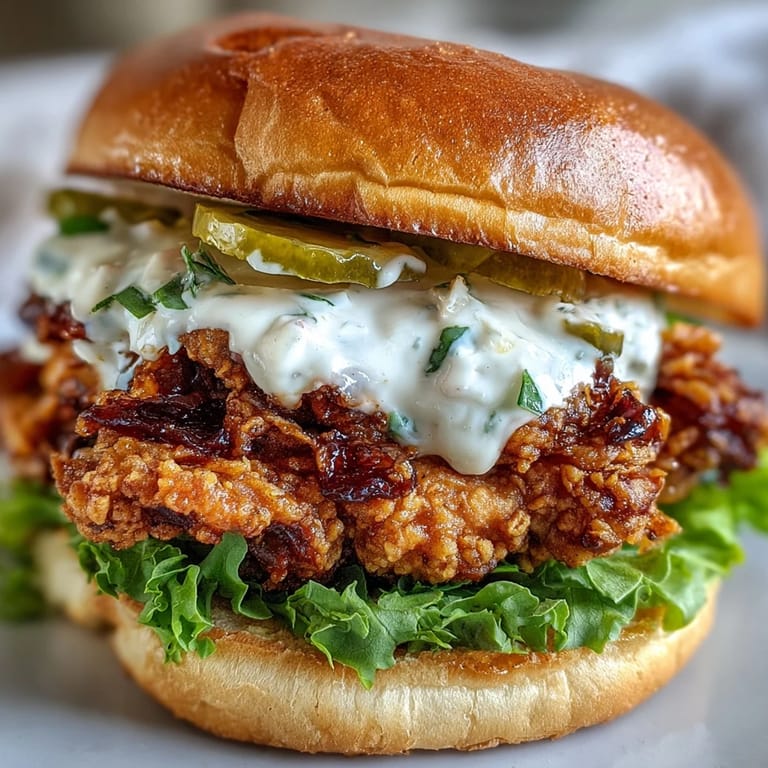
- Spread sauce generously on both sides of each bun, then layer with fried chicken, pickles, lettuce, and tomato if you want. Serve immediately with extra sauce on the side.
 Save
Save One Saturday, I packed these in foil and brought them to a picnic, and they were still warm when we sat down on the grass. My friend Kate, who never finishes anything, ate hers in about four bites and asked for the recipe on the spot. That's when I realized this wasn't just dinner, it was the kind of food that makes people happy without trying too hard.
How to Store and Reheat
I've kept fried chicken in the fridge for up to three days, stored in an airtight container with a paper towel underneath to catch moisture. When I reheat it, I skip the microwave and use a 375°F oven for about 10 minutes, flipping halfway, so the crust crisps back up. The sauce keeps for a week in a sealed jar, and I've been known to use it on everything from fries to leftover roasted vegetables.
What to Serve Alongside
These sandwiches are rich, so I like to balance them with something tangy or crunchy. A simple cabbage slaw with vinegar dressing cuts through the fat beautifully, and crispy oven fries or sweet potato wedges add a satisfying contrast. If I'm feeling indulgent, I'll pour a cold beer or make a batch of fresh lemonade, both work perfectly to cool the spice and keep things casual.
Ways to Make It Your Own
I've swapped chicken breasts for thighs when I want something richer and more forgiving, and I've dialed up the cayenne when feeding spice lovers. Sometimes I add a fried egg on top or swap pickles for pickled jalapeños, and once I used a pretzel bun that added a salty chew I didn't expect to love. The sauce is endlessly flexible too, try adding a pinch of chipotle powder or swapping honey for maple syrup.
- For a lighter version, bake the chicken at 425°F on a wire rack until golden and crispy.
- If you're gluten-free, use a 1-to-1 flour blend and gluten-free buns, the texture holds up surprisingly well.
- Make extra sauce and keep it in the fridge, it's incredible on burgers, wraps, and even as a dip for vegetables.
 Save
Save This sandwich has become my answer to bad days, good days, and everything in between. I hope it finds a place in your kitchen the way it has in mine.
Recipe FAQs
- → How long should I marinate the chicken?
Marinate the chicken for at least 60 minutes, but overnight marinating in the refrigerator yields the most tender and flavorful results. The buttermilk helps break down proteins while infusing spices throughout the meat.
- → Can I make the sauce ahead of time?
Yes, the creamy sauce can be prepared up to 3 days in advance and stored in an airtight container in the refrigerator. The flavors actually meld together better after sitting for a few hours.
- → What temperature should the oil be for frying?
Heat the vegetable oil to 350°F (175°C) for optimal frying. Use a kitchen thermometer to monitor the temperature, as oil that's too cool will make the chicken soggy while oil that's too hot will burn the exterior before the inside cooks through.
- → Can I bake the chicken instead of frying?
While frying yields the crispiest results, you can bake at 425°F for 20-25 minutes, flipping halfway through. The texture will be different—less crunchy but still delicious. Spray with oil before baking to help browning.
- → How do I reheat leftovers without losing crispiness?
Reheat in a 375°F oven for 10-12 minutes on a wire rack set over a baking sheet. This allows air circulation to recrisp the coating. Avoid microwaving as it creates soggy chicken.
- → Can I use chicken thighs instead of breasts?
Absolutely. Chicken thighs are naturally juicier and more forgiving during cooking. Pound them to even thickness and adjust cooking time slightly—thighs may need an extra minute or two per side to reach 165°F internally.