 Save
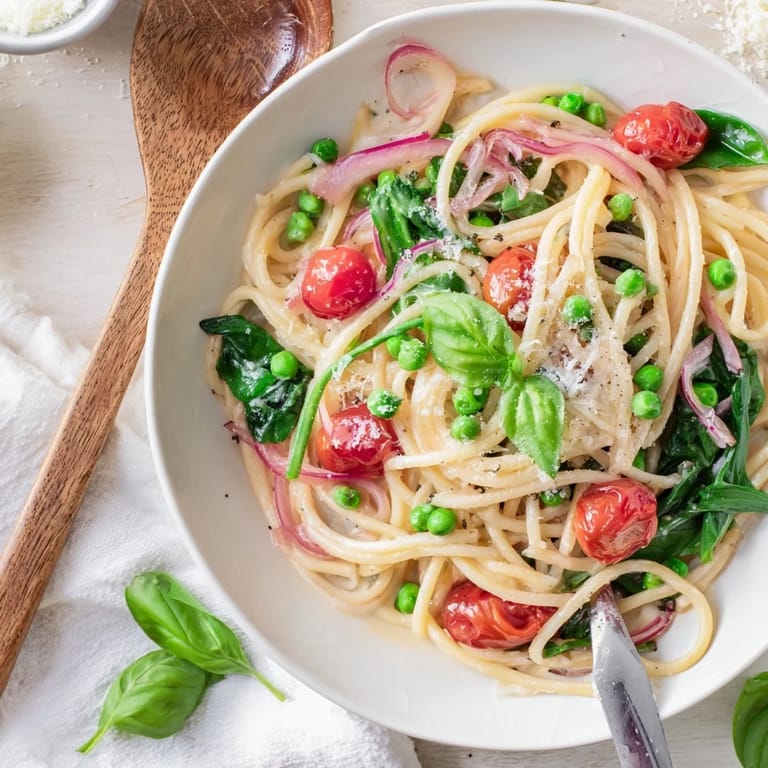
Save Last spring, I found myself staring at a farmers market haul that had somehow tripled in size because everything looked so vibrant and promising. That evening, instead of washing multiple pans for what should have been a simple dinner, I threw everything into one pot and called it an experiment. The spaghetti absorbed all those bright spring flavors while the vegetables practically melted into the sauce, creating something that felt greater than the sum of its parts.
My sister called me halfway through cooking this the first time, sounding exhausted after a long day at work. I told her to come over hungry, and when she walked in, she literally stopped in her tracks and said it smelled like a restaurant kitchen but warmer somehow. We ate standing up at the counter, twirling spaghetti and talking until the pot was scraped clean.
Ingredients
- Dried spaghetti: The noodles absorb all that vegetable broth flavor while cooking, so they taste seasoned through and through
- Frozen or fresh peas: Even frozen peas work beautifully here, bursting with sweetness as they simmer
- Baby spinach: Wilts down into silky ribbons that weave through the pasta, adding color without overwhelming the dish
- Cherry tomatoes: Halved tomatoes release their juices into the broth, creating natural sweetness and depth
- Garlic and red onion: Thinly sliced, they soften gently in the oil before everything else joins the party
- Vegetable broth: Use a good quality one you would drink on its own since it reduces down and concentrates
- Olive oil: Start with a generous glug, it carries all the aromatics and helps coat every strand
- Salt, black pepper, and red pepper flakes: Layer the seasoning as you cook, tasting as you go
- Lemon zest: Adds that essential bright finish that cuts through the richness
- Grated Parmesan and fresh basil: The finishing touch that makes it feel special and complete
Tired of Takeout? 🥡
Get 10 meals you can make faster than delivery arrives. Seriously.
One email. No spam. Unsubscribe anytime.
Instructions
- Build your flavor foundation:
- Heat olive oil in a large pot over medium heat, then add sliced garlic and red onion, letting them soften and perfume the oil for about 3 minutes until they smell amazing
- Bring everyone to the pot:
- Add spaghetti, peas, spinach, cherry tomatoes, and pour in vegetable broth, bringing everything to a gentle boil
- Season and tend the pot:
- Season with salt, pepper, and red pepper flakes, then stir occasionally to keep noodles from sticking together
- Let it work its magic:
- Cook uncovered for 10 to 12 minutes until pasta is perfectly al dente and most liquid has been absorbed, then stir in lemon zest
- Finish with flourish:
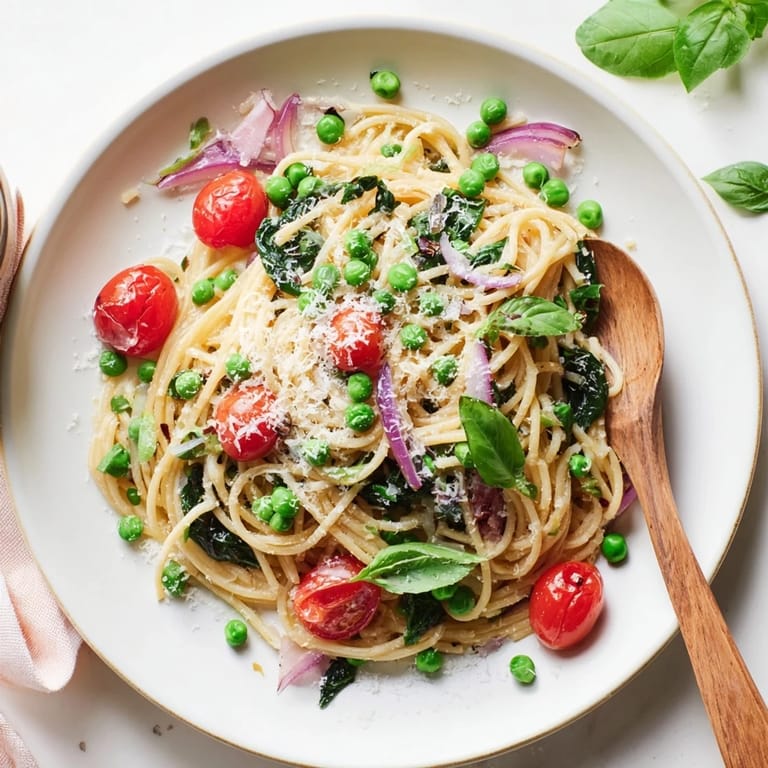
- Remove from heat, plate in shallow bowls, and top generously with Parmesan and fresh basil leaves
 Save
Save This recipe has become my answer to practically every question lately. Busy weeknight? Spring veggie spaghetti. Friends dropping by unexpectedly? Double it. Someone needs comfort food? This pot of bright green and red never fails to make people feel taken care of.
The Art of One-Pot Pasta
What makes one-pot pasta work is the way starch from the noodles thickens the cooking liquid into a silky sauce that clings to every strand. The ratio of liquid to pasta matters, but so does the frequent stirring that releases starch and prevents sticking.
Making It Your Own
Swap asparagus for peas in early spring, add shredded zucchini in summer, or toss in handfuls of arugula at the end for peppery bite. The method stays the same, but the vegetables can follow whatever the season brings.
Perfect Pairings
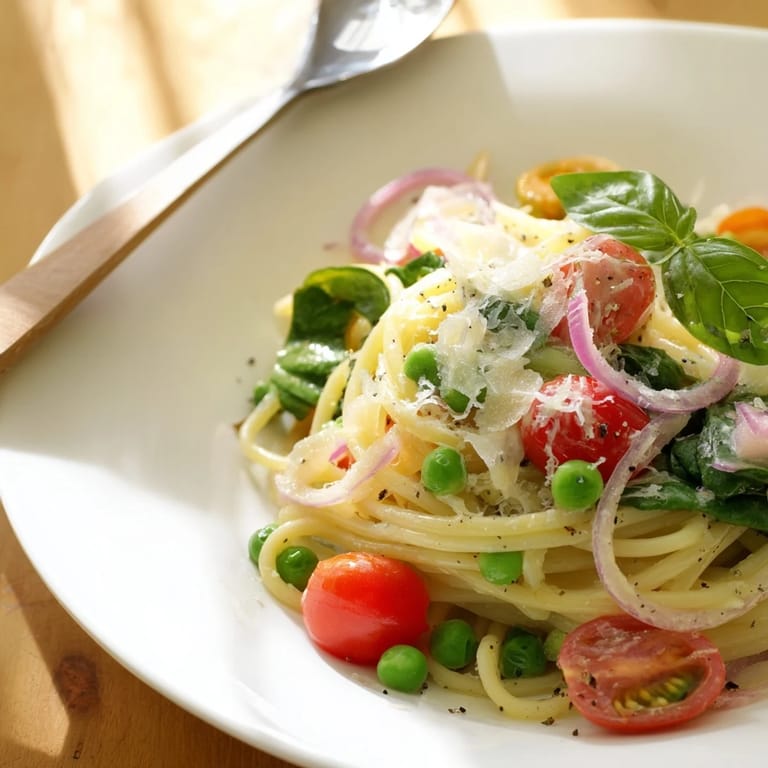
A crisp white wine like Sauvignon Blanc cuts through the pasta and highlights the spring vegetables. A simple green salad with lemon vinaigrette mirrors the bright flavors without competing. Crusty bread for soaking up any remaining sauce is never a bad idea.
- Chill your serving bowls in the fridge for 10 minutes before plating
- Hold back some fresh basil to scatter on top as a finishing touch
- Extra Parmesan at the table lets everyone adjust to their taste
 Save
Save There is something deeply satisfying about a meal that nourishes and simplifies all at once.
Recipe FAQs
- → Can I use fresh vegetables instead of frozen peas?
Absolutely! Fresh peas work wonderfully in this dish. Add them at the same time as the frozen peas, or if using larger fresh peas, add them a minute or two earlier to ensure they cook through completely.
- → How do I prevent the pasta from sticking?
Stir occasionally throughout the cooking process, especially during the first few minutes. The key is using enough broth and stirring frequently to distribute the liquid evenly across the pasta.
- → What can I add for extra protein?
A drained can of chickpeas adds wonderful texture and plant-based protein. You can also try white beans, tofu, or a handful of pine nuts. Add these in step 2 along with the other vegetables.
- → Is this dish gluten-free?
Yes! Simply substitute regular spaghetti with gluten-free spaghetti. Check that your vegetable broth is also certified gluten-free, and always verify that any pre-grated Parmesan hasn't been processed with gluten-containing ingredients.
- → Can I make this dairy-free?
Definitely. Replace the Parmesan cheese with vegan cheese or nutritional yeast for a similar savory flavor. The rest of the dish is naturally dairy-free, making it easily adaptable for plant-based diets.
- → What wine pairs well with this dish?
A crisp Sauvignon Blanc complements the fresh spring vegetables and light broth beautifully. The acidity and herbal notes enhance the lemon zest and basil flavors in the pasta.