 Save
Save The first time I tried making hand rolls at home, I was convinced I'd need years of training and a special license. My friend Mika laughed and said all you really need is warm rice, cold fillings, and confident hands. She was right. Once I stopped overthinking the cone shape and just let the nori guide me, these little parcels became my favorite way to eat sushi without the pressure of perfect maki rolls.
I started making these on weeknights when I wanted something light but satisfying, something that felt like a small celebration. My daughter learned to fold her own by age seven, and now she requests them for her birthday every year instead of cake. There's something about holding your dinner in one hand, dipping it in soy sauce with the other, that makes the whole meal feel easy and joyful.
Ingredients
- Sushi rice: Short grain Japanese rice is essential because it clings to itself when seasoned, creating that signature sticky texture that holds everything together without being gummy.
- Rice vinegar: This is what gives sushi rice its subtle tang and gloss, turning plain rice into something bright and balanced.
- Sugar and salt: They dissolve into the vinegar to create a sweet salty coating that amplifies every bite without tasting overtly seasoned.
- Avocado: Choose one that yields slightly to pressure but isn't mushy, it should slice cleanly and taste buttery against the rice.
- English cucumber: Its thin skin and minimal seeds make it perfect for julienning into crisp refreshing matchsticks.
- Crab meat: Real lump crab is sweet and delicate, but good imitation crab works beautifully and keeps the cost down.
- Mayonnaise: Just a touch mixed into the crab creates a creamy binder that mimics spicy mayo without the heat.
- Nori sheets: Look for roasted seaweed that's dark green and crisp, it should snap when you break it, not bend.
- Soy sauce, pickled ginger, wasabi: These accompaniments aren't just garnish, they cleanse your palate and add layers of flavor between bites.
Tired of Takeout? 🥡
Get 10 meals you can make faster than delivery arrives. Seriously.
One email. No spam. Unsubscribe anytime.
Instructions
- Rinse the rice:
- Run cold water over the sushi rice in a fine mesh strainer, swishing it gently with your fingers until the water runs clear instead of cloudy. This removes excess starch so your rice doesn't turn gluey.
- Cook the rice:
- Combine the rinsed rice and water in a saucepan, bring it to a boil, then lower the heat, cover tightly, and let it simmer for 15 minutes before removing it from heat to steam for another 10 minutes. Resist the urge to peek under the lid.
- Season the rice:
- Stir together rice vinegar, sugar, and salt until dissolved, then gently fold this mixture into the warm rice using a cutting motion to avoid smashing the grains. Let it cool to room temperature, fanning it if you're in a hurry.
- Prep the fillings:
- Slice the avocado into thin wedges, julienne the cucumber into long thin strips, and if you like, mix the crab meat with a little mayonnaise for extra richness. Arrange everything on a plate so it's easy to grab.
- Assemble the hand roll:
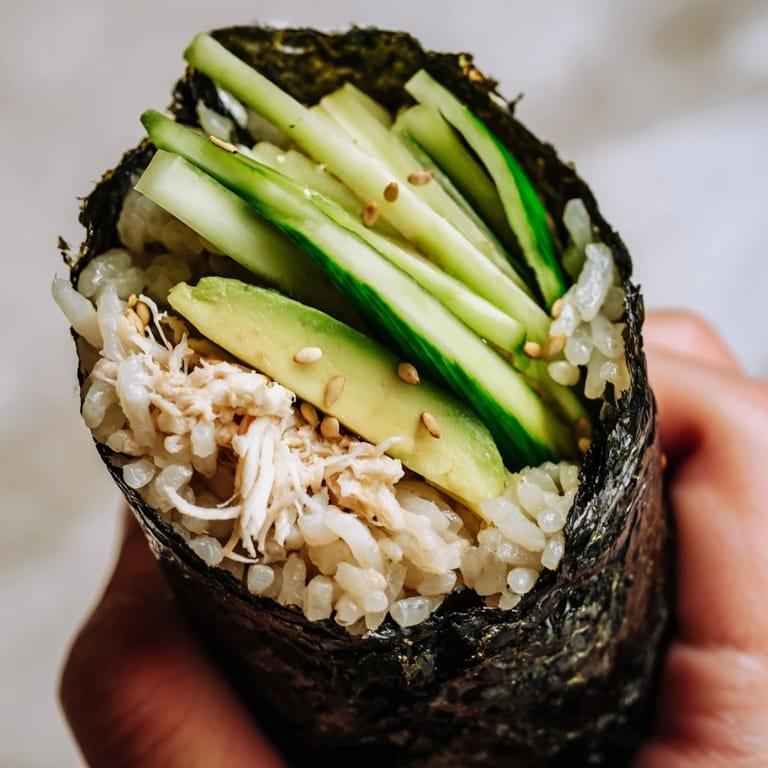
- Place a half sheet of nori shiny side down on your palm, spread 2 to 3 tablespoons of rice diagonally across one corner, then layer avocado, cucumber, and crab on top. Start rolling from the rice filled corner, wrapping the nori into a cone shape and sealing the edge with a few grains of rice.
- Serve immediately:
- Hand rolls are best eaten right away while the nori is still crisp and snappy. Set out soy sauce, pickled ginger, and wasabi so everyone can dip and customize as they go.
 Save
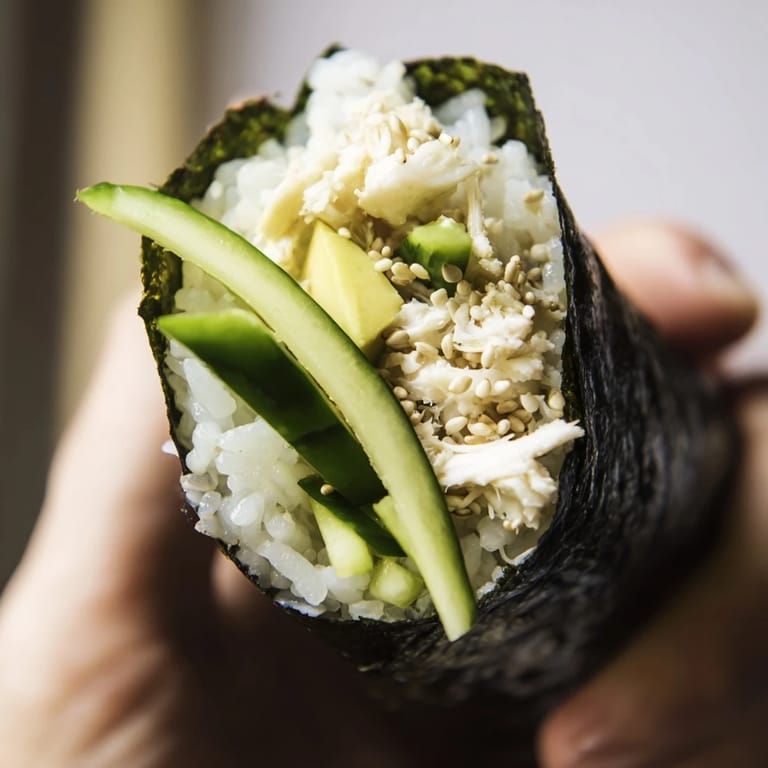
Save The night I served these to my in laws, my father in law said he didn't realize homemade sushi could taste this fresh. He ate four in a row and asked if we could do this every month. It became our tradition, and now I can't imagine a family gathering without a platter of hand rolls, everyone laughing as they try to roll theirs tighter than mine.
Choosing Your Fillings
Once you master the basic technique, you can swap in whatever sounds good. I've used smoked salmon with cream cheese (not traditional, but delicious), cooked shrimp with spicy mayo, and even roasted sweet potato for a vegetarian version. The key is balancing textures, something creamy, something crunchy, something with a little bite. My favorite surprise filling is thinly sliced mango with lime and cilantro, which sounds wild but tastes like sunshine wrapped in seaweed.
Getting the Rice Right
Sushi rice is the backbone of every hand roll, and it took me a few tries to stop making it too wet or too sticky. The trick is measuring your water precisely and letting the rice steam undisturbed after cooking. I used to lift the lid to check on it, which let all the steam escape and left me with undercooked grains. Now I set a timer and walk away, trusting the process. If your rice turns out too firm, add a tablespoon of water next time; if it's mushy, use a little less.
Serving and Storing Tips
Hand rolls don't keep well because the nori absorbs moisture and turns chewy, so plan to eat them within an hour of rolling. If you're hosting, set up a hand roll bar with all the fillings prepped and let guests assemble their own. It's interactive, fun, and takes the pressure off you to roll everything perfectly. Leftover sushi rice can be stored in the fridge for a day and gently reheated with a damp towel over it, but it's never quite as good as fresh.
- Serve the rolls on a wooden board or a simple white platter for a clean, elegant presentation.
- Offer small dishes of soy sauce so everyone can dip without double dipping.
- Pickled ginger and wasabi aren't just for flavor, they cleanse your palate between different fillings.
 Save
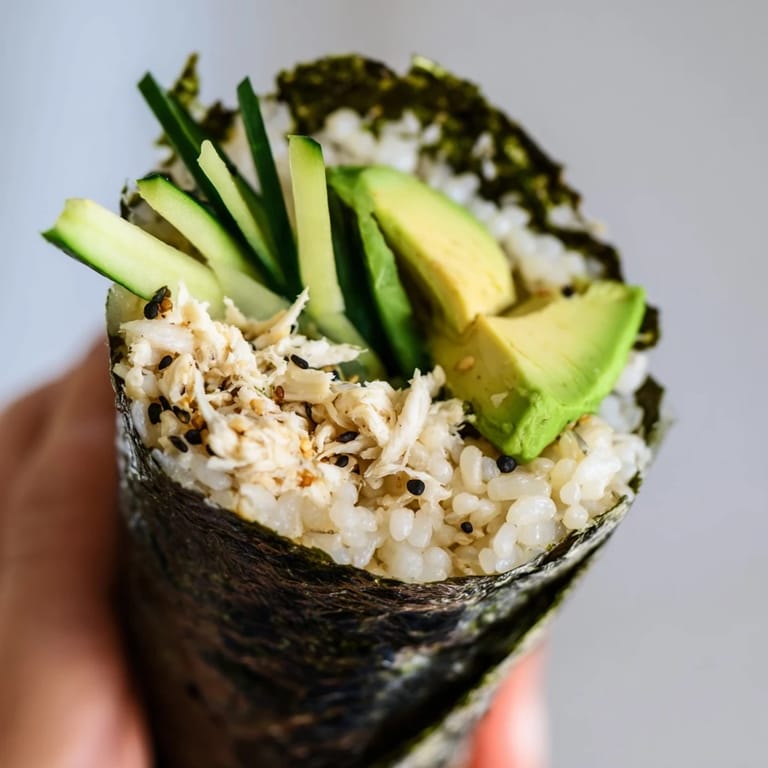
Save These hand rolls taught me that sushi at home doesn't have to be intimidating or precise, it just has to taste good and make you smile. I hope they become a regular in your kitchen, too.
Recipe FAQs
- → How do I prevent the nori from becoming soggy?
Serve the hand rolls immediately after assembly, as nori softens when exposed to moisture over time. If preparing ahead, keep the nori separate and assemble just before serving. Store cooked rice and fillings in separate containers until ready to roll.
- → Can I make substitutions for the crab filling?
Absolutely. Cooked shrimp, smoked salmon, cooked chicken, or tofu all work beautifully as alternatives. For shellfish allergies, tofu provides a protein-rich option that pairs well with the other fillings.
- → What's the best technique for rolling a tight cone?
Place the nori shiny side down on your palm or a bamboo mat. Spread rice diagonally across one corner, layer fillings, then roll starting from the rice-filled corner. Use gentle pressure and seal the edge overlap with a few grains of rice to hold it closed.
- → How should I season the sushi rice properly?
After cooking, let the rice cool to room temperature. Dissolve rice vinegar, sugar, and salt together, then gently fold this mixture into the warm rice using a wooden paddle. This creates the signature sweet-tangy flavor without damaging the grains.
- → Are there allergen concerns with this dish?
Yes. This contains crab (shellfish), soy sauce, and mayonnaise (eggs). While nori is typically gluten-free, always check labels. For shellfish allergies, substitute with chicken or tofu. Confirm all ingredients match your dietary restrictions before preparation.
- → Can I prepare the components in advance?
Yes. Cook and season the rice a few hours ahead, then cool and store it in an airtight container. Prepare vegetable fillings and store separately. Assemble hand rolls fresh just before serving for the best texture and nori quality.