 Save
Save The first time I made this soup, I was standing in my kitchen on an October afternoon when the light turned that particular shade of gold that makes you want to cook something warm. I'd bought too many carrots at the farmers market—a common mistake of mine—and rather than let them fade in the crisper, I decided to roast them. That simple choice transformed everything. The sweetness that emerged from the oven was nothing like raw carrots; it was deeper, almost caramel-like, and I knew I had to build something around it.
I served this to my friend Daniel one Saturday when he showed up unannounced and cold, still in his jacket from the bike ride over. Watching his whole face relax after that first spoonful reminded me why I cook—it's not about impressing anyone, it's about wrapping someone in warmth when they need it.
Ingredients
- Carrots (1 lb, peeled and chopped): Use ones that feel firm and have good color; they'll roast into something almost candy-like without any added sugar.
- Sweet potato and parsnip (1 medium each, peeled and diced): These two together create a hidden depth—the parsnip adds an earthiness that keeps the soup from tasting one-note.
- Onion and garlic (1 medium onion, 2 cloves): These are your flavor foundation; don't skip the step of cooking them in oil first.
- Vegetable broth (4 cups): The quality matters here more than you'd think—a good broth makes this soup sing.
- Coconut milk or heavy cream (1 cup): Coconut milk gives it a subtle richness without heaviness; cream is creamier but both work beautifully.
- Pure maple syrup (2 tbsp): Don't use pancake syrup; the real thing has a complexity that actually improves with the roasted vegetables.
- Olive oil (2 tbsp total): Split between roasting and sautéing so nothing sticks or burns.
- Ground ginger and cinnamon (1 tsp and 1/2 tsp): These spices whisper rather than shout, warming everything from the inside out.
- Salt and pepper: Taste as you go; you'll need more than you think once the broth is added.
Tired of Takeout? 🥡
Get 10 meals you can make faster than delivery arrives. Seriously.
One email. No spam. Unsubscribe anytime.
Instructions
- Preheat and prep:
- Turn your oven to 400°F and get your vegetables ready while it heats. Chopping takes longer than roasting, so tackle that first.
- Roast the vegetables:
- Toss your carrots, sweet potato, and parsnip with 1 tablespoon olive oil, salt, and pepper, then spread them on a baking sheet. They'll take 25 to 30 minutes, and you'll know they're ready when the edges start turning caramelized and the kitchen smells like autumn decided to move in.
- Build the base:
- While they roast, heat the remaining olive oil in a large pot over medium heat. Add your chopped onion and let it soften for about 5 minutes, then add the minced garlic, ginger, and cinnamon. Cook just until the spices bloom and you can smell that warm, toasty perfume—usually about a minute.
- Combine and simmer:
- Add the roasted vegetables to the pot with the onion mixture, then pour in your vegetable broth. Bring everything to a gentle simmer and let it cook for 10 minutes so the flavors start talking to each other.
- Blend and finish:
- Remove from heat and stir in the maple syrup and coconut milk. Use an immersion blender to make it smooth and velvety, working in small sections if you need to, or carefully blend in batches in a countertop blender if that's what you have.
- Taste and adjust:
- This is where the soup becomes yours—add more salt, pepper, or even a tiny drizzle more maple syrup if it needs it. Everyone's palate is different, so trust yours.
- Serve with care:
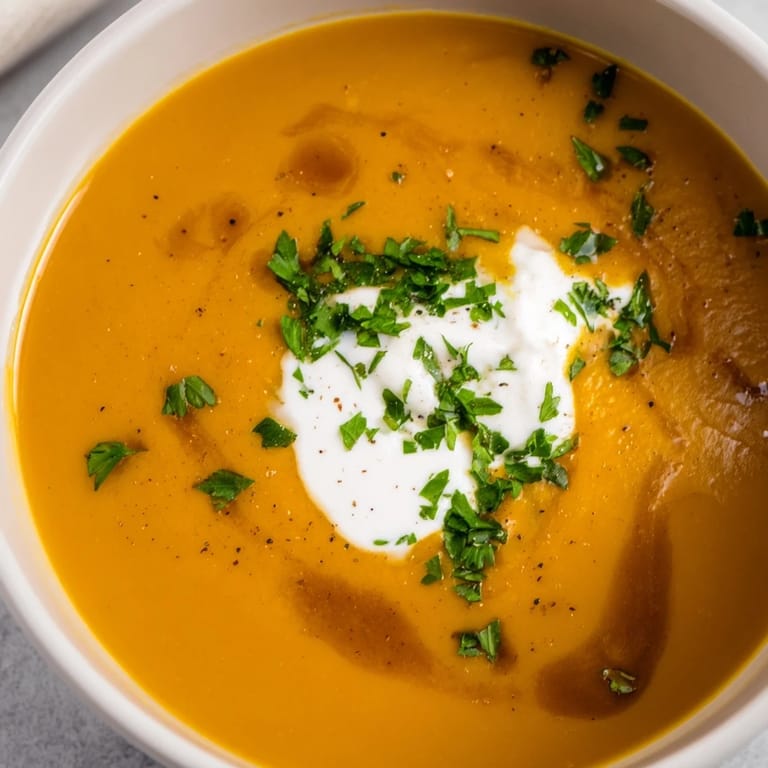
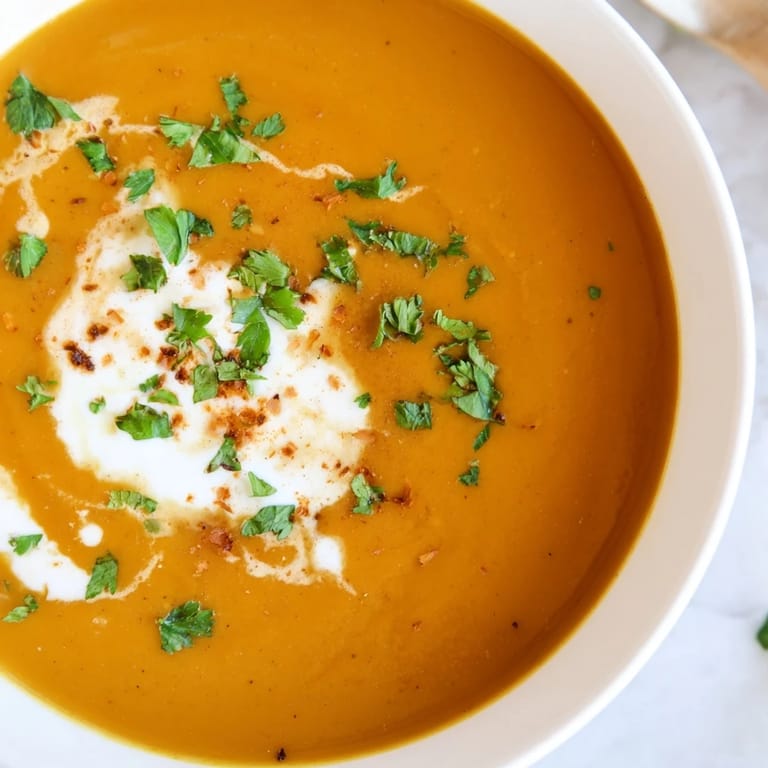
- Ladle it into bowls and top with a handful of fresh parsley, a dollop of yogurt or crème fraîche, and another whisper of maple syrup if you're feeling generous. Serve hot.
 Save
Save There's a moment near the end of making this soup when you stand over the pot with your immersion blender and watch the rough chunks of vegetables transform into something smooth and luxurious. It feels a bit like magic, but it's really just patience and heat doing their work. That's when I always remember why I cook.
The Roasting Secret
I learned this the hard way after making the soup three times before I actually roasted the vegetables first. The difference between boiling them and roasting them is the difference between a mild, one-note soup and something that tastes like it's been simmering on the back of your stove all day. Roasting concentrates the natural sugars and adds a caramelized depth that you cannot get any other way. It's also why this soup is worth the few extra minutes of oven time.
Flexibility and Substitutions
This soup is forgiving in the best way. I've made it with butternut squash instead of sweet potato on nights when that's what I had, and it was equally delicious. I've used half coconut milk and half regular cream, or gone full dairy-free with oat milk when friends were coming over. The backbone of roasted root vegetables and that gentle maple sweetness stays the same no matter what you swap in.
Serving and Storage
Serve this soup hot with crusty sourdough or warm bread—something with enough texture to push back against the velvety soup. It pairs beautifully with a crisp white wine like Sauvignon Blanc if you're in the mood, but it's equally perfect as an afternoon snack with nothing but a spoon.
- This soup keeps beautifully in the refrigerator for up to four days, or frozen for a month if you leave out the cream and add it fresh when you reheat.
- Reheat gently on the stovetop over low heat so the flavors don't get shocked or separated.
- Save the garnishes for serving day—they add a welcome brightness and texture that shouldn't be cooked into storage.
 Save
Save This soup lives in the place between comfort and sophistication, where simple ingredients become something special without any pretense. Make it for yourself, make it for someone you care about, or make it just because the weather turned cold and your kitchen deserves to smell like autumn.
Recipe FAQs
- → What vegetables are used in this dish?
Carrots, sweet potato, parsnip, and onion form the vegetable base, providing natural sweetness and depth.
- → How does roasting affect the flavor?
Roasting caramelizes the vegetables, intensifying their sweetness and enriching the overall taste.
- → Can the dairy be substituted?
Yes, coconut milk offers a creamy, dairy-free alternative without sacrificing richness.
- → Which spices are included for flavoring?
Ground ginger and cinnamon add warm, aromatic notes that complement the maple’s sweetness.
- → What garnishes enhance the dish?
Chopped parsley, a dollop of yogurt or crème fraîche, and an extra maple syrup drizzle add freshness and balance.
- → Is this dish suitable for gluten-free diets?
Yes, all ingredients used are naturally gluten-free, ensuring safe enjoyment for gluten-sensitive individuals.