 Save
Save I still remember the year I decided to transform my holiday entertaining. Instead of the usual cheese board that looked like everyone else's, I wanted to create something that told a story—twelve chapters, one for each day of Christmas. I pulled out my favorite cheeses from the local fromagerie, each one a memory of a trip or a season, and began arranging them like a love letter on a board. That night, watching guests discover each pairing, their eyes lighting up as they found their favorite combination, I realized this wasn't just food. It was an invitation into a world of flavor and thoughtfulness that only a carefully curated cheese board could offer.
The first time I served this at a dinner party, my grandmother sat at the table and spent forty minutes tasting her way through all twelve sections, pairing each cheese with different crackers and jotting notes on a napkin. At eighty-three, she was discovering cheeses she'd never tried, and it became the most memorable evening we'd shared in years. That's when I knew this wasn't just a platter—it was permission to be curious, to linger, and to celebrate the everyday luxury of good food with people you love.
Ingredients
- Brie: The creamy ambassador, soft and forgiving, it's your gateway cheese for anyone hesitant. Choose one that yields gently to pressure but isn't sweating—that's the sweet spot.
- Aged Cheddar: This is where sharpness teaches you about patience and time. The older it gets, the more it crystallizes into something almost nutty and complex.
- Manchego: A Spanish beauty with a faint nuttiness that reminds you why terroir matters. It's firm enough to slice thin, elegant enough to stand alone.
- Roquefort or Blue Cheese: The daring choice. It asks you to be brave and rewards you with umami and a subtle spice that lingers beautifully.
- Goat Cheese: Tangy, bright, and almost floral, it's the cheese that makes you wonder why you don't eat it every day.
- Gruyère: Complex and slightly sweet with hints of caramel, it's the cheese that taught me how flavor develops over months of aging.
- Camembert: Like Brie's more sophisticated cousin, it has a mushroomy depth that unfolds as it warms on your tongue.
- Gouda: Caramel-sweet and buttery, it's comfort wrapped in wax. The Dutch knew what they were doing.
- Comté: Fruity and slightly granular, it's the cheese that makes you taste mountain meadows and time.
- Pecorino: Sharp, salty, and assertive, it's the cheese that doesn't apologize for being itself.
- Havarti: Buttery and mild, almost innocent in its creaminess, it's a bridge between bold and delicate.
- Smoked Cheese: Choose smoked provolone or another variety that whispers of fire pits and autumn. The smoke should complement, not overpower.
- Artisanal bread or assorted crackers: Your vehicles for the cheese, choose textures that vary—crispy, seeded, delicate—so each cheese gets its moment.
- Honey: Golden and floral, it's the voice of sweetness that makes creamy cheeses sing.
- Fig jam: Earthy and complex, it bridges the gap between sweet and savory in a way that feels inevitable.
- Whole grain mustard: Sharp and grainy, it's the wake-up call that sharpens your palate for the next bite.
- Seedless grapes: Fresh and juicy, they're the palate cleanser that makes you ready to taste again.
- Dried apricots: Chewy and concentrated sweetness, they pair with smoked and aged cheeses like old friends.
- Walnut halves: Earthy and slightly bitter, they ground the sweeter pairings and add texture.
- Toasted almonds: Nutty and delicate, they toast away the raw edge and bring out hidden flavors in mild cheeses.
- Apple slices: Crisp and slightly tart, they're the refreshment that comes right when you need it.
- Fresh pear slices: Soft and sweet, they pair with blue cheese and aged varieties like they were meant for each other.
- Dark chocolate: Rich and slightly bitter, it's the unexpected twist that makes you say yes, absolutely.
- Cornichons: Tiny pickles packed with vinegar and spice, they're the sharp punctuation that resets your mouth.
- Fresh herbs: Thyme and rosemary, fragrant and piney, they're not just garnish—they're a fragrant invitation to what's below.
Tired of Takeout? 🥡
Get 10 meals you can make faster than delivery arrives. Seriously.
One email. No spam. Unsubscribe anytime.
Instructions
- Divide Your Stage:
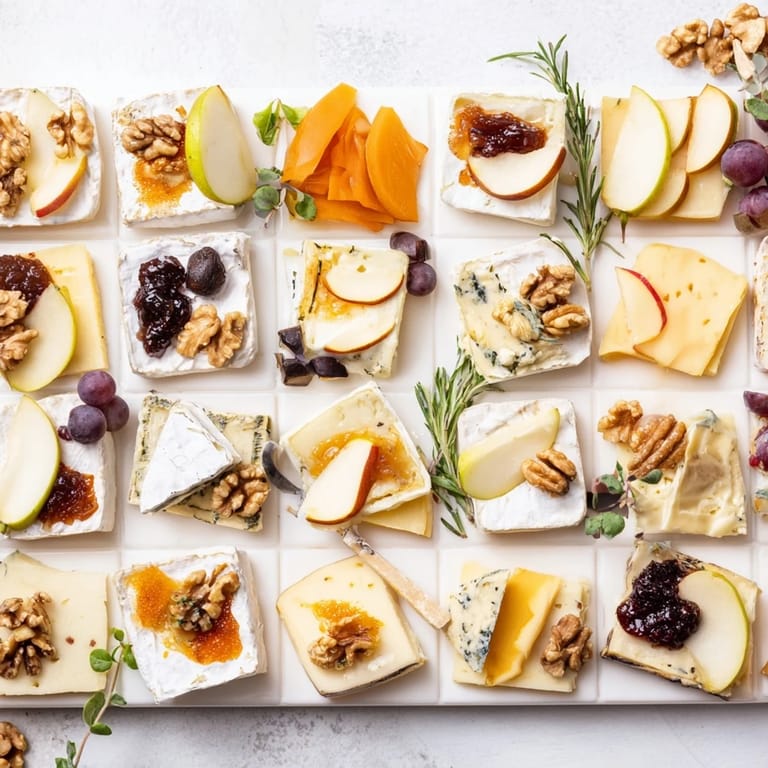
- Take your largest, most beautiful serving board—this is going to be a portrait of thoughtfulness. Visualize twelve equal sections radiating outward like a clock, or arranged in two neat rows of six. You can use small ramekins to mark the boundaries, or simply arrange with intention, knowing that perfect geometry matters less than intentional spacing.
- Meet Your Cheeses:
- Remove each cheese from the refrigerator about fifteen minutes before assembly. Let them come to room temperature—this is when their personalities emerge. Aged Cheddar becomes silkier, Brie softens to near butter, and the blue cheese's edges round out into something welcoming. Cut each into bite-sized pieces, respecting the cheese's natural structure. A soft cheese deserves a gentle cut; a hard cheese can be chunked or thinly sliced.
- The Dance of Pairing:
- Now comes the part that feels like play. In section one: Brie meets a warm honey drizzle and a paper-thin apple slice. In another: Aged Cheddar gets a small dollop of fig jam and a walnut that anchors it. Manchego with a toasted almond and a whisper of restraint. Roquefort with a pear slice that is soft enough to yield. Goat Cheese gets a sprig of fresh thyme and a single grape. Gruyère sits beside a tiny pool of whole grain mustard and a cornichon. Camembert cradles an apple slice and an almond. Gouda reaches for a dried apricot and a dark chocolate piece. Comté claims a grape and a walnut. Pecorino gets pear and honey. Havarti takes fig jam and almond. Smoked Cheese earns a cornichon and dark chocolate. Let your instincts guide you here—you're not following rules, you're creating moments.
- Frame the Masterpiece:
- Arrange crackers and bread slices around the perimeter, leaning them like petals, making sure there's enough for each person to have twelve vehicles for their journey through the board. Scatter them naturally, as if they're supporting players in this story.
- The Finishing Touch:
- Sprinkle fresh herbs—thyme leaves and small rosemary sprigs—across the board like confetti. These aren't just decoration. They're aromatic clues that deepen the experience. Their fragrance will rise as people gather, setting the mood.
- Serve with Grace:
- Bring the board to the table when everyone is seated, at room temperature. Let people discover. The pairings are suggestions, not laws. Someone might ignore my careful arrangement and combine Brie with chocolate and cornichon, and that discovery will be theirs alone.
 Save
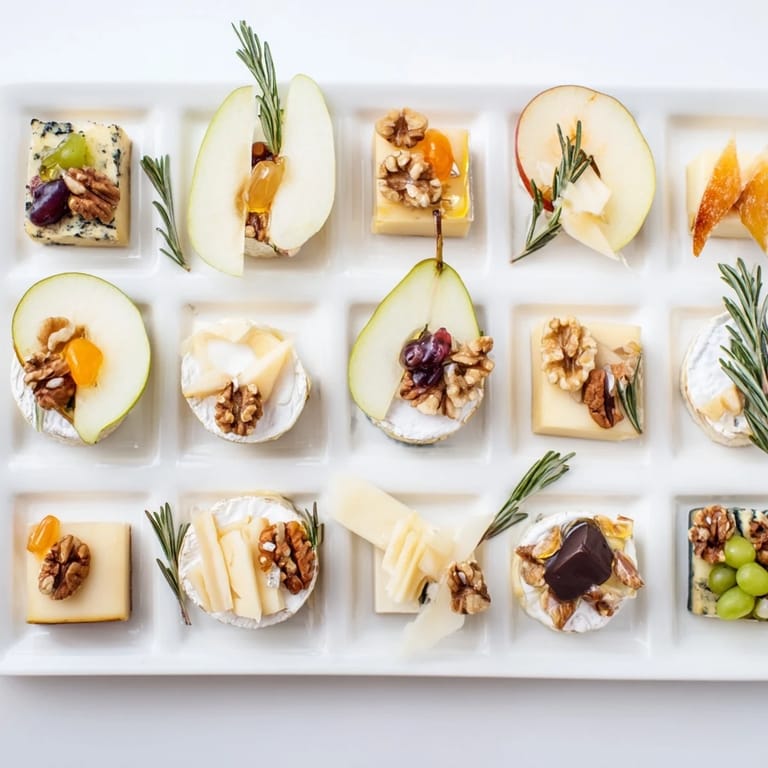
Save Years ago, I made a mistake on one of these boards—I brought it straight from the refrigerator, cold and tight, and watched as elegant cheeses tasted like nothing much at all. A friend gently suggested we wait, and as the board warmed, it transformed. Every cheese found its voice, every pairing clicked into place. That taught me that hospitality isn't just about appearance. It's about giving your ingredients and your guests the conditions to shine.
The Art of Cheese Selection
The magic of this board lies not in perfection but in curiosity. Visit a good cheese counter where someone cares about their work. Tell them you're making a twelve-day board and ask them to suggest cheeses across the spectrum—soft to hard, mild to bold, local to international. A good cheesemonger will hand you samples and stories. They'll tell you which cheese pairs with chocolate and why. They'll remind you that terroir—the way a place shapes what grows and grazes there—matters more than names. Build your board around cheeses that excite you, and let the pairings follow naturally from there.
Pairing Principles That Never Fail
There are no real rules here, just patterns that emerge when you taste thoughtfully. Creamy cheeses love sweet partners—honey, apricot, fig. Aged hard cheeses want savory complexity—walnuts, mustard, cornichon. Blue cheese reaches for the unexpected—dark chocolate, pear, walnut. But these are invitations to experiment, not commands. The moment you stop overthinking and start tasting, you'll find your own pairings that make people stop and close their eyes.
- Sweet always softens sharp—a touch of honey or fig can make bold cheese approachable and elegant
- Textural contrast keeps the palate interested—pair soft cheese with something crispy, smooth with grainy
- Temperature and acidity reset the palate—cool grapes and pickled cornichons let you taste cheese again with fresh attention
Why This Board Transforms Parties
When you set down a cheese board like this, you're not just offering food. You're offering permission. Permission to linger. To try something unfamiliar. To taste without pressure. To talk about flavor like it matters. To slow down. A guest who might never order Roquefort at a restaurant will try it here, paired thoughtfully with pear and walnut, and discover something about themselves they didn't know. Another will find their new favorite in a cheese they'd never heard of. These small discoveries become stories shared over wine, and those stories become the evening people remember.
- The twelve sections make it feel like an event, not just snacking
- Individual pairings prevent debate about what goes together—you've already decided, but guests feel free to rearrange
- The variety ensures no one gets bored and everyone finds something they love
 Save
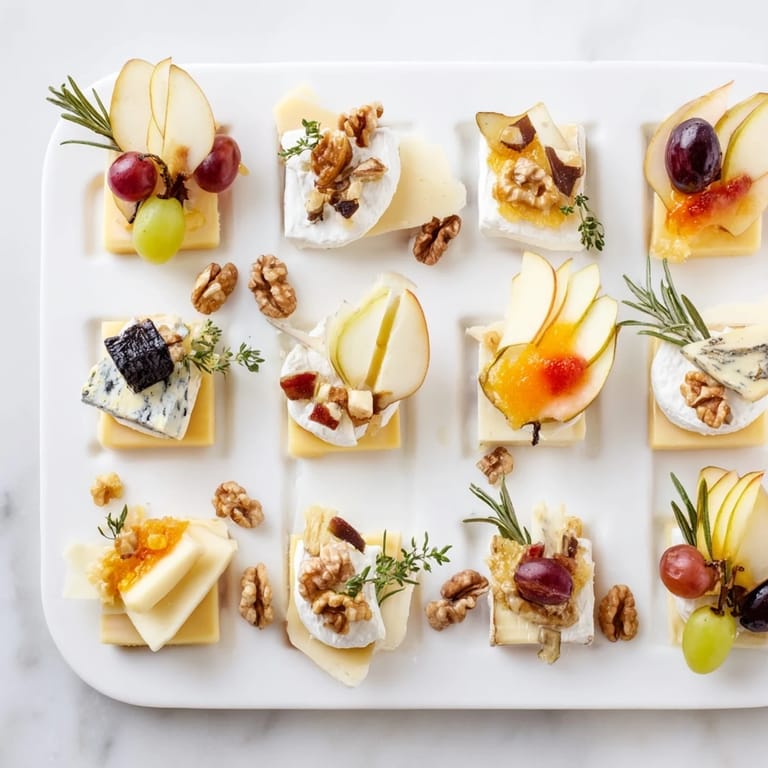
Save Every time I set down this board, I watch people become adventurous. They taste things they thought they didn't like and discover they were wrong. That's the real magic—creating space for surprises.
Recipe FAQs
- → What cheeses are included in the twelve days board?
The board features Brie, Aged Cheddar, Manchego, Roquefort or Blue Cheese, Goat Cheese, Gruyère, Camembert, Gouda, Comté, Pecorino, Havarti, and a Smoked Cheese like Provolone.
- → How are the cheeses paired on the board?
Each cheese is paired with distinct accompaniments such as honey, fig jam, nuts (walnuts, almonds), fresh fruit slices, dark chocolate, mustard, and cornichons to enhance the flavors.
- → What is the ideal serving temperature?
Allow the board to come to room temperature before serving to bring out the best flavors and textures of the cheeses.
- → Can this board accommodate dietary preferences?
Yes, using vegetarian or plant-based cheeses can make the board suitable for vegetarian or vegan diets. Gluten-free crackers can also be used to accommodate gluten sensitivities.
- → What drinks complement this cheese board?
Pairings like sparkling wine, light red wines, or cider complement the range of cheeses and accompaniments beautifully.
- → How should the board be arranged for best presentation?
Divide the serving board into 12 sections using bowls or garnish lines, placing one cheese and its accompaniments in each. Surround with bread or crackers and finish with fresh herb garnishes.