 Save
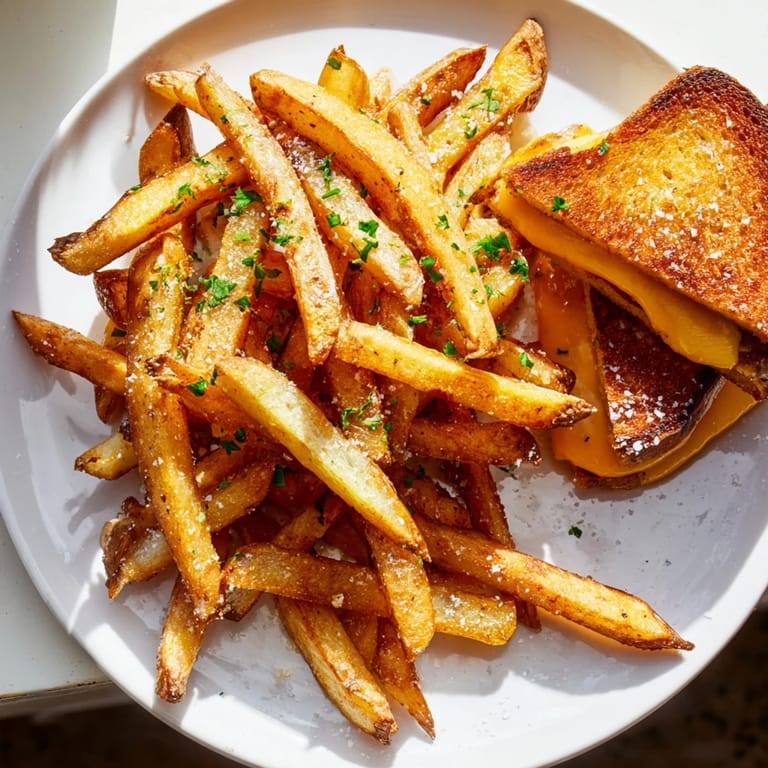
Save There's something about the combination of beef tallow and cast iron that takes me back to a Saturday afternoon when my neighbor handed me a jar of golden tallow he'd rendered himself, almost as if he was passing down a secret. I'd never deep-fried anything in tallow before, always reaching for the generic oils in a bottle, but that first batch of fries came out impossibly crispy—the kind that shattered between your teeth and tasted like something richer, more intentional. The grilled cheese was the obvious pairing, golden bread cradling melted sharp cheddar, and together they felt less like a quick lunch and more like an event worth a whole afternoon.
I made this for my sister on a cold Tuesday evening when she needed comfort food more than she needed anything fancy, and watching her face when she bit into that first fry—that moment when the crispy exterior gave way to the tender inside—felt like the whole thing was worth it. She stole fries off my plate without asking, which is how I knew it was exactly right.
Ingredients
- Russet potatoes: Choose large ones with minimal blemishes; the starch content is crucial for that crispy exterior, and soaking removes just enough to keep them tender inside without making them fragile.
- Beef tallow: This is the foundation of the whole thing—if you can source it from a butcher or render it yourself, the difference is remarkable, but quality matters more than quantity.
- Kosher salt: Don't use table salt here; it dissolves differently and won't coat the fries the way you want.
- Fresh parsley: A small sprinkle at the end adds color and a whisper of freshness that cuts through the richness.
- Sharp cheddar cheese: The sharpness matters because it stands up to the richness of the beef tallow without disappearing into sweetness.
- Sourdough bread: The slight tang and sturdy crumb hold up to buttering and frying without falling apart, and it toasts beautifully.
- Unsalted butter: Softened before spreading means it distributes evenly, creating an even golden crust without burning.
- Mayonnaise (optional): A restaurant trick that adds moisture to the bread, helping it brown faster and stay tender inside.
Tired of Takeout? 🥡
Get 10 meals you can make faster than delivery arrives. Seriously.
One email. No spam. Unsubscribe anytime.
Instructions
- Soak and Dry the Potatoes:
- Cut your potatoes into ¼-inch sticks and submerge them in a large bowl of cold water for at least 30 minutes—this draws out excess starch that would otherwise make them gummy. Drain them thoroughly and pat each stick completely dry with paper towels, because even a little moisture will cause splattering and prevent crisping.
- First Fry (The Gentle Cook):
- Heat your beef tallow to 325°F and slide the potatoes in, working in batches so they cook evenly without crowding the pot. They'll sizzle quietly at first; you're looking for them to turn pale gold and feel tender when you poke one, which takes about 4 to 5 minutes. Remove them to paper towels and let them rest—this is where the magic starts building.
- Second Fry (The Finish):
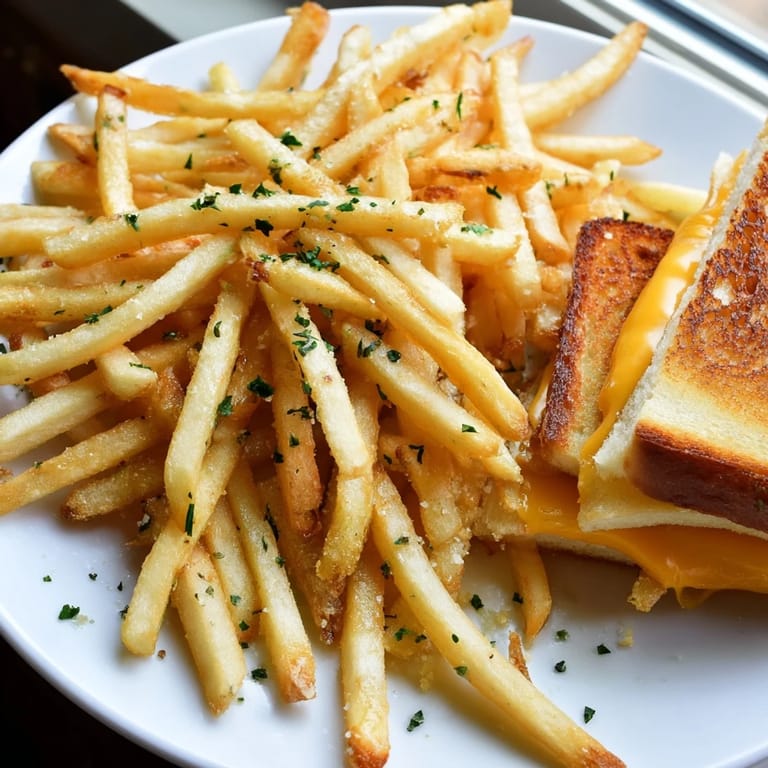
- Increase the heat to 375°F and return the fries for a quick 2 to 3 minutes, watching as they transform into a deep golden color and sound crispy when you stir them. They should look like they're blushing slightly, not screaming in color; pull them out when they're singing that perfect crackling sound, then season aggressively with salt and pepper.
- Build Your Grilled Cheese:
- Spread softened butter (or a thin layer of mayo mixed with butter, if you're feeling fancy) on one side of each bread slice. Lay two slices of cheddar between buttered sides facing outward, creating a little cheese nest that will melt straight into the bread.
- Toast to Golden Perfection:
- Heat your skillet over medium heat and place your sandwich down, listening for that satisfying sizzle as the butter hits the hot surface. Press it gently with a spatula every 30 seconds or so, letting the heat distribute evenly, and after 3 to 4 minutes flip it to brown the other side just as deeply. You want the cheese melted all the way through and the bread crackling, not soft.
- The Final Assembly:
- Plate your grilled cheese whole or sliced on the diagonal, pile those fries beside it with wild abandon, and eat immediately while the fries are still snapping between your teeth.
 Save
Save There was a moment during a casual dinner party when someone asked to take a photo of the plate before eating, and I realized then that this dish had become something beyond just food—it was the kind of thing people remember. That's when I knew I'd nailed it.
The Magic of Beef Tallow
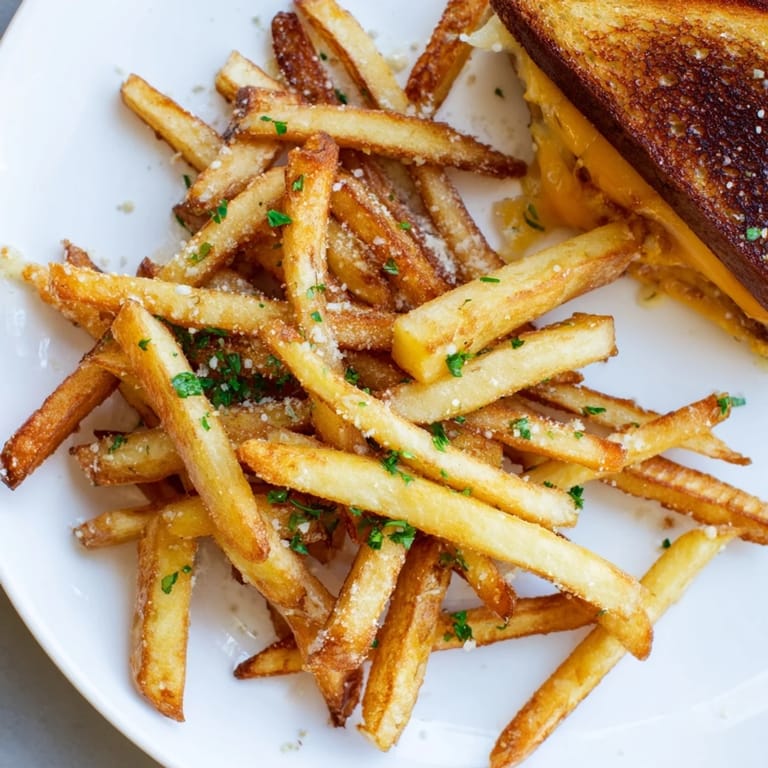
Beef tallow has been the gold standard for frying for centuries, and using it here isn't pretentious—it's actually returning to something older and more honest than vegetable oil. The fat has a higher smoke point and a subtle savory quality that makes potatoes taste more like themselves, not like a vehicle for whatever oil you used. If you can't find tallow, duck fat is the next best option, though beef tallow really is worth seeking out from a good butcher.
Why the Double Fry Wins
The first fry at lower temperature cooks the potato through without browning, and the second fry at higher heat creates that crackling, shattered exterior. Trying to do it all in one fry gives you either a raw center or a burnt crust, which is why this method exists. It feels like extra work until you bite into that first fry and realize you're tasting professional kitchen technique on your own plate.
Grilled Cheese Secrets Worth Keeping
The key to a grilled cheese that doesn't disappoint is understanding that you're not making toast—you're melting cheese gently while building a crispy exterior. Using mayo mixed with butter sounds strange until you realize mayo contains water and emulsifiers that help the bread brown more evenly without the butter solids burning. Sourdough's slight acidity and sturdy crumb handle the heat better than regular white bread, and sharp cheddar doesn't fade or turn oily the way milder cheeses do.
- Let your butter soften to room temperature so it spreads without tearing delicate bread slices.
- Press gently with the spatula during cooking to help the heat conduct into the cheese without squashing out the moisture.
- Slice on the diagonal when serving because everyone prefers diagonals, even if they don't know why.
 Save
Save This is the kind of meal that reminds you why cooking matters, why comfort food deserves respect, and why sometimes the best moments happen when you slow down enough to fry potatoes properly. Make this when you want to feel like you've done something meaningful in your kitchen.
Recipe FAQs
- → Why soak the potato sticks before frying?
Soaking removes excess starch, promoting crispiness and preventing fries from sticking together during frying.
- → What is the benefit of double-frying fries?
Double frying ensures the fries are tender inside and ultra-crispy outside by cooking them at two different temperatures.
- → Can I use other fats instead of beef tallow?
Yes, duck fat can be used for similar richness, or vegetable oil for a vegetarian-friendly alternative.
- → How do I get the grilled cheese extra crispy?
Butter the bread generously and optionally add mayonnaise, then cook on medium heat pressing gently for even toasting.
- → What cheeses work well in the grilled sandwich?
Sharp cheddar is classic, but mixes with Gruyère or mozzarella add depth and meltiness.