 Save
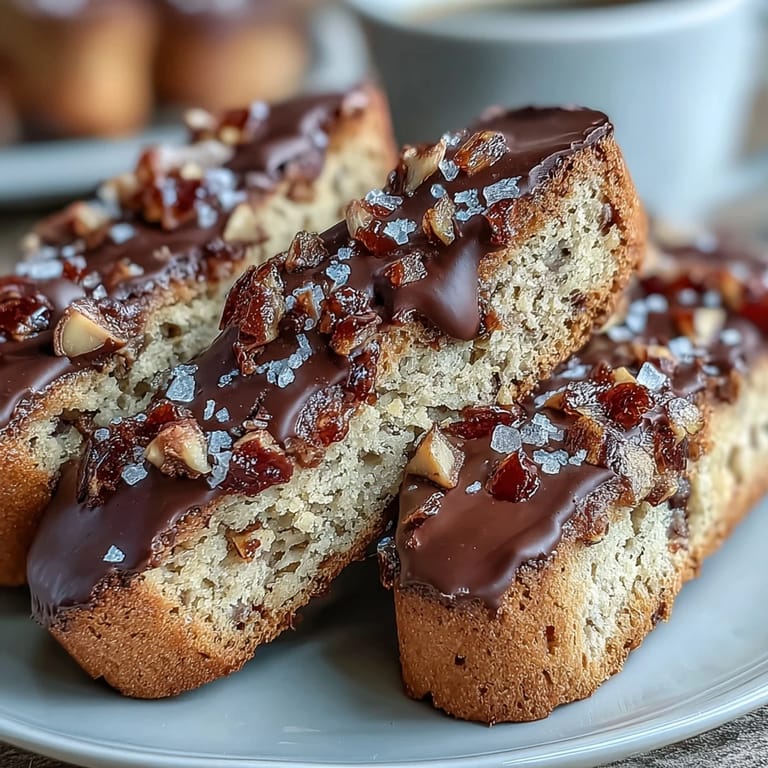
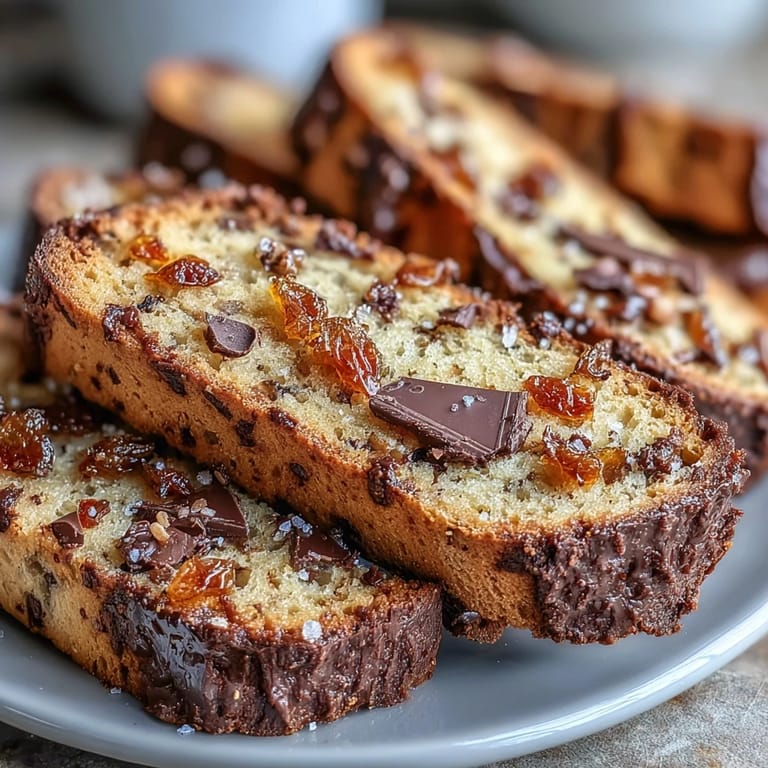
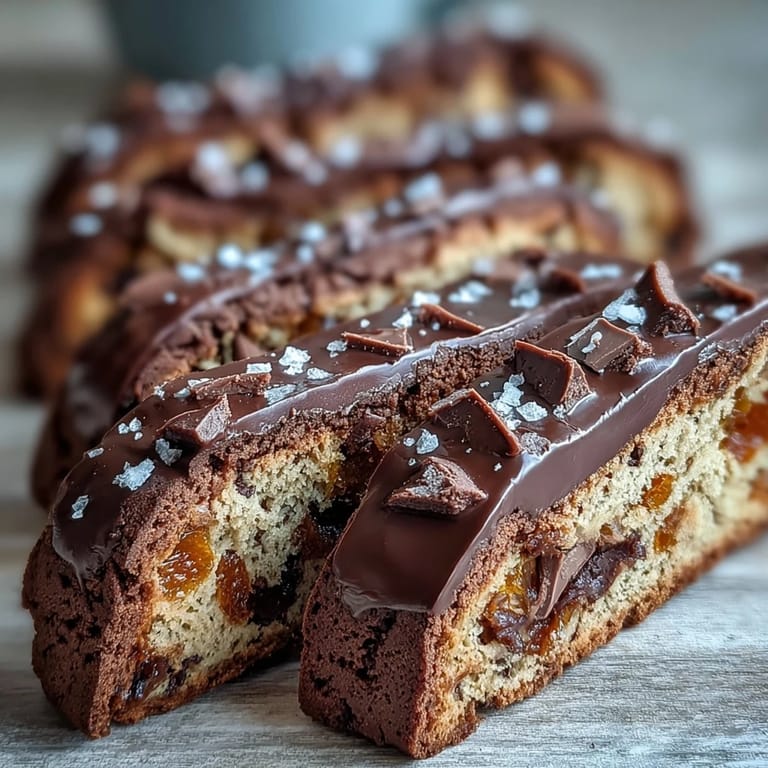
Save My kitchen smelled like a Sicilian marketplace the afternoon I first made these biscotti, all bright citrus and deep chocolate dancing together. A friend had left me a jar of homemade candied orange peel months earlier, and it sat in my cupboard until I finally understood what it was meant for. There's something about twice-baked cookies that feels both fancy and comforting at once, like they belong in a tin beside your grandmother's china but also in your coat pocket for a midday escape. These ones crack just right when you bite them, releasing little bursts of sweetness before that bitter-rich chocolate arrives.
I made a batch last December when my sister visited unexpectedly, and she sat at the kitchen counter eating them straight off the cooling rack while we caught up on months of conversations. She dunked one in my espresso and made a face that said everything about how good that combination was, and suddenly I understood why biscotti mattered so much to Italian grandmothers. That tin of homemade cookies became the thing she asked about every phone call after.
Ingredients
- All-purpose flour (2 cups / 250 g): The foundation of structure; measure by spooning and leveling for accuracy, or weigh it if you want predictable results every time.
- Baking powder (1.5 teaspoons): Just enough lift to keep these tender rather than dense, but not so much that they cake up.
- Salt (1/4 teaspoon): A whisper that makes the chocolate sing and keeps sweetness from feeling one-note.
- Eggs (2 large): These bind everything and create that light, airy crumb texture biscotti are known for.
- Granulated sugar (2/3 cup / 130 g): Creaming this with eggs traps tiny air bubbles that make the first bake light and fluffy.
- Unsalted butter, melted and cooled (1/4 cup / 60 ml): Melted butter keeps the dough moist; let it cool so it doesn't scramble the eggs.
- Pure vanilla extract (1 teaspoon): Use the real thing here, not imitation, because you'll actually taste it in something this delicate.
- Orange zest, freshly grated (1/2 teaspoon): Fresh zest is non-negotiable; it brings alive flavor that dried versions can't match.
- Candied orange peel, finely chopped (3/4 cup / 100 g): The star player; chop it small enough to distribute evenly but big enough that you catch those jewel-like pieces in every bite.
- Dark chocolate, 60-70%, roughly chopped (3/4 cup / 120 g): The percentage matters because it balances brightness from the orange without being too bitter or too sweet.
Tired of Takeout? 🥡
Get 10 meals you can make faster than delivery arrives. Seriously.
One email. No spam. Unsubscribe anytime.
Instructions
- Set the stage:
- Preheat your oven to 350°F (175°C) and line a baking sheet with parchment paper so your first logs won't stick and brown unevenly. This early setup means you're never rushing once the dough comes together.
- Build the dry team:
- Whisk together flour, baking powder, and salt in a medium bowl, making sure the baking powder breaks up any tiny clumps. This prevents dense pockets later.
- Cream the foundation:
- Beat eggs and sugar in a large bowl until the mixture turns pale and fluffy, about 2 minutes; this is where the magic starts, because you're incorporating air that makes biscotti crisp rather than heavy. Once it's light, whisk in the cooled melted butter, vanilla, and orange zest until smooth.
- Bring it together:
- Pour the dry ingredients into the wet mixture and stir until just combined, being careful not to overwork the dough. Gently fold in the candied orange peel and chocolate so the pieces stay somewhat intact.
- Shape the logs:
- Divide dough in half and, with floured hands, shape each half into a 10-inch log about 2 inches wide, spacing them a couple inches apart on your parchment. The flour on your hands keeps things from sticking and frustration from building.
- First bake:
- Bake for 25 minutes until golden and just firm to the touch; you're looking for set-but-still-soft because these will harden more when you slice and finish them. Let cool for 15 minutes so you can handle them without burning your fingers.
- Lower and slice:
- Reduce oven temperature to 300°F (150°C). Using a serrated knife, slice the cooled logs diagonally into 3/4-inch thick pieces with a gentle sawing motion. Diagonal cuts look beautiful and give you more surface area for crispness.
- Second bake:
- Arrange slices cut-side down and bake for 12 minutes, flip them over, then bake another 10-12 minutes until they're completely dry and crisp throughout. You'll know they're done when they snap cleanly if you bend one.
- Cool completely:
- Transfer to a wire rack and let them sit for at least an hour before eating, because they crisp up even more as they cool. This is when patience actually changes everything.
 Save
Save These cookies have become my answer to that question of what to bring somewhere when you want to show up thoughtfully without spending the whole day cooking. There's something generous about homemade biscotti that's impossible to match with anything store-bought, and they somehow say 'I thought of you' in a way that feels both elegant and sincere.
The Story Behind Biscotti
Biscotti means 'twice-baked' in Italian, and the tradition comes from a practical place—these cookies were designed to last weeks without going stale, perfect for taking on ships or storing through winter. That's the romance of Italian cooking right there: something born from necessity became a luxury. Understanding that history changes how you appreciate the twice-baking process; it's not fussy technique, it's clever engineering that's been refined over centuries.
Why Candied Orange Peel Matters
There's a brightness in citrus that dark chocolate actually craves; it's why orange and chocolate appear together in desserts across every cuisine that values balance. Candied peel specifically gives you the pith and fruit together, which creates a complex sweetness instead of just sharp flavor. The warmth of the candying process transforms raw orange bitterness into something sophisticated that makes the chocolate taste richer.
Making These Your Own
Once you've mastered this version, you can drift into variations without fear of ruining the whole thing.
- Candied lemon peel brings a sharper elegance if you want something less sweet and more sophisticated-tasting.
- A pinch of cinnamon or nutmeg in the dry ingredients adds warmth that bridges the citrus and chocolate beautifully.
- If you can't find candied peel, dried cranberries chopped small work in a pinch, though you'll lose that distinctive orange note.
 Save
Save There's real comfort in knowing you have homemade biscotti waiting in a tin, ready for morning coffee or an afternoon when you need something beautiful and simple. Make these once and you'll understand why they've stayed in Italian kitchens for so long.
Recipe FAQs
- → What gives the biscotti its crisp texture?
The twice-baking process removes moisture, resulting in a crunchy, firm texture perfect for dipping.
- → Can I substitute the candied orange peel with another ingredient?
Yes, candied lemon peel can be used for a different citrus flavor twist without altering the overall texture.
- → Is it necessary to cool the biscotti between the two baking stages?
Allowing the first bake to cool ensures even slicing and helps maintain the shape during the second bake.
- → How should the biscotti be stored to keep crispness?
Store in an airtight container at room temperature for up to two weeks to preserve freshness and crunch.
- → Can the ends be dipped in chocolate for extra flavor?
Yes, dipping one end in melted dark chocolate after baking adds an indulgent touch and enhances flavor.