 Save
Save There's something about the smell of candying oranges that stops me mid-afternoon, makes me pause whatever I'm doing to stand by the stove and watch the transformation happen. My kitchen filled with steam and sweetness, I'd catch myself grinning at how something so simple—just fruit, sugar, and time—could become something that felt genuinely luxurious. That's when this parfait was born, really: not from a recipe hunt, but from standing there with candied orange slices cooling on my counter and wondering how to make them the star of something unforgettable.
I made this for my neighbor one Sunday morning when she stopped by unexpectedly with her kids, and watching them scrape their parfait glasses clean told me everything. One of her sons actually asked if he could help make it next time, which never happens—they're usually too cool for kitchen projects. That moment shifted how I think about this recipe: it's not just breakfast or dessert, it's actually a conversation starter, something that makes people slow down and taste what's in front of them.
Ingredients
- Oranges (2 medium, thinly sliced): The thinner you slice them, the faster they'll turn translucent and the better they'll soften—I learned this after my first attempt with chunky cuts.
- Granulated sugar (1 cup / 200 g): This creates the syrup that coats the oranges and develops that jewel-like quality; don't skip it or substitute with brown sugar.
- Water (1 cup / 240 ml): The liquid base that keeps everything moving smoothly and prevents burning on the pan bottom.
- Greek yogurt (2 cups / 500 g, plain or vanilla): The creamy anchor that balances all the sweetness and provides that luxurious texture against the crunch.
- Honey or maple syrup (2 tbsp, optional): Only add this if your yogurt tastes plain; sometimes the candied oranges provide enough sweetness and it's nice to taste the tang.
- Vanilla extract (1 tsp): A small detail that rounds out the yogurt layer and makes it feel less plain.
- Granola (1 1/2 cups / 120 g): Store-bought works perfectly fine here; I've made homemade versions and honestly, a good store-bought granola keeps the whole thing from feeling overwrought.
- Toasted almonds (1/4 cup / 30 g, chopped, optional): These add another layer of crunch and nuttiness that keeps things interesting across spoonfuls.
- Fresh mint (optional garnish): A handful of leaves scattered on top adds brightness and a professional finishing touch without any real effort.
Tired of Takeout? 🥡
Get 10 meals you can make faster than delivery arrives. Seriously.
One email. No spam. Unsubscribe anytime.
Instructions
- Create your syrup and begin the transformation:
- In a medium saucepan, combine sugar and water and bring to a simmer over medium heat, stirring gently until every grain of sugar disappears into the liquid. This takes maybe three minutes, and you'll know it's ready when the mixture goes from cloudy to clear.
- Candying the oranges with patience:
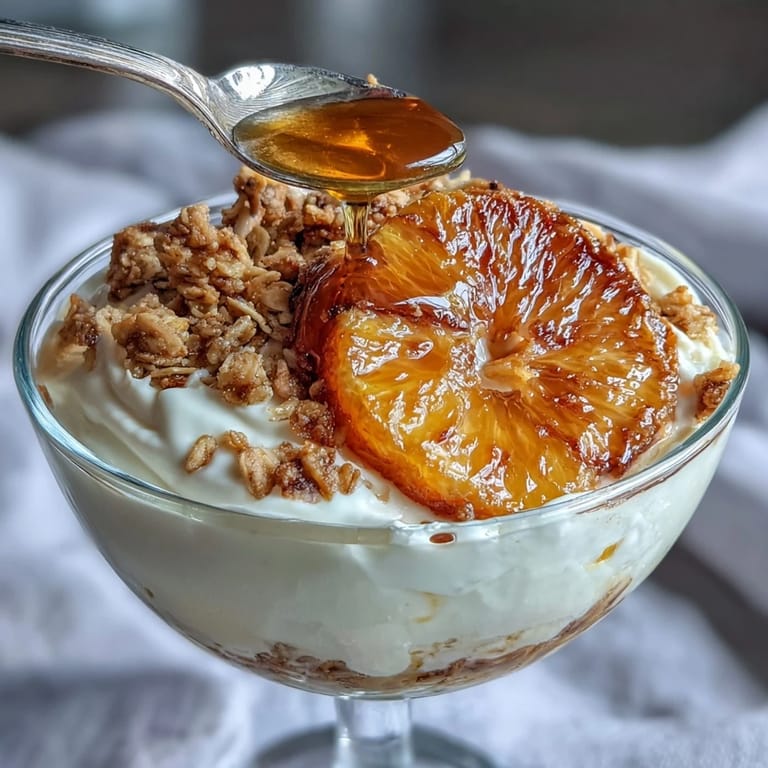
- Lay your orange slices in a single layer in the simmering syrup—work in batches if they overlap—and simmer gently for 12 to 15 minutes, turning the slices occasionally so they candy evenly. You're looking for the moment when the white pith turns translucent and the edges look almost glassy; resist the urge to rush this part.
- Cool without losing your progress:
- Carefully lift the candied oranges with a slotted spoon and arrange them on a parchment-lined tray, spreading them out so they don't stick together as they cool. This usually takes about 10 minutes, though you can speed it up by sliding the tray into the refrigerator if you're in a hurry.
- Prepare your yogurt foundation:
- In a bowl, whisk together Greek yogurt, honey if you're using it, and vanilla extract until smooth and completely combined. Taste as you go and remember that the candied oranges will add sweetness, so you don't need the honey if your yogurt tastes good to you already.
- Build your parfaits with intention:
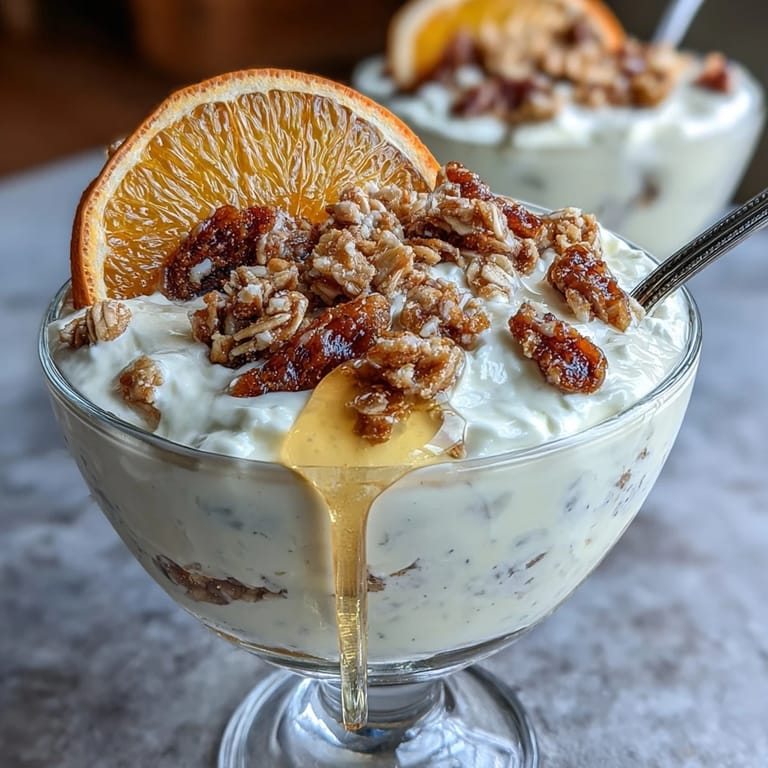
- Spoon a generous layer of yogurt into the bottom of each glass or jar, then add a layer of granola, followed by a few pieces of candied orange arranged however appeals to you. Continue layering—yogurt, granola, orange, yogurt, granola, orange—until the glass is nearly full, then crown everything with yogurt and arrange your prettiest candied orange slices on top, maybe scatter some almonds and mint leaves if you're feeling it.
- Timing and serving:
- Serve immediately if you want the granola crunchy and defiant against the creamy yogurt, or chill for up to an hour if you prefer your layers to mingle and soften slightly. Both are wonderful in different ways.
 Save
Save Last winter, I made this for a friend who was going through something difficult, and we sat at the kitchen counter eating parfaits in near silence. There was something about the ritual of it—the sweetness, the textures, the beauty of those candied oranges catching the light—that felt like comfort without being heavy. Neither of us needed to say much; the parfait said it for us.
The Candying Process and Why It Matters
The magic of candied oranges isn't just about making something fancy; it's about understanding what heat and sugar do to fruit. As the orange slices simmer, the water content releases and mingles with the sugar, the pith softens and becomes almost translucent, and the whole slice takes on this jewel-like quality that fresh oranges can never achieve. The first time I watched this happen, I got it: candying isn't complicating fruit, it's revealing a version of itself that was always possible.
Variations and Ways to Make It Your Own
Blood oranges will give you a stunning deep-red hue and a slightly more complex flavor, though they candies just the same way. Tangerines work beautifully too, especially if you want thinner slices that candy even faster. You can also swap Greek yogurt for coconut yogurt to make the whole thing dairy-free, and honestly, the creamy richness of coconut yogurt pairs almost better with the citrus sweetness than regular yogurt does.
Storage and Make-Ahead Wisdom
The candied oranges are actually the most durable component here; stored in their syrup in a sealed container in the refrigerator, they'll keep for up to a week and almost improve as the flavors deepen. Assemble the parfaits as close to serving time as you can manage, but if you're hosting and need to work ahead, layer the yogurt and oranges the night before and add the granola just before bringing everything to the table.
- Keep leftover candied orange syrup in a jar for drizzling over desserts, stirring into sparkling water, or serving alongside vanilla ice cream.
- If granola gets soft, spread it on a baking sheet and warm it gently in a low oven for a few minutes to restore some crunch.
- Make extra candied oranges—they're beautiful enough to gift to friends or use to garnish cocktails and cakes.
 Save
Save This parfait lives in that beautiful space between breakfast and dessert, between simple and special—the kind of thing you can make on a Tuesday morning or pull together for guests without fuss. Make it, taste it, and notice how something this lovely came from your own hands.
Recipe FAQs
- → How do you make the candied oranges tender and translucent?
Simmer thin orange slices gently in a sugar and water syrup for 12-15 minutes, turning occasionally until they are translucent and tender.
- → Can I use a different type of yogurt?
Yes, coconut yogurt can be used to make a dairy-free version without compromising flavor and texture.
- → What granola works best for this dish?
A crunchy granola with nuts or toasted seeds enhances texture; store-bought or homemade varieties work well.
- → How should the parfait be served for best texture?
Serve immediately for maximum crunch, or chill up to an hour before serving to allow flavors to meld while preserving texture.
- → Are there any good substitutions for candied oranges?
Blood oranges or tangerines can be swapped in for a variation with a different citrus profile and color.