 Save
Save I started making this soup during a particularly brutal winter when everyone around me seemed to be catching something. I'd watched my grandmother rely on ginger and garlic her whole life, swearing they could cure anything, and figured there was no harm in trying. The first batch filled the kitchen with such a warm, spicy fragrance that my neighbor knocked to ask what I was cooking. That's when I knew I had something worth keeping.
The first time I made this for my best friend during flu season, she texted me two days later asking for the recipe. She said it was the only thing that didn't taste like cardboard when she was sick. I've been making double batches ever since, keeping one in the freezer just in case.
Ingredients
- Boneless, skinless chicken breasts: They cook quickly and shred beautifully into tender ribbons that blend right into the broth.
- Olive oil: Just enough to get a light golden crust on the chicken, which adds a deeper flavor to the whole pot.
- Onion, carrots, and celery: The holy trinity of soup making, they create a sweet, earthy base that feels like home.
- Garlic cloves: Four might seem like a lot, but when you're fighting off a cold, you need all the help you can get.
- Fresh ginger: Grate it finely so it melts into the broth and warms you from the inside out.
- Fresh turmeric: It stains everything bright yellow, but the anti-inflammatory boost is worth the scrubbing.
- Low-sodium chicken broth: Gives you control over the salt and keeps the soup from tasting like a salt lick.
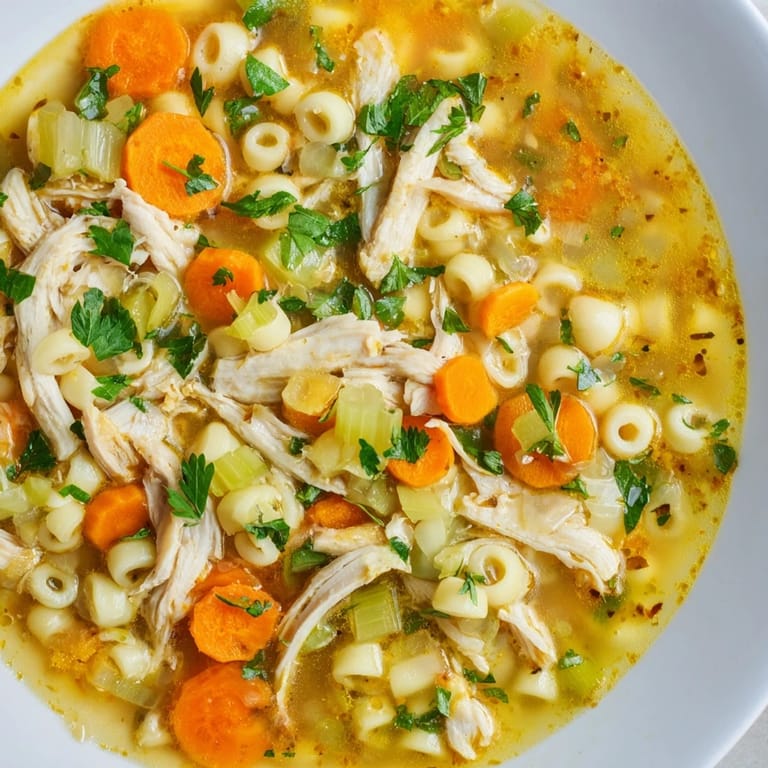
- Ditalini pasta: These little tubes are the perfect size for a spoon and they don't get mushy if you have leftovers.
- Bay leaf: One leaf adds a subtle herbal note that ties everything together.
- Salt and black pepper: Season gradually and taste as you go, especially if someone's taste buds are off from being sick.
- Fresh parsley: Stirred in at the end, it adds a pop of color and a hint of freshness.
- Lemon juice: A squeeze brightens the whole bowl and cuts through the richness.
Tired of Takeout? 🥡
Get 10 meals you can make faster than delivery arrives. Seriously.
One email. No spam. Unsubscribe anytime.
Instructions
- Sear the chicken:
- Heat the olive oil in a large pot over medium heat and lay the chicken breasts flat. Let them sizzle for 2 to 3 minutes on each side until they turn lightly golden, then pull them out and set them aside.
- Soften the vegetables:
- Toss the onion, carrots, and celery into the same pot and stir them around for about 5 minutes. You'll know they're ready when the onion turns translucent and the kitchen smells sweet.
- Wake up the aromatics:
- Stir in the garlic, ginger, and turmeric, and let them cook for just a minute. The smell will hit you fast, sharp and warm and a little bit spicy.
- Simmer the chicken:
- Nestle the chicken back into the pot, pour in the broth, and drop in the bay leaf. Bring it all to a boil, then lower the heat, cover it, and let it simmer gently for 20 minutes.
- Shred and return:
- Pull the chicken out and use two forks to shred it into bite-sized pieces. Stir it back into the pot so every spoonful has some chicken.
- Cook the pasta:
- Add the ditalini, salt, and pepper, and let it bubble away uncovered for 8 to 10 minutes. Stir occasionally so the pasta doesn't stick to the bottom.
- Finish and serve:
- Stir in the parsley and lemon juice, then taste and add more salt if you need it. Fish out the bay leaf and ladle the soup into bowls while it's still steaming.
 Save
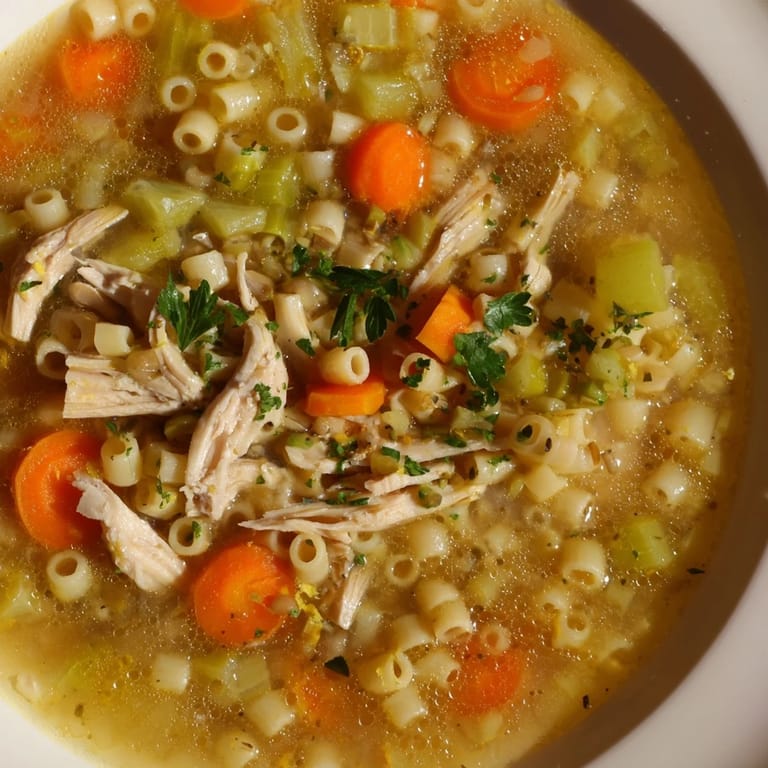
Save One rainy afternoon, I brought a container of this soup to a coworker who'd been out sick for days. She called it liquid sunshine and said it was the first thing that made her feel human again. That's the moment I realized this recipe wasn't just about feeding people, it was about taking care of them.
How to Store and Reheat
Let the soup cool completely before transferring it to airtight containers. It'll keep in the fridge for up to four days, and the flavors actually deepen overnight. Reheat it gently on the stove over medium-low heat, adding a splash of broth or water if it's thickened up. If you freeze it, leave out the pasta and cook it fresh when you're ready to eat, otherwise it gets waterlogged and falls apart.
Simple Swaps and Add-Ins
If you can't find ditalini, orzo or small shells work just as well and cook in about the same time. A handful of chopped spinach or kale stirred in during the last few minutes adds color and a little extra nutrition. For more heat, sprinkle in a pinch of cayenne or red pepper flakes when you add the garlic.
Serving Suggestions
This soup is hearty enough to stand on its own, but it's even better with a thick slice of crusty bread for dipping. I like to set out a small dish of extra lemon wedges and fresh parsley so everyone can adjust their bowl to their liking. A crisp dry white wine on the side makes it feel a little more special, even on a weeknight.
- Serve with warm sourdough or a baguette.
- Pair with a simple green salad dressed in olive oil and lemon.
- Keep extra parsley and lemon wedges on the table for topping.
 Save
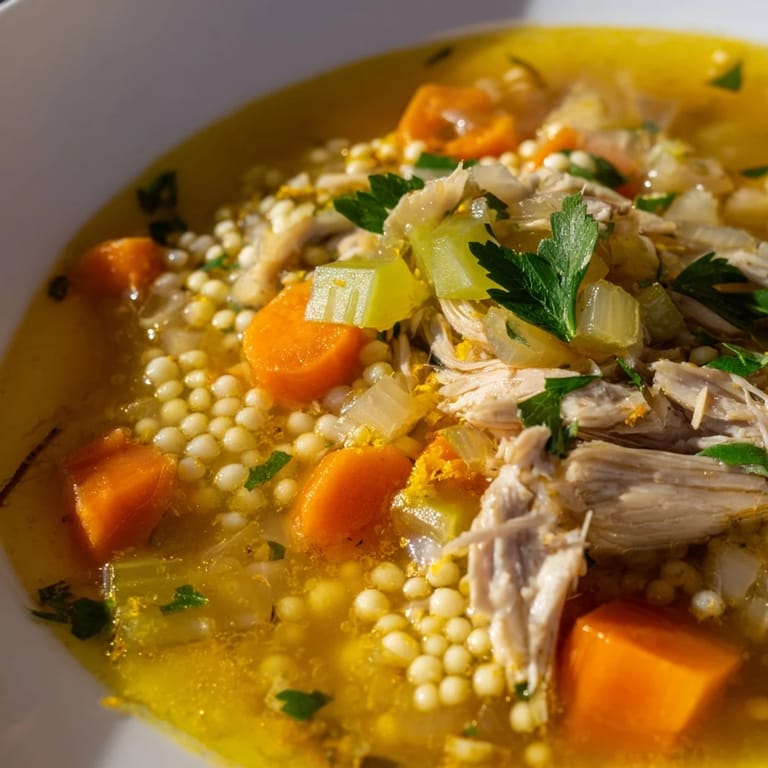
Save This soup has become my go-to whenever someone needs comfort, whether they're sick or just having a rough day. I hope it brings the same warmth to your kitchen that it's brought to mine.
Recipe FAQs
- → What makes this soup immune-boosting?
Fresh ginger, garlic, and turmeric in the broth provide natural compounds known to support the immune system and reduce inflammation.
- → Can I substitute the ditalini pasta?
Yes, you can replace ditalini with small pasta shapes like orzo or shells without altering the cooking time significantly.
- → How do I keep the chicken tender?
Searing the chicken breasts before simmering locks in juices, then shredding them back into the broth ensures tenderness in every spoonful.
- → What are some good additions to enhance flavor?
A pinch of cayenne pepper or fresh spinach added near the end enhances flavor and adds nutritional depth.
- → Is this soup suitable for a dairy-free diet?
Yes, all ingredients are dairy-free, making it suitable for those avoiding dairy products.