 Save
Save My roommate in college came back from Seoul with a jar of homemade kimchi her grandmother had packed in bubble wrap and a Ziploc bag. We stood in our tiny kitchen at midnight, stirring day-old rice into a hot pan with that funky, spicy cabbage, and I realized I'd been missing out on something extraordinary. The smell filled the hallway and our neighbor knocked to ask what we were cooking. That jar didn't last the week.
I started making this on Sunday nights when I needed something fast but didn't want to compromise on flavor. My partner would hover by the stove, drawn in by the sizzle and the sharp, fermented aroma. We'd eat it straight from the pan sometimes, standing at the counter, laughing about how something so simple could feel like a small celebration. It became our reset meal, the thing that made Monday mornings feel a little less daunting.
Ingredients
- 2 cups cooked short-grain rice (preferably day-old): Day-old rice is drier and fries up beautifully without turning mushy, giving you those coveted crispy bits at the edges.
- 1 cup napa cabbage kimchi, chopped, plus 2 tbsp kimchi juice: The juice is liquid gold, adding acidity and a punch of umami that balances the richness of the oil and rice.
- ½ cup yellow onion, finely chopped: Onion adds sweetness and a slight crunch that contrasts nicely with the soft kimchi.
- ½ cup carrot, diced: Carrots bring color and a subtle earthiness that rounds out the spice.
- 2 green onions, sliced (white and green parts separated): Whites go in early for a mellow bite, greens at the end for a fresh, grassy finish.
- 1 tbsp gochujang (Korean chili paste): This fermented chili paste is the soul of the dish, delivering heat, sweetness, and depth all at once.
- 1 tbsp soy sauce: Soy sauce adds salty complexity and helps the rice take on a deep, savory color.
- 1 tsp toasted sesame oil: A small amount goes a long way, lending a nutty aroma that ties everything together.
- ½ tsp sugar: Just a pinch balances the tang and heat, rounding out the flavors without making it sweet.
- ⅛ tsp freshly ground black pepper: A subtle background note that enhances the other spices without competing.
- 2 tbsp vegetable oil: High smoke point oil is essential for getting that wok hei, the breath of the wok, on your rice.
- 1 tsp toasted sesame seeds: These add a gentle crunch and visual appeal, plus a whisper of nuttiness.
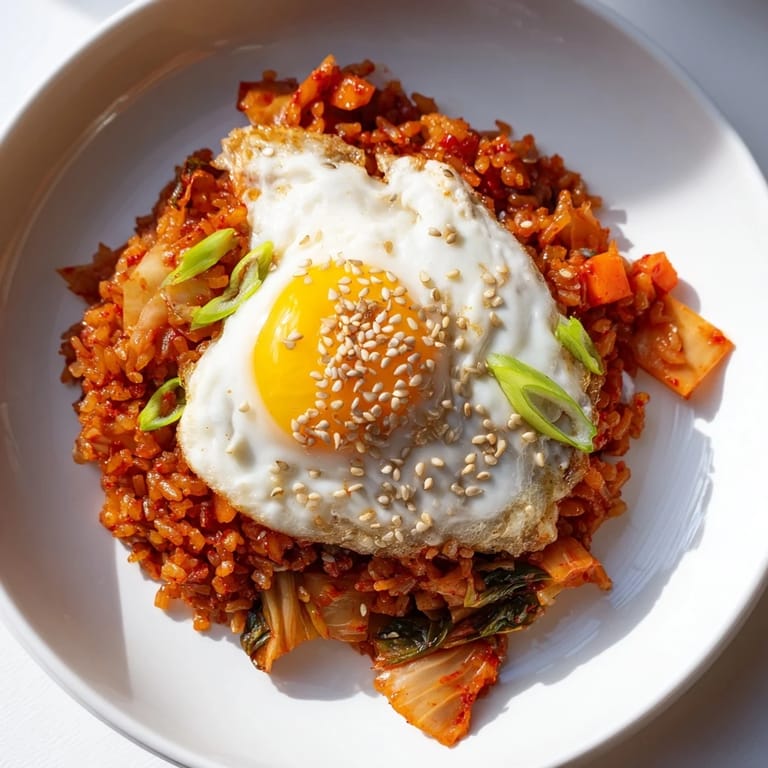
- 2 fried eggs (optional, for topping): A runny yolk transforms this into a complete meal, enriching every bite with silky richness.
Tired of Takeout? 🥡
Get 10 meals you can make faster than delivery arrives. Seriously.
One email. No spam. Unsubscribe anytime.
Instructions
- Start with the aromatics:
- Heat 1 tablespoon of vegetable oil in a large skillet or wok over medium-high heat until it shimmers. Add the chopped onion, carrot, and the white parts of the green onion, letting them sizzle and soften for 2 to 3 minutes, stirring occasionally so they don't scorch.
- Bring in the kimchi:
- Toss in the chopped kimchi and let it cook for another 2 to 3 minutes, stirring now and then. You'll know it's ready when the edges start to caramelize and the whole kitchen smells tangy and a little sweet.
- Build the sauce:
- Stir in the gochujang, soy sauce, kimchi juice, sugar, and black pepper, coating the vegetables evenly. Let it bubble and cook for about a minute so the flavors meld and the raw edge of the gochujang mellows out.
- Add the rice:
- Break up any clumps of rice with your hands or a spatula, then add it to the pan. Toss everything together and stir-fry for 3 to 4 minutes, pressing the rice into the pan occasionally to encourage those crispy bits to form.
- Finish with freshness:
- Drizzle the sesame oil over the rice and add the green parts of the green onion. Stir well to combine, letting the sesame oil perfume everything with its toasty aroma.
- Fry the eggs (optional):
- In a separate pan, heat the remaining tablespoon of oil and fry the eggs to your liking, crispy edges and runny yolks preferred. Slide them on top of each bowl of rice.
- Serve and garnish:
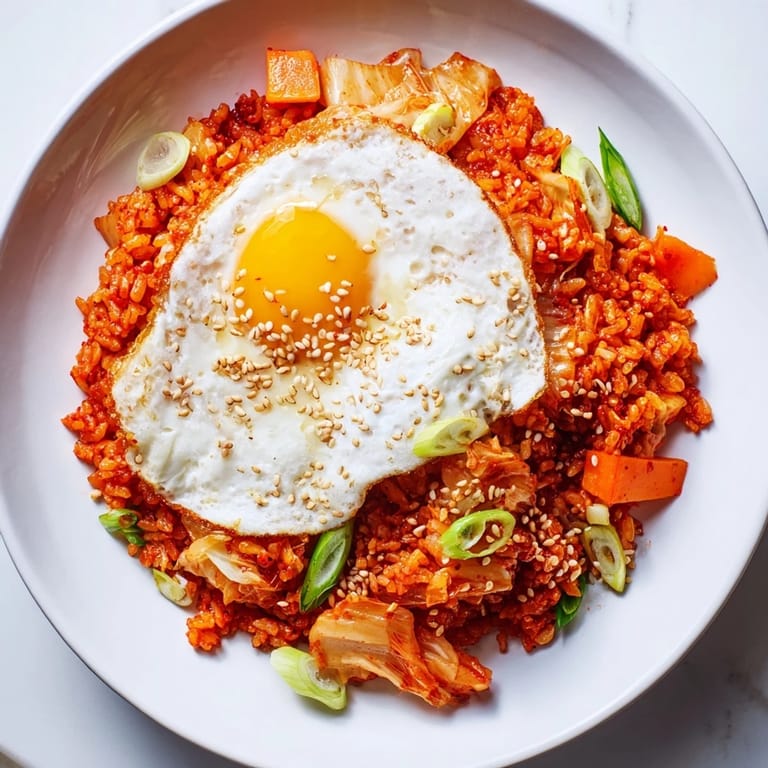
- Divide the kimchi fried rice between two bowls, top each with a fried egg if using, and sprinkle with toasted sesame seeds. Serve immediately while everything is hot and fragrant.
 Save
Save The first time I made this for a dinner party, I worried it was too simple, too casual for guests. But when I set the bowls down, everyone went quiet for a moment, then started talking about their own favorite late-night meals and childhood comfort foods. One friend said it reminded her of her grandmother's fried rice, even though the flavors were completely different. Food has a way of doing that, bridging memories and moments with just a few bites.
How to Store and Reheat Leftovers
Kimchi fried rice keeps well in an airtight container in the fridge for up to three days, though the texture is best when it's fresh. When reheating, add a splash of water or a drizzle of oil to a hot skillet and stir-fry it again over medium-high heat until warmed through. The microwave works in a pinch, but you'll lose some of that crispy texture. If you topped it with a fried egg originally, store the egg separately and fry a fresh one when you reheat.
Customizing Your Kimchi Fried Rice
This recipe is endlessly adaptable, and I've played with it dozens of times depending on what's in my fridge. Diced tofu crisped up in a bit of oil adds plant-based protein and a satisfying chew. Cooked chicken, shrimp, or even leftover pork belly can turn this into a heartier meal. If you're out of carrots, try bell peppers, zucchini, or shiitake mushrooms. For a vegan version, skip the egg or use a plant-based substitute, and double-check your kimchi and gochujang labels since some contain fish sauce or shrimp paste.
Pairing and Serving Suggestions
I love serving this with a simple cucumber salad dressed in rice vinegar and a pinch of sugar to cut through the richness. A cold glass of crisp lager or a mug of roasted barley tea balances the heat and complements the fermented flavors beautifully. If you want to make it a bigger spread, add some seasoned spinach or blanched bean sprouts on the side.
- Top with extra kimchi or a drizzle of gochujang for those who like it even spicier.
- Serve with a small bowl of miso soup or a light broth to round out the meal.
- Garnish with nori strips or a handful of fresh cilantro for an extra layer of flavor.
 Save
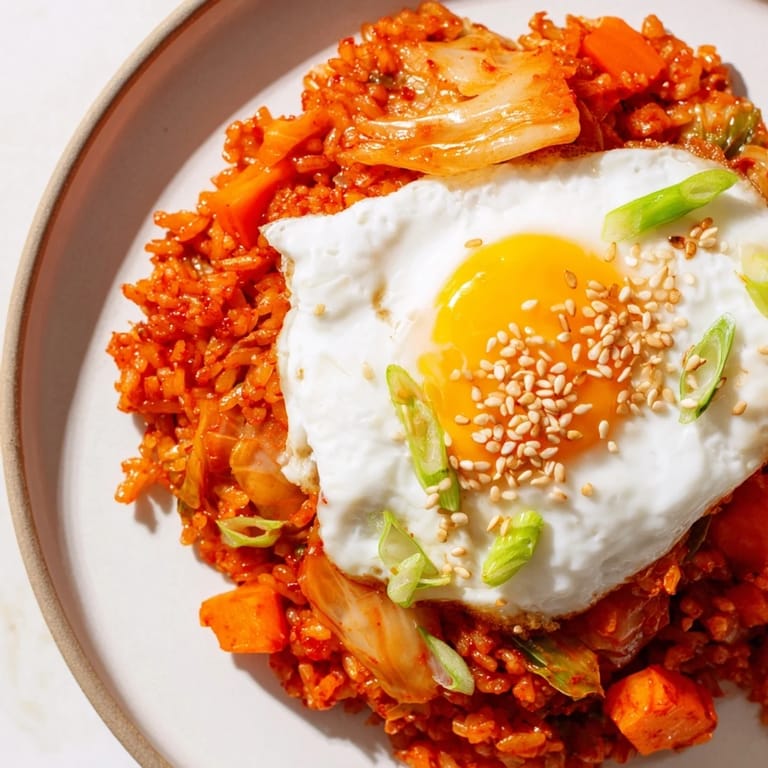
Save Every time I make this, I'm reminded that the best recipes are the ones that fit into your life without fuss, the ones you can make on a Tuesday night and feel a little bit taken care of. I hope this becomes one of those recipes for you too.
Recipe FAQs
- → Can I use freshly cooked rice instead of day-old rice?
Day-old rice works best because it's drier and won't clump when stir-fried. If using fresh rice, spread it on a plate to cool completely, then refrigerate for at least an hour before cooking. Fresh rice tends to become mushy when heated with sauce.
- → What if I don't have gochujang?
Gochujang provides authentic spicy-savory depth. In a pinch, combine sriracha with a bit of miso paste for similar flavor. Adjust quantities to taste, as sriracha is thinner and spicier than gochujang.
- → How do I adjust the spice level?
Start with less gochujang and kimchi juice, then taste and add more as needed. The kimchi itself contributes significant heat and tang, so increase it gradually. You can also reduce the black pepper or add a splash of sugar to balance spiciness.
- → Can I make this vegan?
Absolutely. Omit the fried egg or substitute with a plant-based alternative. Check that your gochujang and kimchi don't contain fish products—many traditional versions use fish sauce. Look for labels marked vegetarian or vegan.
- → What proteins pair well with this dish?
Fried eggs are traditional, but diced tofu, cooked chicken, or shrimp work beautifully. Cook your protein separately, then top the finished rice. For plant-based options, crispy tofu or mushrooms add meaty texture and umami.
- → Why does my fried rice taste bland?
Ensure you're using enough gochujang and soy sauce—these build flavor foundation. Don't skip the kimchi juice, as it adds tangy depth. Toast the sesame seeds and drizzle with sesame oil at the very end for aromatic richness that ties everything together.