 Save
Save My grandmother used to make mjadra on quiet afternoons, the kind where the whole apartment would fill with the smell of cumin and caramelizing onions before anyone else woke up. She'd work slowly, never rushing, letting the lentils and rice become almost creamy as they simmered together. It wasn't fancy or complicated, but there was something about watching those humble ingredients transform into something so deeply satisfying that made me understand why this dish has fed families across the Levant for generations. Years later, I realized she was teaching me that the best meals don't come from complexity, but from patience and respect for what's already perfect.
I made this for a dinner party once where half the guests arrived hungry and slightly grumpy about being stuck in traffic, and something about mjadra's warmth and earthiness just melted that tension away. By the second bowl, everyone was leaning back in their chairs talking about childhood dinners and comfort foods. That's when I understood that this dish does something beyond nourishing your body, it creates space for real conversation and connection.
Ingredients
- Brown or green lentils (1 cup): These hold their shape beautifully while cooking, giving you that tender bite without turning mushy, unlike red lentils which dissolve into creaminess.
- Long-grain rice (¾ cup): Basmati works perfectly here, staying separate and light instead of clumping together, which lets each grain soak up those warm spices.
- Water or vegetable broth (4 cups): The liquid is where the magic happens, so don't skimp on quality, and if you use store-bought broth, taste it first to make sure the salt won't overwhelm the dish.
- Olive oil (5 tablespoons total): This dish needs good olive oil, the kind that tastes like something, not just neutral fat that carries heat.
- Ground cumin (1 teaspoon): This is the backbone of the flavor, so don't use old cumin that's been sitting in your cabinet for two years.
- Ground allspice (½ teaspoon): It adds a subtle warmth and complexity that makes people ask what spice they're tasting.
- Ground cinnamon (½ teaspoon): Just enough to whisper sweetness in the background without making the dish dessert-like.
- Bay leaf (1): Remove this at the end so nobody bites into it, which is exactly as unpleasant as it sounds.
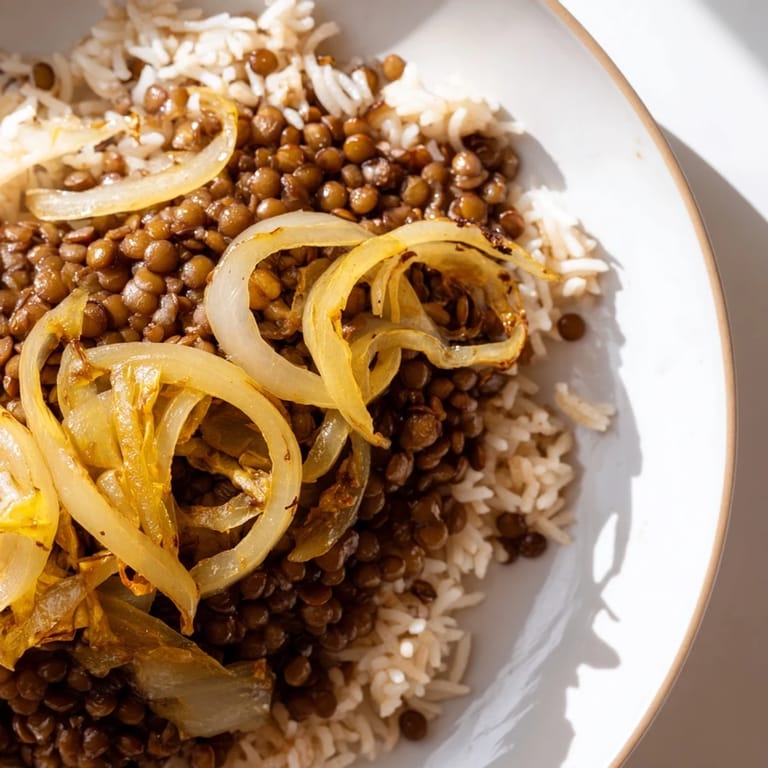
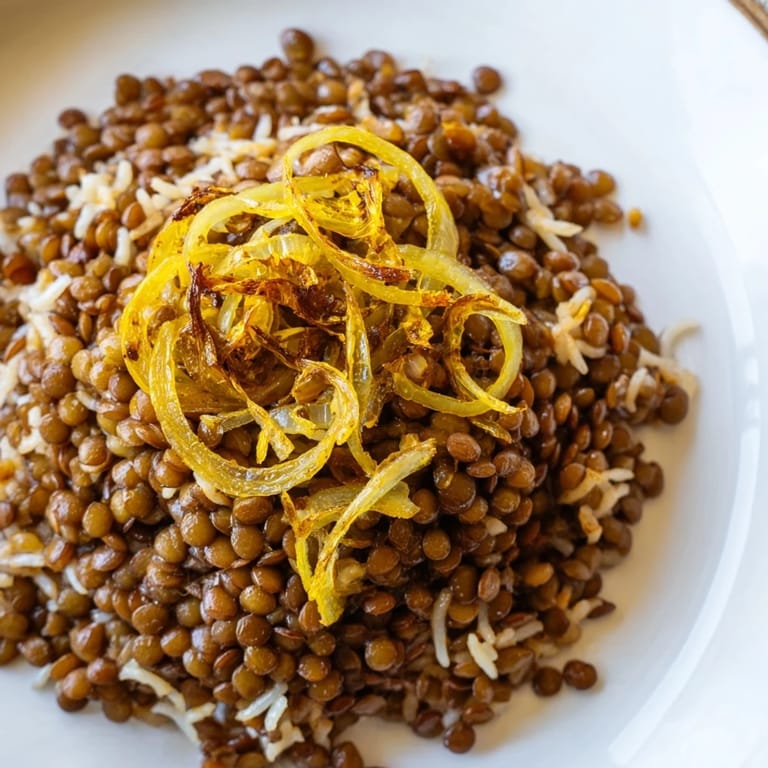
- Yellow onions (3 large): Slice them thin and consistent so they caramelize evenly, turning into these deep golden jewels that become the dish's crown.
Tired of Takeout? 🥡
Get 10 meals you can make faster than delivery arrives. Seriously.
One email. No spam. Unsubscribe anytime.
Instructions
- Wake up the spices:
- Heat your olive oil over medium heat until it shimmers, then add those lentils and bay leaf, stirring for about 2 minutes. You'll hear them toast slightly and release their aroma, which is your signal that they're ready for the liquid.
- Build the base:
- Pour in your water or broth and bring it to a rolling boil. Once it's bubbling away, lower the heat and let it simmer uncovered for 15 minutes, giving the lentils a head start so they cook evenly with the rice that's coming next.
- Start the onion magic:
- While the lentils are going, warm that second portion of olive oil in a skillet over medium-low heat. Add your sliced onions and a tiny pinch of salt, then stir occasionally for 25 to 30 minutes, watching them slowly transform from sharp and raw into deep golden layers of sweetness.
- Bring it together:
- Once the lentils have had their 15 minutes, add your rinsed rice, cumin, allspice, cinnamon, salt, and pepper, stirring everything together so the spices coat each grain. Cover the pot and turn the heat down low for 20 to 25 minutes, until the liquid has been absorbed and both the rice and lentils are tender.
- Finish and taste:
- Remove that bay leaf and fluff everything with a fork, breaking up any clumps gently. Taste it now and adjust seasoning to your preference, because this is the moment to make it exactly what you want.
- The crowning moment:
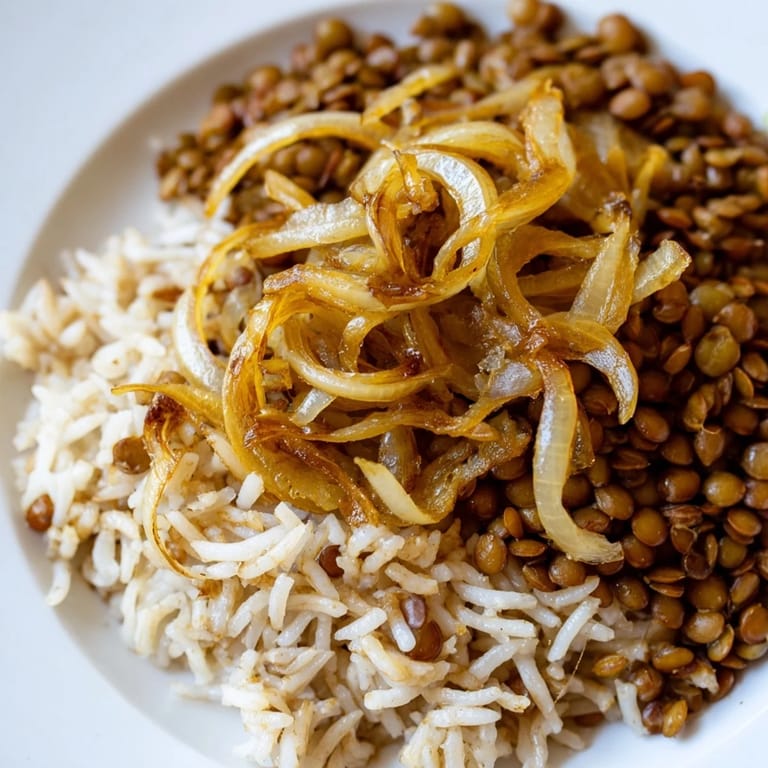
- Divide into bowls and pile those caramelized onions generously on top, letting them be the star. This dish is equally good hot or at room temperature, so serve it however feels right to you.
 Save
Save My first time eating mjadra at someone else's table, I asked about the recipe and they looked almost surprised, as if they'd forgotten they knew how to make something this nourishing. That's the special thing about dishes that belong to a culture and a history, they carry knowledge that's been passed down so many times it feels instinctive, and when you learn to make it, you're joining something bigger than yourself.
The Spice Story
The spice combination here is what separates mjadra from any ordinary lentil and rice bowl. Cumin is the loudest voice, grounding everything in warmth and earthiness, but allspice and cinnamon come in quietly with their own softness. I learned this from my grandmother's hands as much as her words, watching how she'd measure with her eyes and taste the food more than once while cooking, adjusting based on what the dish needed that day.
Timing and Patience
There's something deeply meditative about the two separate cooking processes happening at once, the gentle simmer of lentils and rice on one burner while onions slowly collapse into caramel on another. You're not standing there constantly, but you're present, stirring when needed, checking on things, understanding what's happening. This kind of cooking teaches you to trust your senses over a timer, to recognize doneness by how something looks and smells and feels when you taste it.
Serving and Keeping
Mjadra is one of those rare dishes that actually tastes better after a day or two in the refrigerator, once everything has rested and the flavors have deepened and found each other. You can eat it straight from the pot when it's hot and steaming, or pack it for lunch the next day and reheat it gently. Fresh parsley and plain yogurt on the side is traditional, and a simple tomato and cucumber salad cuts through the richness beautifully.
- Store leftovers in an airtight container for up to four days, and reheat gently over low heat with a splash of water if it's gotten dry.
- The caramelized onions can be made a day ahead, which means less to do on the day you're serving dinner.
- This dish feeds four generously or stretches to six if you're serving it as part of a larger spread.
 Save
Save Making mjadra is how you learn that the simplest ingredients, treated with respect and time, become something that feeds not just your hunger but your soul. It's a gift from a kitchen that has always known this.
Recipe FAQs
- → What type of lentils work best?
Brown or green lentils hold their shape well and provide a hearty texture, perfect for this dish.
- → Can I use broth instead of water?
Yes, low-sodium vegetable broth adds extra depth without overpowering the spices.
- → How do I achieve perfect caramelized onions?
Cook onions slowly over medium-low heat with olive oil, stirring often, until they turn a deep golden brown.
- → What spices enhance the flavor?
Ground cumin, allspice, and cinnamon bring warmth and complexity to the lentils and rice.
- → Is this dish suitable for vegan diets?
Yes, it contains plant-based ingredients and no animal products, making it vegan-friendly.
- → Can I prepare this dish ahead of time?
Absolutely, flavors develop well when refrigerated and it can be gently reheated before serving.