 Save
Save The aroma of my mung bean soup always transports me back to that chilly November afternoon when I discovered the recipe tucked inside my grandmother's weathered recipe box. I remember my hands trembling slightly as I sorted through the small green beans, wondering if I could possibly recreate the healing warmth I'd experienced at her table years before. What began as a simple attempt to fight off a seasonal cold became my gateway to understanding the gentle power of these humble legumes. The first spoonful convinced me I'd found something special—something that deserved to be shared.
Last winter when my friend Sarah was recovering from surgery, I brought over a thermos of this soup on a particularly gray afternoon. We sat at her kitchen table, steam rising between us, and I watched as the worry lines on her face softened with each spoonful. She called me three days later asking for the recipe, saying it was the first thing that had truly comforted her in weeks. Sometimes food becomes medicine in ways science can't quite measure.
Ingredients
- 1 cup dried mung beans: These little powerhouses are incredibly digestible and cook faster than most beans, especially if you remember to soak them beforehand like I learned the hard way.
- Onion, garlic, and ginger: This aromatic trinity creates the foundation of flavor that distinguishes an ordinary soup from one that makes people close their eyes when they take the first bite.
- Carrots and celery: They provide a subtle sweetness and texture that balances the earthiness of the mung beans without stealing the show.
- Cumin seeds and turmeric: Toast these until fragrant and youll unlock a depth that pre-ground spices simply cant match.
- Fresh cilantro and lemon juice: These final bright notes cut through the richness and transform the entire pot from good to unforgettable.
Tired of Takeout? 🥡
Get 10 meals you can make faster than delivery arrives. Seriously.
One email. No spam. Unsubscribe anytime.
Instructions
- Awaken the spices:
- Heat your largest pot over medium heat and add those cumin seeds, letting them dance and pop until the scent fills your kitchen with warmth and promise.
- Build your flavor base:
- Add your chopped onion, minced garlic, and grated ginger, stirring occasionally until the onions turn translucent and your kitchen smells like heaven.
- Layer in vegetables:
- Introduce the carrots and celery, letting them soften slightly and get acquainted with the aromatics.
- Bloom the spice chorus:
- Sprinkle in turmeric, coriander, black pepper, cinnamon if using, and that bay leaf, stirring for just a minute to release their oils without burning them.
- Unite the elements:
- Add your soaked mung beans, tomato chunks, and broth, bringing everything to a gentle bubble before reducing to a simmer.
- Practice patience:
- Cover and let everything mingle for about 40 minutes, occasionally lifting the lid to enjoy the evolving aroma as the beans soften into velvety tenderness.
- Final harmony:
- Remove the bay leaf, then wake up all the flavors with salt and a bright squeeze of lemon juice.
- Serve with love:
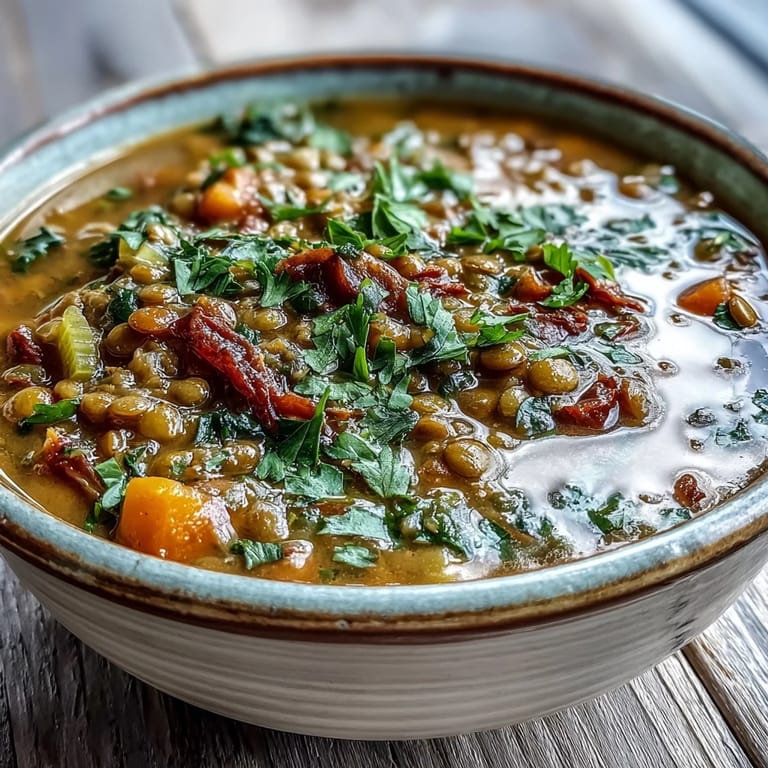
- Ladle into bowls and scatter fresh cilantro on top, watching as the vibrant green specks settle onto the golden surface.
 Save
Save On a particularly stressful day last year, I found myself mindlessly preparing this soup, measuring and chopping on autopilot while my thoughts were tangled with work deadlines. Somewhere between stirring the pot and inhaling the warm, spiced steam, I felt my shoulders drop and my breathing slow. By the time I sat down with my bowl, the day's tensions had melted away. This soup had become more than just sustenance—it had become a form of self-care that required nothing more complicated than paying attention to simple ingredients transforming with heat and time.
Serving Suggestions
I've discovered that this soup reaches new heights when ladled over a small mound of steamed basmati rice, the grains catching the broth like tiny flavor sponges. Some evenings I'll tear off chunks of warm naan bread and use them as edible spoons, collecting the tender beans and vegetables in each bite. For guests who appreciate heat, I set out a small dish of finely diced green chilis, watching as the more adventurous eaters scatter them across the golden surface of their soup, creating tiny islands of vibrant color and gentle fire.
Storage and Make-Ahead Tips
This soup performs a kind of magic in the refrigerator, deepening in flavor overnight as the beans continue to release their starches and the spices fully infuse the broth. I've found it keeps beautifully for up to four days, though it rarely lasts that long in my household. When reheating, add a small splash of water if it's thickened too much, and a fresh squeeze of lemon revives all the original brightness. For meal prep champions, this soup freezes exceptionally well in individual portions, becoming your future self's gift on those too-tired-to-cook evenings.
Health Benefits
I began making this soup for its comfort factor but continue making it regularly for how it makes me feel—nourished from the inside out with lasting energy rather than the quick surge and crash of more processed meals. The combination of protein-rich mung beans and fiber-filled vegetables creates a satisfying meal that maintains steady energy levels for hours.
- Mung beans are known for their exceptional digestibility and gentle detoxifying properties, making this soup perfect for sensitive systems or times of transition.
- The cumin and ginger work together to support digestion and reduce inflammation, something I notice especially when seasonal allergies flare up.
- Unlike heavier meat-based soups, this plant-powered version leaves you feeling energized rather than ready for a nap, perfect for midweek lunches when you need sustained focus.
 Save
Save There's something profoundly satisfying about transforming such humble ingredients into something that nourishes so completely. Perhaps that's the true magic of this mung bean soup—it reminds us that healing and comfort often come from the simplest sources.
Recipe FAQs
- → Do I need to soak mung beans before cooking?
Yes, soaking dried mung beans for 2 hours helps them cook more evenly and reduces simmering time. This step also makes them easier to digest and ensures a creamy texture in your soup.
- → Can I use split mung beans instead of whole?
Absolutely. Split mung beans cook faster and break down more, creating a thicker, creamier consistency. Reduce cooking time to 25-30 minutes if using split variety.
- → What vegetables work best in this soup?
Carrots, celery, onions, and tomatoes form the classic base, but you can add spinach, kale, or diced potatoes. Hard vegetables like carrots need more time, while greens should be added in the last 5 minutes.
- → How do I store leftovers?
The soup keeps well in the refrigerator for 4-5 days and actually tastes better as flavors meld. The beans may absorb more liquid, so add water or broth when reheating to reach desired consistency.
- → Can I make this in a pressure cooker?
Certainly. Sauté aromatics first, then add remaining ingredients. Cook on high pressure for 10-12 minutes, then allow natural release for 5 minutes before venting.