 Save
Save There's something about baking a cake for a milestone that makes your hands shake a little—at least mine did when my niece's First Communion was coming up. I'd never piped flowers before, only watched my grandmother do it with this quiet confidence that made it look effortless. So I decided to teach myself through this cake, a simple vanilla sheet cake that would let me practice without the pressure of a complicated recipe. The vanilla became almost meditative, a backbone so pure that every other element—the butter, the eggs, the buttercream—had room to shine.
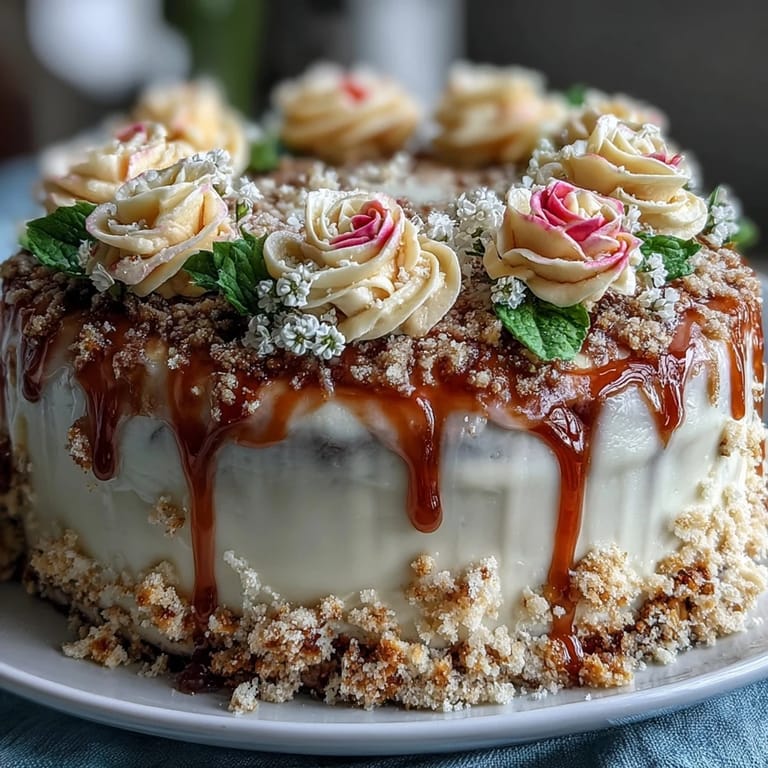
I remember standing in my kitchen at 6 a.m. on that Saturday, the cake cooling on the rack while I tinted buttercream in tiny glass bowls—pale pink, soft yellow, sage green. My sister wandered in for coffee and watched me pipe my third flower, which looked nothing like a flower. She didn't laugh, just said, "That one's pretty," and suddenly I wasn't nervous anymore. By the time I'd piped thirty flowers across that cake, my hand had found its own rhythm, and the cake looked like something from a dream.
Ingredients
- All-purpose flour: The foundation—make sure it's measured by weight for consistency, or spoon and level if measuring by cup to avoid a dense cake.
- Baking powder: This is what gives the cake its tender crumb; don't skip the sifting step with your dry ingredients.
- Salt: Just a whisper to balance the sweetness and deepen the vanilla flavor.
- Unsalted butter: Room temperature is non-negotiable; it aerates better and creates a lighter cake.
- Granulated sugar: Beating it with butter for three full minutes is worth every second—that's where the lift comes from.
- Eggs: Also room temperature; cold eggs won't incorporate smoothly and your batter could break.
- Pure vanilla extract: Use the real thing; it's the soul of this cake and you'll taste the difference.
- Whole milk: Warmed slightly, it helps the batter emulsify beautifully and keeps the cake moist.
- Powdered sugar for buttercream: Sift it before you start, or tiny lumps will haunt your frosting.
- Food coloring: Gel coloring is the secret—it won't thin your buttercream like liquid coloring does, and the colors stay true.
Tired of Takeout? 🥡
Get 10 meals you can make faster than delivery arrives. Seriously.
One email. No spam. Unsubscribe anytime.
Instructions
- Set yourself up for success:
- Preheat your oven to 350°F and get that 9x13-inch pan ready with parchment paper. Having everything in place before you start mixing is like laying out clothes the night before—it eliminates one source of stress.
- Build your dry mixture:
- Whisk flour, baking powder, and salt together in a medium bowl. This distributes the leavening evenly so you won't have dense pockets in your final cake.
- Cream butter and sugar:
- Beat them together for a full three minutes until the mixture is pale and fluffy. You're literally beating air into the butter, which is what creates a tender crumb.
- Add eggs one at a time:
- After each egg, mix well so it fully incorporates before the next one goes in. This might feel slow, but it ensures your batter stays smooth and doesn't break.
- Fold in flour and milk in thirds:
- Start with flour, then milk, then flour again, ending with flour. This alternating method prevents overmixing, which would develop gluten and make your cake tough.
- Pour and bake:
- Spread the batter evenly into your prepared pan and smooth the top. Bake for 28 to 32 minutes until a toothpick comes out clean—don't overbake or it'll be dry.
- Cool with patience:
- Let it sit in the pan for ten minutes so the structure sets, then turn it out onto a wire rack to cool completely. Decorating a warm cake is asking for melted buttercream everywhere.
- Make your buttercream:
- Beat softened butter until it's creamy, then add powdered sugar and milk in alternating additions, beating until fluffy. The whole process takes about five minutes and creates something silkier than you'd expect.
- Color your dreams:
- Divide the buttercream into bowls and add a tiny drop of gel coloring, stirring to combine. Start with less than you think you need—you can always add more.
- Frost the foundation:
- Spread a generous base layer of plain buttercream across the cooled cake. This gives your piped flowers something soft to anchor into.
- Pipe your flowers:
- Fill piping bags with your colored buttercream and use flower tips to create blooms across the cake. Work slowly and let each flower have its own space.
- Add finishing touches:
- A small cross piped in white, or the child's name, transforms this from pretty cake to deeply meaningful celebration.
 Save
Save When my niece walked into the hall and saw that cake, her eyes went wide in this way that made every early morning and piped flower worth it. She reached for it immediately—the kind of unselfconscious joy that reminds you why we bake for people we love. That cake tasted like vanilla, yes, but it also tasted like someone believing in her enough to learn something new.
The Magic of Vanilla in Celebration
Vanilla doesn't show off, which is exactly why it's perfect for a day like this. It doesn't compete for attention or demand to be the star. Instead, it creates a soft backdrop where buttercream flowers can rest, where a child's name piped in frosting becomes the focus. I learned that day that sometimes the most elegant choice is the simplest one.
Decorating Without Fear
The truth about piping flowers is that half the magic lives in imperfection. A slightly wonky rose looks charming, not wrong. The thing that shifted for me was realizing that mistakes aren't disasters—they're just flowers that took a different shape. My grandmother's piped flowers were beautiful because she'd piped thousands, yes, but also because she'd let herself be imperfect along the way.
Make It Your Own
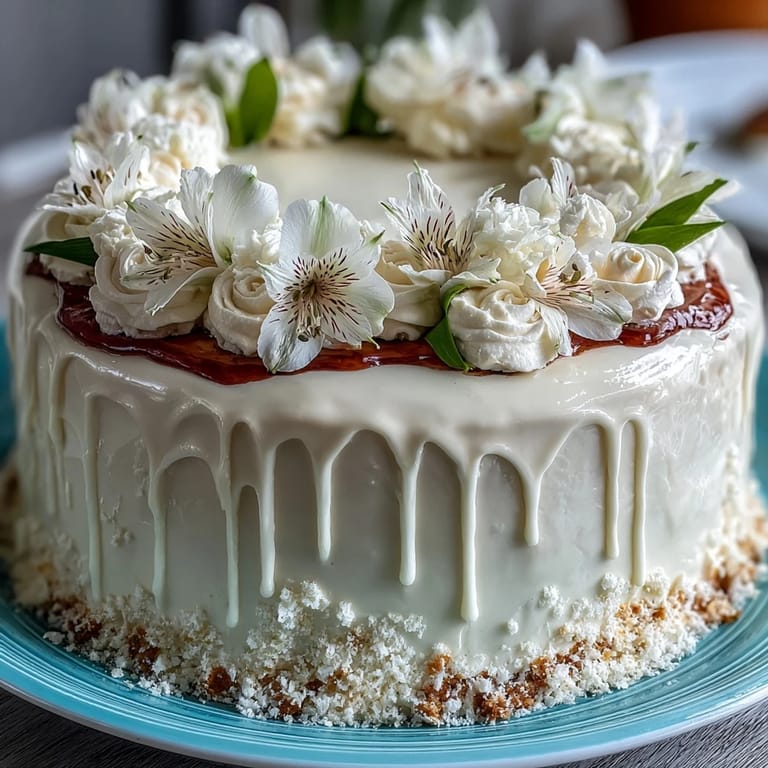
This cake is a canvas, and there are endless ways to make it personal. Some bakers add almond extract for depth, or swap the buttercream for a lighter whipped frosting. Others have piped tiny gold leaf accents or fresh flowers between the buttercream ones. The structure is sturdy enough to hold whatever touches feel right for your celebration.
- Add half a teaspoon of almond extract to the cake batter for subtle, sophisticated flavor.
- Make the cake a full day ahead and store it covered at room temperature to save yourself morning stress.
- Practice your piping on a piece of parchment before decorating the actual cake if nerves are getting loud.
 Save
Save This cake has become my go-to for moments that matter, because it's elegant without being fussy, and it leaves room for your own story to live inside it. Bake it with someone you love, or bake it alone and let it become the centerpiece of someone's memory.
Recipe FAQs
- → What is the best way to achieve a moist vanilla cake?
Using room temperature ingredients, mixing gently to avoid overworking the batter, and baking at the right temperature ensures a tender and moist texture.
- → How can I make smooth buttercream frosting?
Beat softened butter until creamy before gradually adding sifted powdered sugar and milk, then mix until fluffy and smooth.
- → What decorations work well with buttercream frosting?
Piping delicate flower and leaf shapes using tinted buttercream adds elegant and colorful details to the cake's surface.
- → Can this cake be prepared ahead of time?
Yes, the cake can be baked a day in advance and stored covered at room temperature before decorating.
- → What tools are recommended for decorating with buttercream?
Using piping bags fitted with flower, leaf, and round tips helps create detailed and beautiful buttercream decorations.