 Save
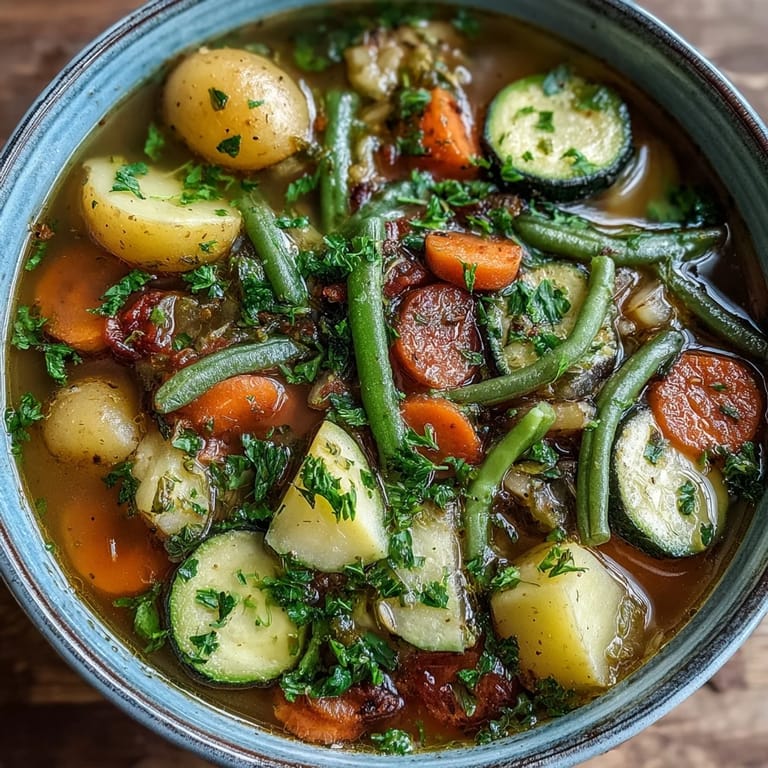
Save The first time I made potato and vegetable soup was during a spring thunderstorm that knocked out our power. Working by candlelight, chopping vegetables became a meditative process as rain drummed against the windows. Something about the simplicity of transforming humble ingredients into something warming felt exactly right for that moment. The kitchen filled with aromatic steam as the soup simmered on our gas stove, becoming our beacon of comfort in the darkness.
Last winter, my neighbor broke her ankle slipping on ice, and I showed up at her door with a container of this soup. Her face lit up at the first spoonful, and she called me later to say it was the first thing that had made her feel human again after days of pain. Now whenever anyone in our circle is under the weather, potato vegetable soup appears on their doorstep like a warm hug in a bowl.
Ingredients
- Potatoes: I prefer waxy varieties like Yukon Gold that hold their shape while still breaking down slightly to thicken the broth naturally.
- Vegetable Stock: The backbone of flavor, I learned to keep homemade frozen cubes on hand after running out once and having to use water instead.
- Fresh and Frozen Vegetables: The combination gives you the best of both worlds, with fresh vegetables providing texture and frozen peas adding that burst of sweet freshness right at the end.
- Herbs: Dried herbs work perfectly in long-simmered soups, while fresh parsley brightens everything up just before serving.
Tired of Takeout? 🥡
Get 10 meals you can make faster than delivery arrives. Seriously.
One email. No spam. Unsubscribe anytime.
Instructions
- Create Your Flavor Base:
- Heat olive oil in a large pot over medium heat and add your onion, carrots, and celery. These three vegetables release their flavors into the oil, creating that irreplaceable foundation that makes your kitchen smell like home.
- Add the Aromatics:
- Stir in minced garlic and cook just until fragrant, about one minute. You'll know it's ready when that pungent garlic smell softens into something more mellow and inviting.
- Layer in Main Vegetables:
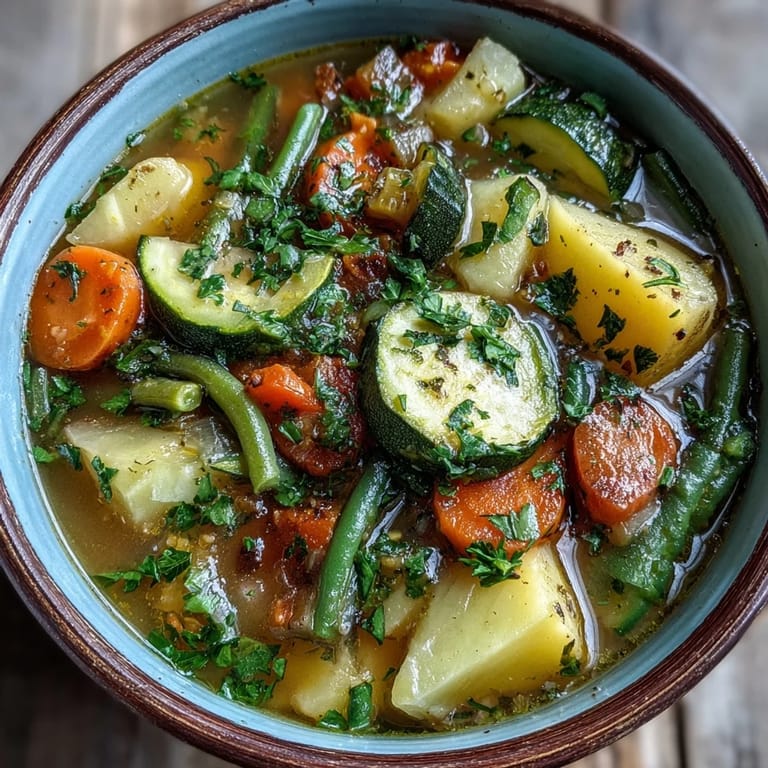
- Add potatoes, green beans, and zucchini, giving them a quick toss in the aromatic oil. This brief cooking before adding liquid helps seal in their flavors and prevents that washed-out taste.
- Pour in Liquid and Seasonings:
- Add vegetable stock, bay leaf, thyme, parsley, salt, and pepper. The liquid should just cover the vegetables, creating a concentrated broth that will become infused with all the vegetable goodness.
- Simmer to Tenderness:
- Bring to a gentle boil, then reduce to a simmer and cover. Let it bubble away for 20-25 minutes or until you can easily pierce a potato chunk with a fork.
- Finish with a Pop of Color:
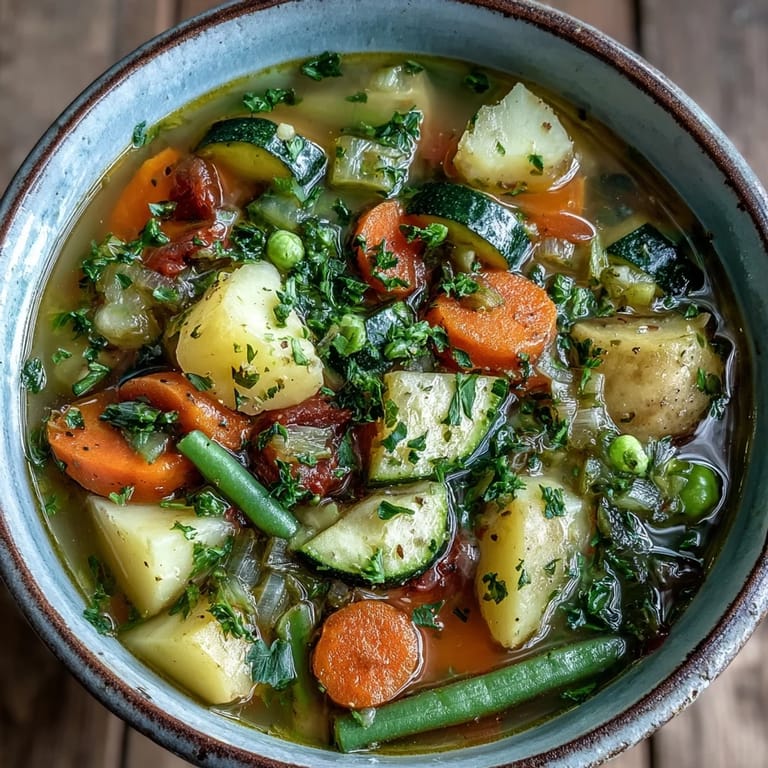
- Stir in frozen peas for the last 2-3 minutes, letting their bright green color and natural sweetness liven up the pot. Remove the bay leaf before serving so nobody gets that surprising woody bite.
- Serve with Flourish:
- Ladle into bowls and sprinkle with fresh parsley. I like serving this with a drizzle of good olive oil on top, creating little pools of richness that swirl into the broth as you eat.
 Save
Save One Tuesday evening, my teenager stormed in after a rough day at school, headphones firmly in place, scowling at the world. The soup was simmering on the stove, and without a word, they ladled themselves a bowl, sat at the counter, and slowly the tension in their shoulders released with each spoonful. By the second bowl, the headphones were off, and they were telling me about their day. Sometimes the most nurturing conversations happen over the simplest meals.
Seasonal Adaptations
Ive made this soup in every season, letting the farmers market guide my choices. Summer brings corn kernels and bell peppers, autumn welcomes butternut squash and kale, winter calls for extra root vegetables like parsnips, while spring introduces asparagus tips and fresh peas. The potato foundation remains constant, but the seasonal vegetables tell the story of the year passing through my kitchen.
Make It a Meal
Though satisfying on its own, this soup becomes a heartier offering when served alongside something to dip. My sourdough-baking neighbor trades me fresh bread for soup regularly, and the exchange benefits us both. For non-bread eaters, a simple side salad with a tangy vinaigrette provides textural contrast to the tender vegetables in the soup.
Storage and Leftovers
If youre cooking for one or two, dont reduce this recipe. Make the full batch and portion the cooled soup into freezer containers, leaving headspace for expansion. Ive discovered that freezing this soup in muffin tins creates perfect single-serving portions that defrost quickly for lunch emergencies.
- Refrigerated soup keeps beautifully for 3-4 days, actually improving in flavor overnight.
- When reheating, add a splash of water or stock if its thickened too much.
- For a completely different meal, blend leftover soup until smooth, creating a velvety base for grain bowls.
 Save
Save This soup has become my edible currency, traded for neighborly favors and offered as comfort in times of need. Its a reminder that sometimes the most powerful way to connect is through a simple bowl of vegetables transformed by time and care.
Recipe FAQs
- → How long does this soup keep in the refrigerator?
The soup stores well in an airtight container for 4-5 days. The flavors often develop and improve after a day or two.
- → Can I freeze this potato and vegetable soup?
Yes, it freezes beautifully for up to 3 months. Cool completely before transferring to freezer-safe containers. Thaw overnight in the refrigerator before reheating.
- → What other vegetables work well in this soup?
Try adding corn, spinach, kale, butternut squash, or turnips. The base is flexible and adapts to whatever seasonal vegetables you have on hand.
- → How can I make this soup more filling?
Stir in cooked beans, lentils, or small pasta shapes during the last 10 minutes of cooking. A splash of cream or grated cheese also adds richness.
- → What's the best way to reheat leftovers?
Gently reheat on the stovetop over medium-low heat, adding a splash of water or stock if needed. The microwave also works well for individual portions.